

Staying hydrated sounds simple. Yet 75% of people walk around mildly dehydrated without realizing it. Low energy, headaches, brain fog, and poor workouts are often just your body asking for water.
This guide gives you clear, practical answers to “how much water per day” you actually need. We’ll break it down by body weight, age, weather, activity level, and health conditions. You’ll also get a quick-scan water intake chart, signs you’re underhydrated, and smart tips to hit your daily fluid intake without forcing it.
Why Daily Water Intake Matters
Water runs nearly every process in your body. It regulates temperature, cushions joints, moves nutrients into cells, flushes waste, and keeps your brain firing. Lose just 1-2% of your body’s water and physical performance drops, focus slips, and mood tanks.
The problem: thirst isn’t a perfect sensor. By the time you feel thirsty, you’re already behind on hydration. Most people also confuse “fluids” with “plain water” and over-rely on caffeine or forget that climate, body size, and exercise all change your water requirement for the body.
Let’s fix that with real numbers, not guesswork.
How Much Water Should You Drink Per Day?
The 8 Glasses Rule Explained
You’ve heard “drink 8 glasses of water a day.” That’s 8 x 8oz glasses = 1.9 liters. It’s a decent starting point and easy to remember. But it’s not based on science for everyone.
The Scientific Guideline
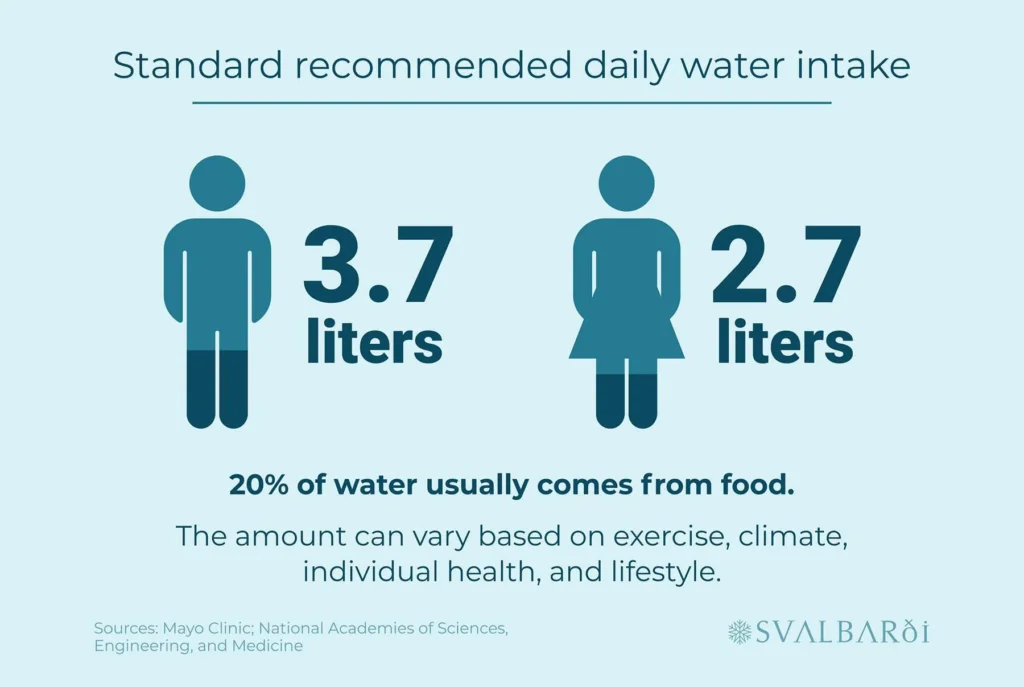
The U.S. National Academies of Sciences says adequate daily fluid intake is:
- Men: About 3.7 liters (125 oz) of total fluids per day
- Women: About 2.7 liters (91 oz) of total fluids per day
Note: “Total fluids” includes water from drinks and food. Roughly 20% of daily hydration needs come from food.
WHO / Health Authority Recommendation
The World Health Organization doesn’t set a single number because hydration needs vary by person. Factors such as heat, humidity, physical activity, and health status affect your recommended water intake.
Key takeaway: “One rule fits all” is incorrect. Your daily hydration needs depend on your body, environment, and lifestyle.
Water Intake Based on Body Weight
Your body size is the biggest factor in your water requirement. A simple, widely used formula:
30–35 ml of water per kg of body weight
Quick Calculation Examples:
- Person weighing 60 kg (132 lbs): 60 x 30 ml = 1.8 liters to 60 x 35 ml = 2.1 liters per day
- Person weighing 80 kg (176 lbs): 80 x 30 ml = 2.4 liters to 80 x 35 ml = 2.8 liters per day
- Person weighing 100 kg (220 lbs): 100 x 35 ml = 3.5 liters per day
Larger bodies have more tissue, blood volume, and metabolic activity. That means more water loss through breathing, skin, and urine. Use this as your baseline, then adjust up for heat or exercise.
Daily Water Intake by Age Group
Hydration needs shift across life stages. Here’s the water intake chart by age from the Institute of Medicine:
| Age Group | Total Daily Fluid Intake | Notes |
| Infants 0–6 months | 0.7 L/day | From breast milk or formula only |
| Infants 7–12 months | 0.8 L/day | Includes breast milk, formula, food, and small sips of water |
| Children 1–3 years | 1.3 L/day | About 4 cups total fluids |
| Children 4–8 years | 1.7 L/day | About 7 cups total fluids |
| Boys 9–13 years | 2.4 L/day | Includes breast milk, formula, food, small sips of water |
| Girls 9–13 years | 2.1 L/day | About 9 cups total fluids |
| Teen Boys 14–18 years | 3.3 L/day | About 14 cups total fluids |
| Teen Girls 14–18 years | 2.3 L/day | About 10 cups total fluids |
| Adult Men 19+ | 3.7 L/day | About 15.5 cups total fluids |
| Adult Women 19+ | 2.7 L/day | About 11.5 cups total fluids |
| Elderly 65+ | Same as adults, but monitor closely | About 10 cups of total fluids |
Key point for parents: Kids’ water needs are high relative to size because they’re active and lose water fast.
Key point for elderly hydration: Older adults need reminders because the thirst signal weakens.
Water Intake in Hot Weather & Climate Conditions
Heat and humidity crank up your hydration needs fast. You can lose 1–2 liters per hour through sweat in extreme heat.
Increase your intake when:
- Summer water intake: Add 500ml–1L on hot days, even without exercise
- High humidity: Sweat evaporates more slowly, but you still lose fluids
- High altitude: Above 8,200 ft, you breathe faster and urinate more. Add 1–1.5L per day
- Dry climates: You lose water through breath and skin without noticing sweat
Rule of thumb for climate hydration needs: If you’re sweating or your mouth feels dry, you’re already behind. Drink before you feel parched.
Water Intake During Exercise & Physical Activity
Sports hydration isn’t just “drink when thirsty” if you’re training hard.
Water for exercise timeline:
- Before workout: Drink 500ml (17 oz) 2–3 hours before. Top up with 250ml 20 min before.
- During workout: 200–300ml (7–10 oz) every 10–20 minutes. For sessions under 60 min, plain water works.
- After workout recovery: Weigh yourself before/after. Drink 1.5L for every kg lost. That’s 24oz per pound lost.
The importance of electrolyte balance: For exercise over 60–90 minutes, intense sweat, or hot conditions, you lose sodium. Add electrolytes or eat salty food with water to avoid cramping and to help fluid absorption.
Water Intake for Special Conditions
Some life stages and health issues raise your daily fluid intake.
Pregnancy Hydration Needs
Pregnant women need about 2.3L–3L total fluids per day. Water supports amniotic fluid, increased blood volume, and nutrient transport.
Breastfeeding Water Requirements
Nursing moms should aim for 3.1L–3.8L per day. Make it a habit: drink a glass every time you nurse.
Illness: Hydration When Sick
Fever, diarrhea, and vomiting cause rapid fluid loss. Increase intake and use oral rehydration solutions if needed. Clear urine is the goal.
Medical Conditions Affecting Hydration
Heart failure, kidney disease, and some medications change fluid needs. If you have a condition, ask your doctor for a personal daily water requirement. Don’t guess.
Water From Food vs Drinking Water
Your “water intake” isn’t just the glass in your hand. About 20% comes from food.
High water content foods:
- Fruits: Watermelon 92%, strawberries 91%, oranges 86%
- Vegetables: Cucumber 95%, lettuce 96%, zucchini 94%
- Other: Soup, yogurt, milk, oatmeal
Do tea and coffee count? Yes. Despite the caffeine, tea and coffee contribute to total daily fluid intake. They have a mild diuretic effect, but you still get positive hydration. Alcohol is the exception: it dehydrates you.
Total fluid intake vs plain water: You don’t need 100% plain water. But sugary drinks add calories without nutrients. Prioritize water, then unsweetened drinks, then water-rich foods.
Signs You Are Not Drinking Enough Water
Low water intake symptoms show up before you hit severe dehydration.
Early dehydration signs:
- Urine color guide: Pale yellow = hydrated. Dark yellow or amber = drink now.
- Fatigue and headache connection: Even mild dehydration cuts energy and triggers headaches.
- Dry skin and lips: Skin loses elasticity and lips chap.
- Brain fog: Concentration and short-term memory dip.
- Constipation: Water keeps your digestive system moving.
- Dizziness: Low blood volume drops blood pressure.
If you notice 2 or more, increase fluids and check your intake for the next 48 hours.
Can You Drink Too Much Water?
Yes, but it’s rare. Overhydration risks are called hyponatremia: blood sodium gets too diluted.
Water intoxication happens when you drink 3–4L within a short time, often during endurance events, without replacing electrolytes.
Safe upper limits of water intake: For healthy kidneys, about 0.8–1.0L per hour is the max you can process. There’s no single “toxic” number for a day, but consistently forcing 6–7L without need isn’t helpful.
Balance is key: Use thirst, urine color, and activity level as guides. More isn’t always better.
Practical Daily Water Intake Chart
Here’s your quick-reference hydration table. Use your body weight for the base, then add for conditions.
| Person Type | Base Intake | Add for Heat | Add for Exercise (1 hr) | Add for Pregnancy |
| 50 kg Adult | 1.5–1.75 L | +0.5 L | +0.5–0.75 L | +0.3 L |
| 70 kg Adult | 2.1–2.45 L | +0.5–1 L | +0.5–1 L | +0.3 L |
| 90 kg Adult | 2.7–3.15 L | +1 L | +0.75–1.25 L | +0.3 L |
| Child 4–8 yrs | 1.7 L | +0.25 L | +0.25 L | N/A |
| Teen 14–18 Male | 3.3 L | +0.5 L | +0.75 L | N/A |
Start with “Base Intake” from your weight. Then add based on your day.
Smart Tips to Meet Daily Water Intake Easily
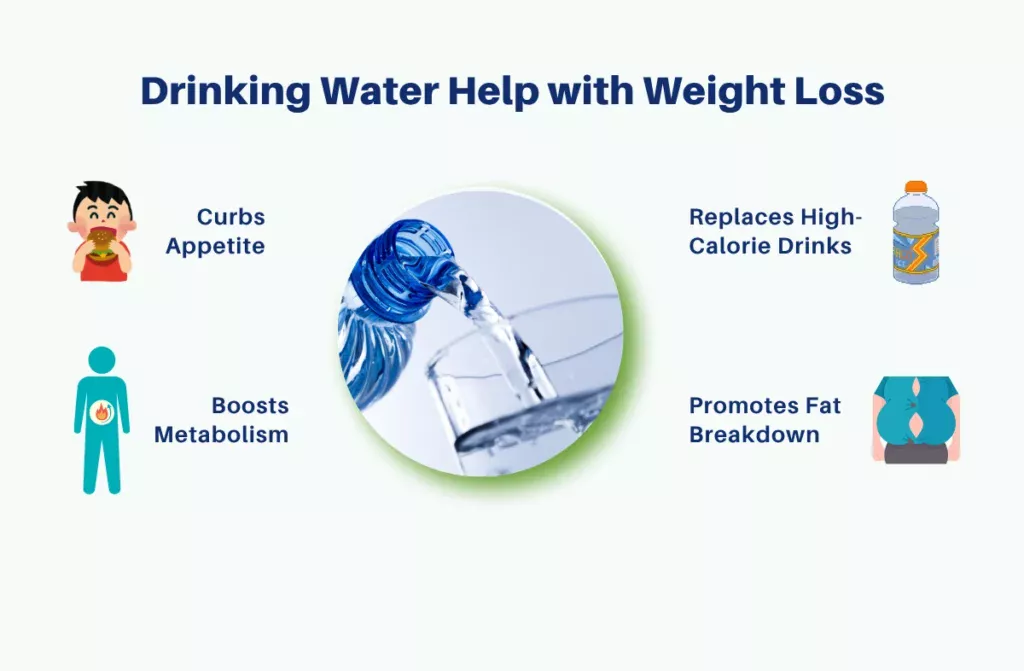
Knowing your number is step one. Hitting it daily is step two. Try these hydration tips:
- Carrying a water bottle habit: A 1L bottle you refill 2–3x is easier than counting 8 glasses.
- Setting reminders: Use phone alarms or apps until it’s automatic. Link it to habits: drink after every bathroom break.
- Drinking water before meals: 1 glass 30 min before eating aids digestion and prevents mistaking thirst for hunger.
- Adding natural flavor to water: Lemon, cucumber, mint, or berries make it less boring without sugar.
- Start early: Drink 500ml within 30 min of waking. You’re dehydrated from sleeping.
- Monitor urine: Aim for pale yellow by midday. It’s the best real-time hydration calculator.
- Eat your water: Add a side of high-water fruits or veggies to each meal.
FAQ: People Also Ask About Daily Water Intake
How much water should I drink daily in liters?
Most adult women need about 2.7 liters of total fluids, and men need 3.7 liters per day, according to the National Academies. That includes water from food and other drinks. A personalized estimate is 30–35 ml per kg of body weight.
Do tea and coffee count as water intake?
Yes. Coffee, tea, and other non-alcoholic beverages contribute to your total daily fluid intake. Caffeine has a mild diuretic effect, but you still retain most of the fluid.
Is 2 liters of water enough per day?
For many adults, 2 liters of drinking water is a solid goal, especially since you get ∼20% of fluids from food. If you weigh over 60 kg, are active, or live in a hot climate, you’ll likely need more than 2 liters of total fluids.
What happens if I drink less water?
Early signs include dark urine, fatigue, headache, dry skin, dizziness, and constipation. Chronic low water intake can affect kidney function, physical performance, and cognition.
When is the best time to drink water?
Spread it out. Best times: first thing in the morning, 30 min before meals, before/during/after exercise, and when you’re in heat. Avoid chugging huge amounts right before bed to prevent sleep interruptions.
Conclusion: Hydration = Energy + Life Quality
Your daily water intake isn’t a fixed rule. It’s a baseline plus adjustments for your body, weather, and activity. Use the 30–35 ml/kg formula, check your urine color, and increase fluids when you sweat, are sick, or pregnant. Consistency beats perfection. Build water drinking habits into your routine: morning glass, bottle on your desk, sip during workouts. Small shifts in hydration deliver big changes in energy, focus, skin, and recovery.
Start today. Fill a bottle now and track how you feel this week when you actually meet your daily hydration needs.