


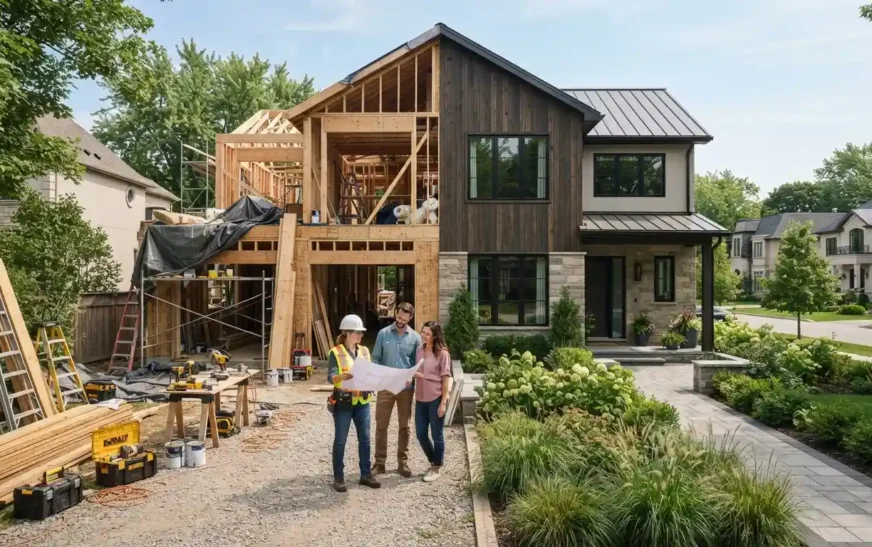
A few months ago, a friend of mine tore out her kitchen, expecting to spend $15,000. She ended up closer to $34,000, and not because anyone tried to overcharge her. Between an outdated electrical panel that needed upgrading, a supply delay on custom cabinets, and “while we’re at it” upgrades she couldn’t resist once the walls were open, the number crept up week by week. If you’re about to start a renovation of your own, that story probably sounds familiar, or at least like something you’re hoping to avoid.
Home renovation costs in 2026 sit noticeably higher than they did even two or three years ago. Labor is harder to book, certain materials still carry pandemic-era price memory, and building codes in many cities have gotten stricter. None of that means renovating isn’t worth it, it just means going in with real numbers matters more than ever.
This guide breaks down the average home renovation cost in 2026, what it costs per square foot, what each room typically runs, and how to budget so your project doesn’t become the next cautionary tale. Whether you’re updating a single bathroom or planning a whole house renovation, you’ll leave with a realistic sense of what to expect and where you can trim costs without cutting corners on quality.
Table of Contents
What Determines Home Renovation Cost in 2026
Before getting into numbers, it helps to understand why two homes of similar size can have wildly different renovation bills. The final cost of any project comes down to a handful of variables that either stack up or work in your favour.
- Scope of work: A cosmetic refresh (paint, flooring, fixtures) costs far less than a structural remodel involving new plumbing, wiring, or wall removal.
- Materials and finish level: Laminate countertops and quartz countertops can differ by $100 or more per square foot for the same footprint.
- Labour availability: Skilled trades like electricians and plumbers remain in short supply in many regions, which keeps hourly rates elevated.
- Home size and layout: Larger homes cost more overall but often less per square foot, since fixed costs like permits and design fees get spread out.
- Permits and code compliance: Older homes frequently need electrical panel upgrades or structural reinforcement to meet current code, adding cost that isn’t always visible in the initial estimate.
- Location: Urban markets typically run 20 to 40 percent higher than suburban or rural areas because of labour rates, permit fees, and material transport costs.
Keep these six factors in mind as you read through the numbers below; they explain why every “average” comes with such a wide range.
Average Home Renovation Cost in 2026
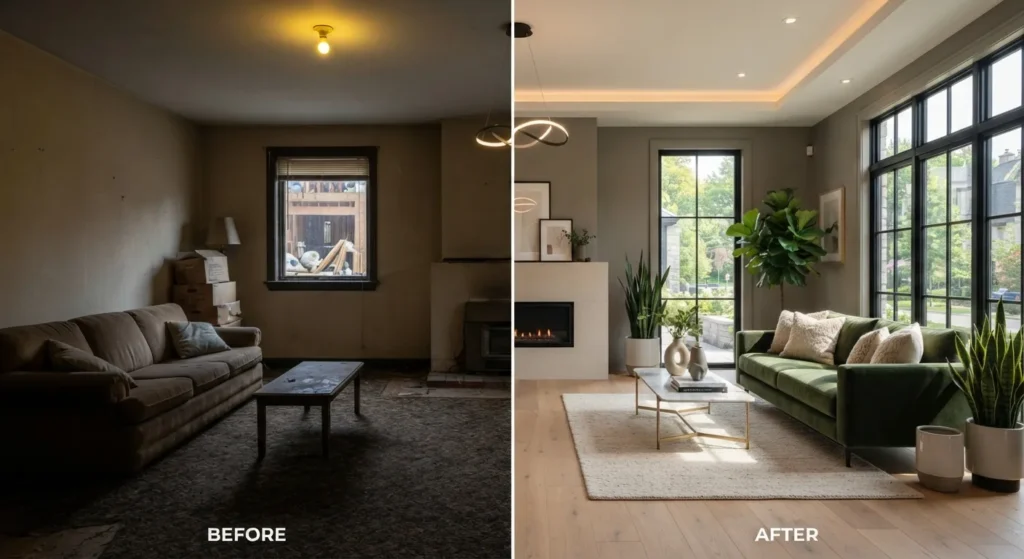
For a full house renovation, most homeowners in the 1,250 to 1,600 square foot range are spending somewhere between roughly $20,000 and $90,000, with the typical project landing near $50,000 to $55,000. That figure covers moderate updates across several rooms rather than a single room refresh.
Zoom out to a full remodel involving structural changes, an expanded footprint, or high-end finishes throughout, and the range widens considerably, often landing between $100,000 and $350,000, with luxury renovations climbing well past that. On the other end, a single-room refresh, think new flooring and paint in a bedroom, can come in under $3,000.
The honest takeaway is that “average home renovation cost” isn’t one number. It’s a spectrum shaped by how many rooms you’re touching, how deep the work goes, and what finishes you choose. A useful planning approach is to price your project room by room and add a contingency, rather than anchoring to a single national average that may not reflect your scope.
Home Renovation Cost Per Square Foot
Cost per square foot is one of the fastest ways to sanity-check a contractor’s quote, as long as you understand its limits. A $60,000 kitchen remodel in a 200-square-foot kitchen works out to $300 per square foot. That same $60,000 spread across painting and flooring in a 3,000-square-foot home comes out to just $20 per square foot. Same budget, completely different scope, so use this metric as a planning tool rather than a strict quote.
Renovation Type | Cost Per Square Foot |
Basic cosmetic refresh (paint, fixtures, flooring) | $15 – $50 |
Mid-range whole house renovation | $50 – $150 |
High-end renovation with structural changes | $150 – $300 |
Luxury full remodel, custom finishes | $250 – $600+ |
Wet rooms like kitchens and bathrooms sit at the higher end of any per-square-foot range because of plumbing, ventilation, and waterproofing requirements. Bedrooms and living rooms, which rarely touch plumbing, stay closer to the lower end.
Room-by-Room Renovation Costs
Breaking your project down room by room is the most reliable way to build an accurate budget, since a whole-house average can hide how differently each space actually costs.
Kitchen Renovation Cost
Kitchens remain the most expensive room to renovate because they combine plumbing, electrical, cabinetry, and countertops in one space. In 2026, a full kitchen remodel typically runs $14,500 to $40,500, with high-end projects using custom cabinetry and stone surfaces reaching $80,000 or more. A minor refresh, new countertops, backsplash, and hardware, can be done for $8,000 to $15,000.
Bathroom Renovation Cost
A complete bathroom renovation generally falls between $12,000 and $25,000 for a standard full bath. Half-baths or powder rooms are far more affordable, often $5,000 to $10,000, since there’s no tub or shower to work around. Bathrooms consistently return a strong share of their cost at resale, which is part of why they’re such a popular starting point for renovations.
Living Room Renovation Cost
Living rooms are one of the more budget-friendly spaces to update since they typically skip plumbing altogether. A full living room remodel, new flooring, paint, lighting, and trim, runs $4,000 to $10,000. A lighter refresh with paint and updated furnishings can be done for $2,500 to $5,000.
Bedroom Renovation Cost
Bedrooms are the most affordable rooms to renovate, typically $1,500 to $5,500 depending on size. Basic updates like paint, new flooring, and lighting sit at the lower end, while adding built-in closets or custom millwork pushes costs toward the top of that range.
Whole House Renovation Cost
A full-home renovation touching every major room typically ranges from $20,000 on the light end to $150,000 or more for a comprehensive remodel, and can exceed $350,000 for large homes with premium finishes throughout. A complete gut-to-the-studs remodel, where walls, plumbing, and wiring are all redone, often runs $100,000 to $200,000 or more.
Whole House Renovation Cost Breakdown
If you’re planning a whole house renovation, it helps to see roughly how a typical budget splits across categories. These percentages will shift depending on your home’s condition and priorities, but they’re a reasonable starting point for planning.
- Kitchen: 25 to 35 percent of total budget
- Bathrooms: 15 to 20 percent
- Flooring throughout the home: 10 to 15 percent
- Painting and finishes: 5 to 10 percent
- Electrical and plumbing upgrades: 10 to 20 percent
- Permits, design fees, and contingency: 10 to 15 percent
That last line item, contingency, is the one homeowners skip most often and regret skipping most often. Set aside 15 to 20 percent of your total budget for surprises. Older homes in particular tend to reveal issues, outdated wiring, hidden water damage, insufficient insulation, once walls and flooring come up.
Regional Cost Differences (US, UK, Canada, Australia)
Renovation costs vary meaningfully by country and even by city within the same country, largely due to labour rates, material availability, and local permitting rules.
- United States: National averages generally range from $50,000 to $55,000 for a moderate whole-house project, with major metros like New York, San Francisco, and Los Angeles running 30 to 50 percent above that baseline.
- United Kingdom: A full house renovation in the UK commonly falls between £30,000 and £70,000, with London projects trending significantly higher due to labour and space constraints.
- Canada: Whole-home renovations typically range from CAD $40,000 to CAD $100,000, with Toronto and Vancouver at the higher end because of both labour costs and stricter permitting timelines.
- Australia: Renovation costs commonly sit between AUD $40,000 and AUD $120,000 for a full home update, with Sydney and Melbourne markets pushing toward the top of that range.
Wherever you’re located, get at least three local quotes before finalizing a budget. National averages are a useful starting point, but local labour markets ultimately set your real number.
How to Budget for a Home Renovation
A renovation budget that actually holds up needs more structure than “I have $40,000, let’s see how far it goes.” Here’s a simple framework that works whether you’re renovating one room or an entire house.
- Start with your must-haves: List the rooms and repairs you actually need to address, separate from nice-to-have upgrades.
- Get three quotes minimum: Contractor pricing can vary by thousands for identical scope, so comparison shopping is not optional.
- Build in a 15 to 20 percent contingency: Older homes especially tend to surface hidden issues once work begins.
- Separate structural work from cosmetic work: Structural and mechanical items (wiring, plumbing, foundation) should never be the place you cut costs.
- Sequence your spending: If your budget is tight, tackle wet rooms (kitchen, bathrooms) first since they carry the highest ROI and the most disruption if left for later.
- Track spending weekly: Renovations rarely go over budget in one dramatic moment, it’s usually a string of small decisions that each add a few hundred dollars.
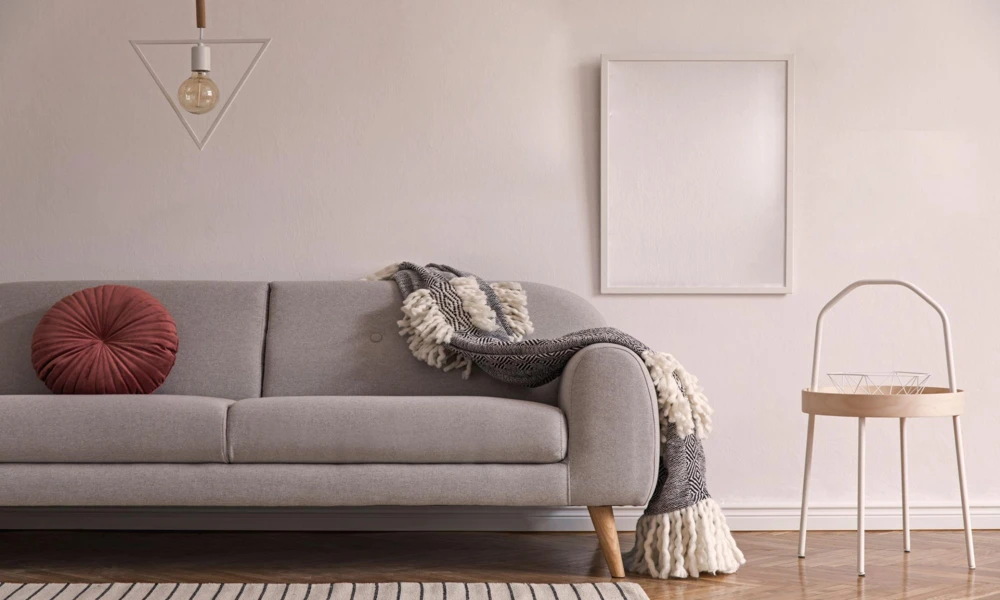
Modern Living Room Decor Ideas Worth Budgeting For
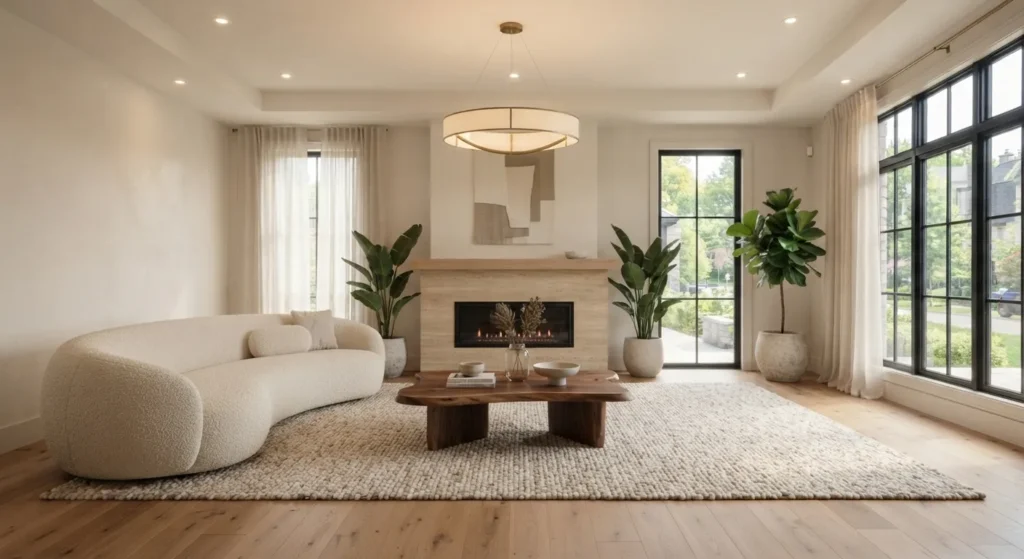
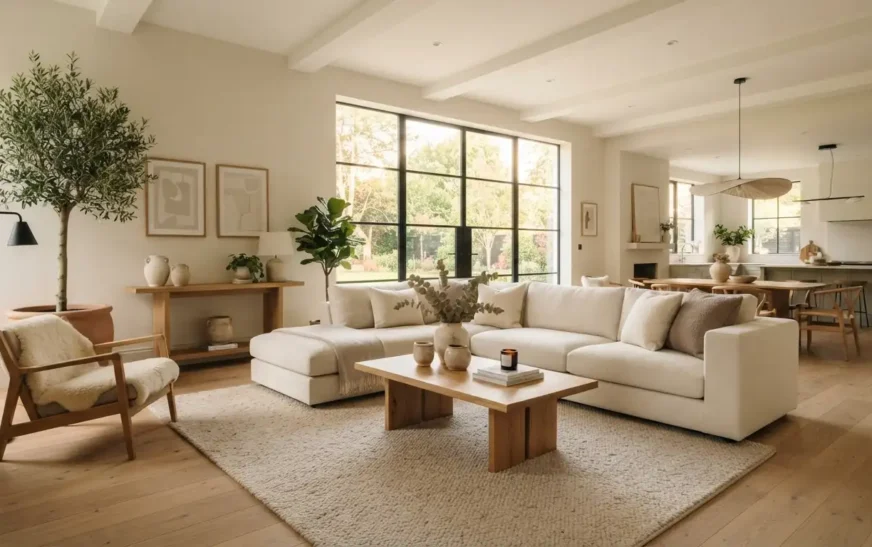
If your renovation includes the living room, it’s worth allocating part of your budget toward decor choices that will actually hold up in style over the next several years, rather than trend pieces you’ll want to replace by 2028.
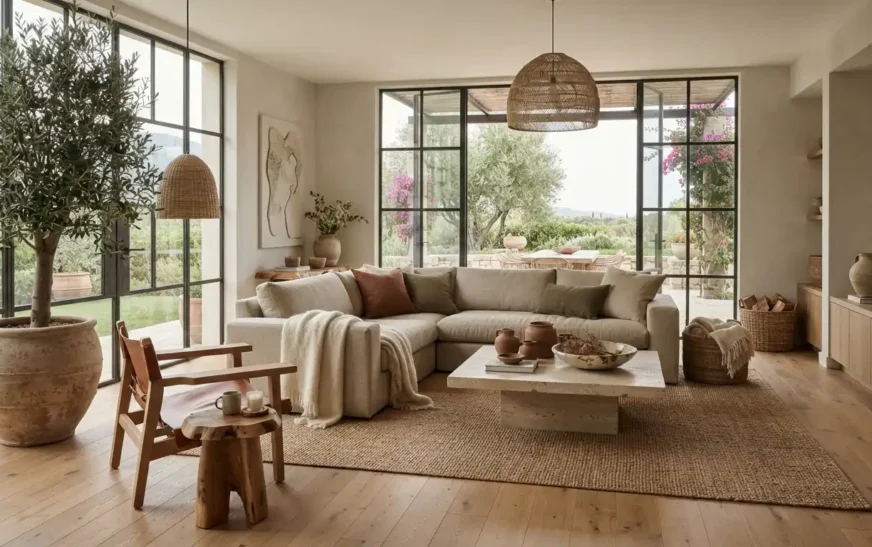
- Warm, earthy neutrals: Terracotta, olive, and warm greige tones are replacing the stark all-white palettes of the past decade.
- Layered lighting: A mix of overhead, floor, and table lighting reads far more polished than a single ceiling fixture, and it’s an affordable upgrade.
- Natural materials: Rattan, boucle, and solid wood furniture continue to dominate modern living room decor because they age well and pair with almost any color scheme.
- Statement rugs: A well-chosen rug can visually anchor a room and is one of the most cost-effective ways to elevate a space without a full remodel.
- Curved furniture silhouettes: Sofas and coffee tables with soft, rounded edges are replacing sharp, boxy shapes in modern living room design.
Even a modest $2,000 to $3,000 living room refresh, paint, lighting, a rug, and a few key furniture swaps, can dramatically change how a space feels without touching structural work.
Smart Ways to Save Money on Your Renovation
Cutting costs doesn’t have to mean cutting quality. These are the strategies that tend to save the most money without compromising the final result.
- Keep the existing layout: Moving plumbing or load-bearing walls adds thousands compared to keeping fixtures in their current locations.
- Mix splurge and save materials: Spend on high-visibility, high-touch surfaces like countertops, and save on items like closet interiors or a secondary bathroom.
- Do the demolition yourself: Tear-out labor is one of the easiest tasks to DIY safely, and it can shave a meaningful amount off a contractor’s quote.
- Buy your own fixtures and materials: Contractors often mark up materials 10 to 20 percent when they source them; buying directly can offset that.
- Time your renovation for off-peak season: Contractors are often more flexible on pricing in late fall and winter when demand slows down.
- Refinish instead of replace: Cabinet refacing, tub reglazing, and floor refinishing can deliver 80 percent of the visual impact at a fraction of full replacement cost.
Frequently Asked Questions
What is the average home renovation cost in 2026?
For a whole-house renovation in a 1,250 to 1,600 square foot home, most homeowners spend between $20,000 and $90,000, with a typical project landing around $50,000 to $55,000. Single-room updates and full luxury remodels fall well outside this range in either direction.
How much does it cost to renovate a house per square foot?
Renovation cost per square foot in 2026 typically ranges from $15 for basic cosmetic updates to $150 for a mid-range whole-house remodel, and can exceed $300 per square foot for luxury projects with structural changes and premium finishes.
Is it cheaper to renovate room by room or all at once?
Renovating all at once is usually more cost-efficient overall since you avoid repeat contractor mobilization fees and can negotiate bundled material pricing. However, room-by-room renovation spreads out the financial impact, which works better for homeowners without a large lump sum available upfront.
What renovation adds the most value to a home?
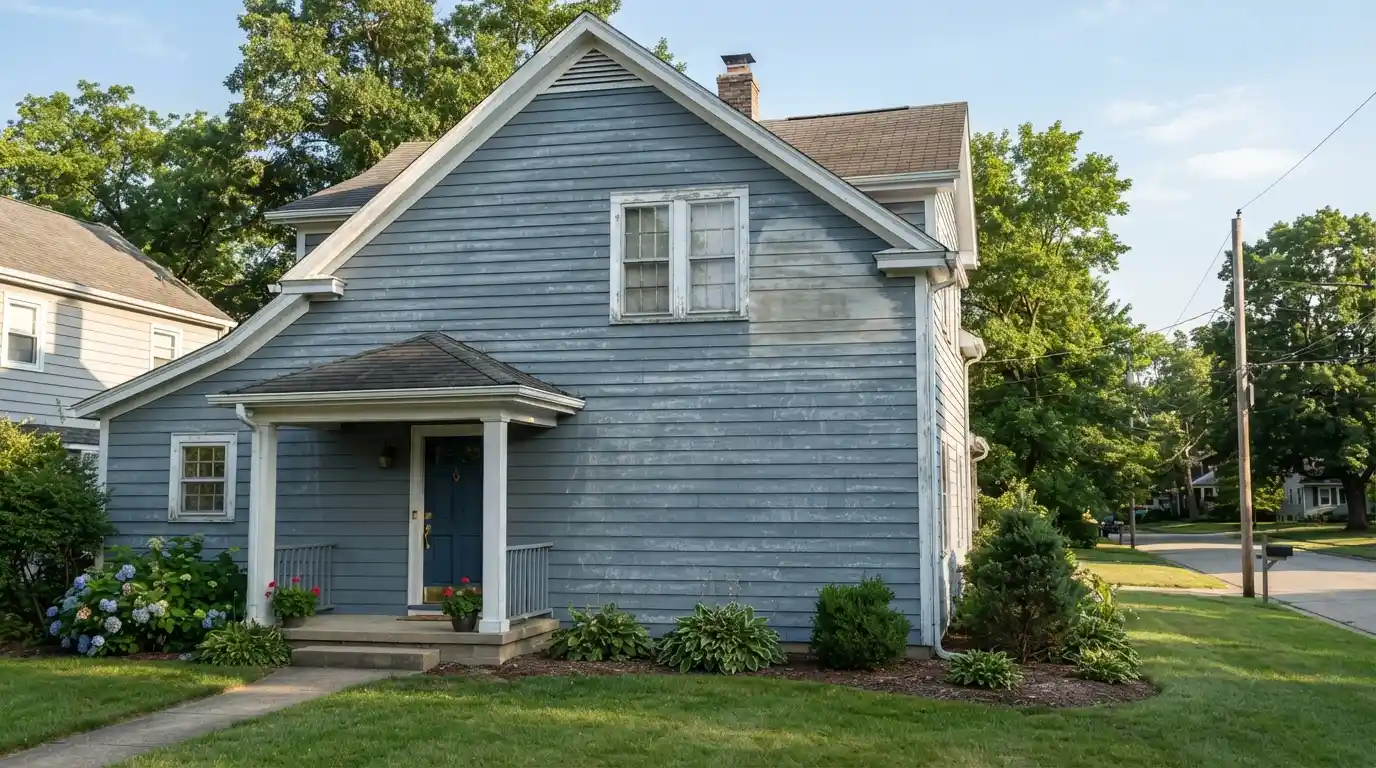
Bathroom and kitchen renovations tend to deliver the strongest return, along with exterior updates like siding, painting, and landscaping, which are comparatively inexpensive but have a noticeable effect on curb appeal and perceived home value.
How much should I budget for unexpected renovation costs?
Set aside 15 to 20 percent of your total renovation budget as a contingency fund. Older homes in particular tend to reveal hidden issues, like outdated wiring or water damage, once walls and flooring are opened up.
Conclusion
Home renovation costs in 2026 have a real range built into them, and that’s not a bad thing once you understand why. A single bathroom refresh and a full-home remodel are two entirely different financial commitments, and the only way to plan well is to price your own project room by room rather than anchoring to one national average.
Start with a clear list of must-haves, get multiple local quotes, build in a genuine contingency fund, and resist the urge to upgrade scope once the walls are open. Do that, and your renovation is far more likely to land near your original budget instead of becoming the story you tell people afterward the way my friend tells hers.








1 Comment
[…] full design styles, a handful of home decor trends are showing up across almost every aesthetic this […]