


Paint is doing more than making your house look nice. It is the thin, unglamorous layer standing between your siding, trim, and drywall and everything the weather throws at them. When that layer starts to fail, it usually fails quietly at first, a little chalk on your hand, a hairline crack near a window, a patch that looks slightly duller than the rest of the wall. By the time it is obvious, you are often looking at a bigger repair bill than a simple repaint would have cost.
Here are the signs worth paying attention to, both outside and inside your home, and what each one is actually telling you.
1. The Color Has Faded or Gone Chalky
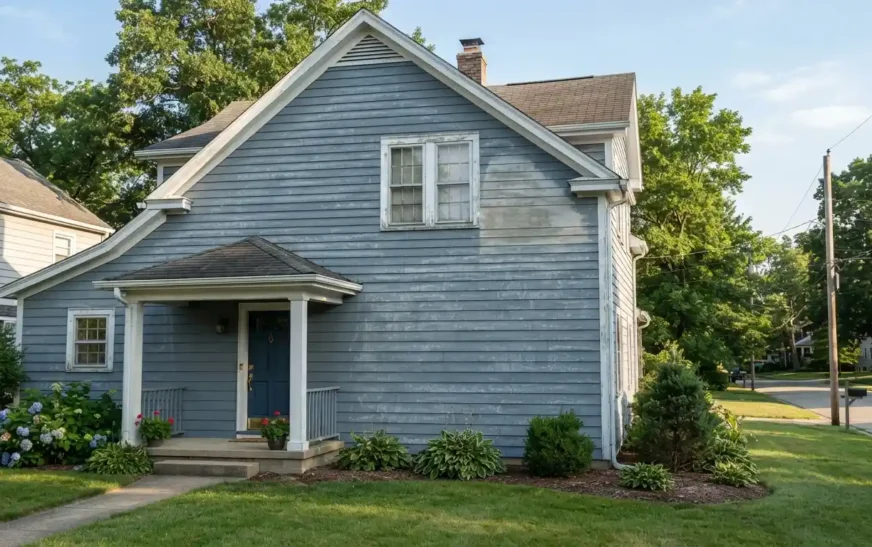
Sunlight breaks down the pigments and binders in exterior paint over time, especially on walls that face south or west. If your once-rich blue now reads as a washed-out grey-blue, or if you run your hand along the siding and it comes away with a fine powdery residue, that is chalking. It means the paint’s protective resin has worn thin and moisture can start working its way underneath.
2. Peeling, Cracking, or Bubbling Paint
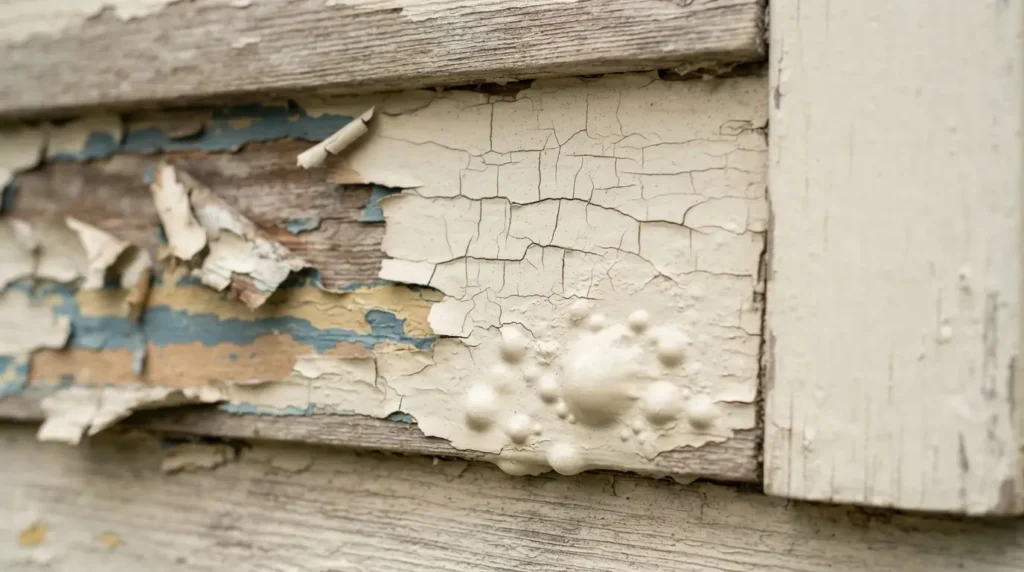
This is the one nobody misses. Peeling and cracking usually mean moisture is getting trapped behind the paint film, either from humidity, a leak, or paint that was applied over a damp or dirty surface to begin with. Bubbles are an early warning sign of the same problem, the paint is losing its grip on the surface underneath.
- Alligatoring: a web of small cracks that looks like reptile skin, usually from age or too many old coats.
- Flaking: small chips coming off in patches, common on wood trim exposed to rain.
- Bubbling: raised pockets that pop when pressed, a sign of trapped moisture.
3. Visible Cracks in Stucco, Siding, or Trim
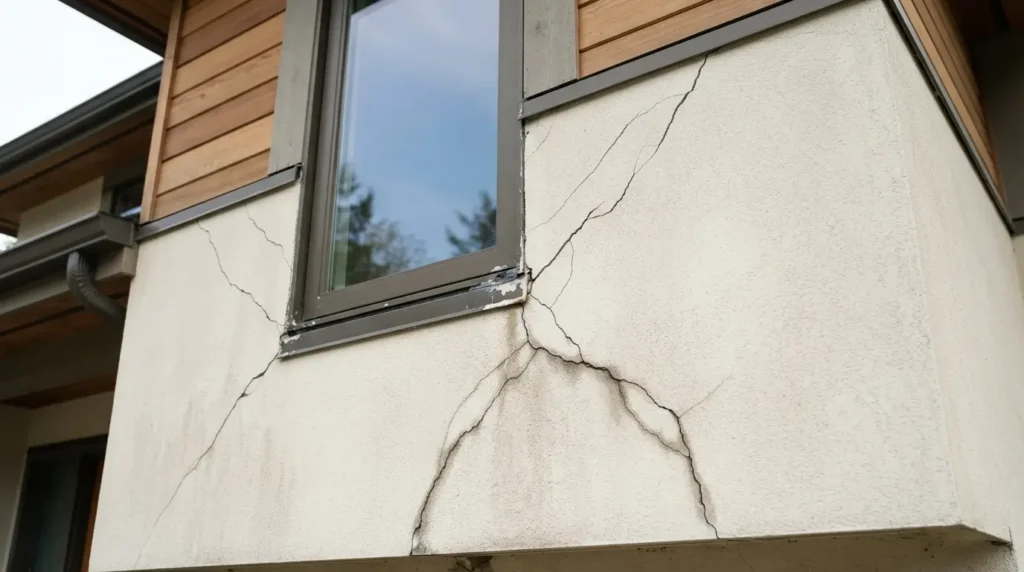
Small cracks in exterior surfaces are not just cosmetic. Once a crack breaks through the paint layer, it opens a direct path for rain and humidity to reach the material underneath, whether that is wood, stucco, or fiber cement. Left alone through a few freeze-thaw cycles, a hairline crack can widen into a real structural repair.
4. Mold, Mildew, or Moss Growing on the Walls
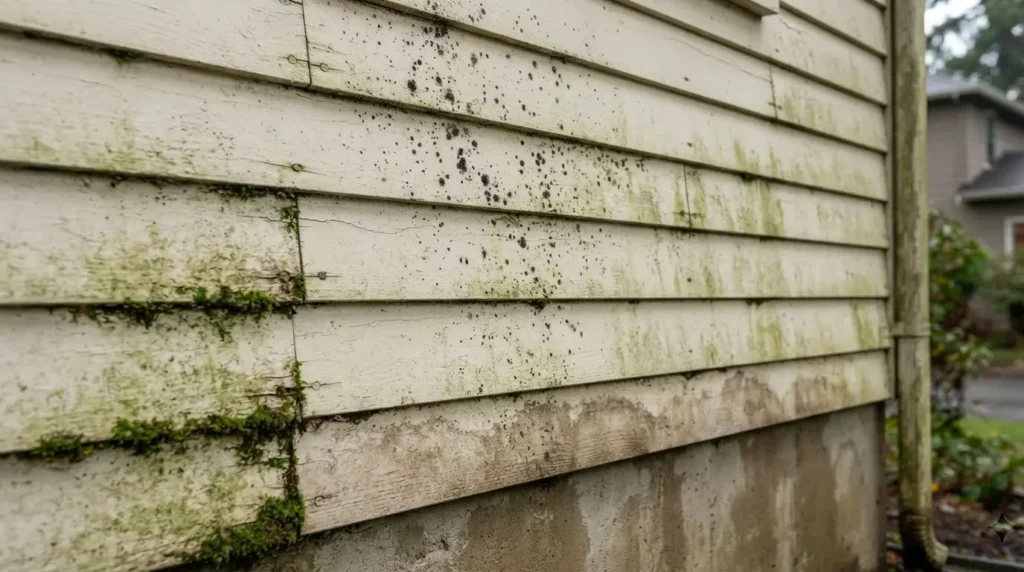
Dark speckled patches, greenish streaks, or a musty smell near an exterior wall usually point to mildew feeding on a paint film that has lost its protective quality. Older paints, especially in shaded or damp corners of the house, are more prone to this. Modern exterior paints include mildewcides specifically to resist it, so persistent growth is a sign the current coat has aged out.
5. Caulk Around Windows and Doors Is Cracked or Missing
Caulking is the seal that keeps water from getting behind your trim, and it usually wears out before paint does. If you notice gaps, dried-out caulk lines, or daylight peeking through around a window frame, water is likely already getting in, even if the paint nearby still looks fine.
6. Wood Trim Feels Soft or Looks Warped
Press a screwdriver gently into exterior wood trim, window sills, or fascia boards. If it sinks in easily or the wood feels spongy, moisture has been getting through the paint for a while. Warping, splitting, or a slightly swollen look along seams are also signs the wood underneath is no longer protected.
7. Rust Stains Around Nail Heads or Metal Fixtures
Small orange-brown streaks running down from nails, screws, or metal fixtures happen when the paint covering them has worn thin enough for moisture to reach the metal. It is a small detail, but it usually means the surrounding paint film is thinner than it should be too.
8. Stains, Streaks, or Watermarks on the Exterior
Dark streaks running down from the roofline, or blotchy watermarks near gutters and downspouts, are often a sign that paint is no longer shedding water the way it should. Combined with any of the other signs above, this points to a coating that has reached the end of its useful life.
9. The House Looks Noticeably Duller Than the Neighbors
This one is subjective, but it is a useful gut check. Stand across the street and look at your house next to others on the block. If yours reads as flat, tired, or a shade off from how you remember it, that visual dullness is the paint’s UV protection breaking down, even before any physical damage shows up.
10. It Is Hard to Clean, Even With a Gentle Wash
Healthy exterior paint should hold up to a rinse or a gentle scrub. If dirt and grime seem to be sinking into the surface rather than washing off, or if pressure washing leaves the wall looking patchy afterward, the paint’s protective sheen has likely worn away.
11. Nicotine, Water, or Grease Stains Won’t Cover With a Regular Wipe-Down
Inside the house, yellowing walls near kitchens, water rings on ceilings below bathrooms, or stubborn marks in high-traffic hallways are signs that a fresh coat, not just a cleaning, is what is actually needed. Stain-blocking primer under new paint solves this permanently; wiping it down every few months does not.
12. Interior Walls Show Scuffs, Nail Holes, and Patch Marks
A few years of daily life, furniture moves, kids, pets, picture frames, leaves visible texture on walls even after touch-ups. If your walls have more patches than original paint at this point, a full repaint gives a cleaner result than chasing individual marks.
13. Your Energy Bills Have Crept Up
This is easy to overlook, but aging, cracked exterior paint can let more air and moisture through siding and trim than most homeowners expect, making insulation work harder. It is rarely the main cause of a higher bill, but combined with visible wear elsewhere, it is worth factoring in.
14. It Has Been 7 to 10 Years Since the Last Exterior Paint Job
Most quality exterior paint jobs last somewhere between 7 and 10 years on wood siding, and up to 15 to 20 years on stucco or fiber cement, depending on climate and sun exposure. If you cannot remember the last time your house was painted and it has clearly been a while, that alone is worth an inspection, even without obvious damage yet.
15. You Are Getting Ready to Sell
Fresh paint is consistently one of the highest-return home improvements before listing a house. Even if none of the warning signs above apply yet, a repaint ahead of selling addresses first impressions directly, buyers judge a home’s condition within seconds of pulling up to the curb.
How Long Should Paint Actually Last?
As a general guide:
- Exterior wood siding: 7 to 10 years
- Stucco: 5 to 6 years
- Fiber cement siding: 10 to 15 years
- Aluminum siding: up to 20 years
- Interior walls (standard rooms): 5 to 10 years
- Interior high-traffic areas or kitchens: 3 to 5 years
Climate plays a big role too. Homes in areas with intense sun, coastal humidity, or harsh winters will typically see paint wear faster than these averages.
Frequently Asked Questions
What is the cheapest sign that repainting is overdue?
Chalking is usually the earliest and cheapest-to-fix sign. Caught at this stage, a wash and a fresh coat is often all that is needed, before cracking or wood damage sets in.
Can I just repaint over peeling paint?
No. Peeling paint needs to be scraped and the surface properly prepped first, otherwise the new coat will fail in the same spots within a year or two.
Does repainting increase home value?
Yes. Exterior repainting is consistently ranked among the improvements that return a high percentage of their cost at resale, largely because of its impact on curb appeal and buyer perception.
How do I know if it’s mold or just dirt?
Dab a small amount of diluted bleach on the spot. If it lightens noticeably within a few minutes, it is mold or mildew. Dirt will not react the same way.
The Bottom Line
None of these signs on their own mean disaster, but they are all your house’s way of asking for attention before a cosmetic issue becomes a structural one. A little chalking or a hairline crack is a painting job. Soft trim wood or long-term water staining can turn into a much bigger repair. Catching it early is really the whole game.