

Walk into any home this year and you’ll notice something different. Rooms feel calmer, more personal, and a little less like a showroom. That shift is exactly what’s driving interior design styles and trends 2026 forward homeowners want spaces that feel good to live in, not just spaces that photograph well.
Choosing a direction for your home can still feel overwhelming, though. Scroll through any design app and you’ll see warm minimalist living rooms next to lush biophilic sunrooms next to sleek Japandi bedrooms, and it’s not always clear which one actually fits your life. This guide breaks down the interior design styles worth knowing this year, the home decor trends shaping them, and a simple framework for picking a style that suits your home, budget, and daily routine. By the end, you’ll know exactly where to start.
Table of Contents
Why Interior Design Trends Matter in 2026
Trends aren’t just about what looks fashionable. They tell you where materials, technology, and lifestyles are heading, which matters if you’re planning a renovation or buying furniture that needs to last.
This year’s biggest shift is toward homes that support wellbeing. After years of maximalist accent walls and fast-furniture trends, people are investing in fewer, better pieces. Natural materials, softer lighting, and layouts that reduce clutter are showing up everywhere, from small apartments to full custom builds. Modern interior design in 2026 also leans heavily on flexibility rooms that can shift from home office to guest space to workout corner without a full redesign.
Understanding these shifts helps you make choices that won’t feel dated in two years, and it helps you avoid spending money on trends that never really suited your home in the first place.
How to Choose the Right Interior Design Style for Your Home
Before picking a style, it helps to answer a few honest questions about how you actually live.
- Start with your daily habits. Do you cook often, work from home, host guests regularly, or need a quiet retreat at the end of the day? A style should support your routine, not fight against it.
- Look at your home’s natural light and architecture. A dark, north-facing apartment will feel very different in a heavy, moody palette than a sun-filled bungalow. Older homes with molding and character often lean well into classic or organic styles, while newer builds with clean lines suit modern or minimalist approaches.
- Set a realistic budget. Some styles, like Scandinavian home decor, can be achieved affordably with paint, textiles, and secondhand furniture. Others, like a full biophilic renovation with custom millwork and living walls, cost significantly more.
- Think about longevity. Ask whether you’ll still like this look in five years, not just five months. Neutral bases with room for smaller trend-driven updates a new rug, fresh cushions, a gallery wall tend to age better than a fully trend-committed room.
- Test before you commit. Pin a small mood board, order a few paint samples, or live with one new piece of furniture for a few weeks before overhauling an entire room. It’s the cheapest way to avoid an expensive regret.
Top Interior Design Styles Dominating 2026
Here’s a closer look at the interior design styles getting the most attention this year, and who each one actually suits.
Warm Minimalist Interior
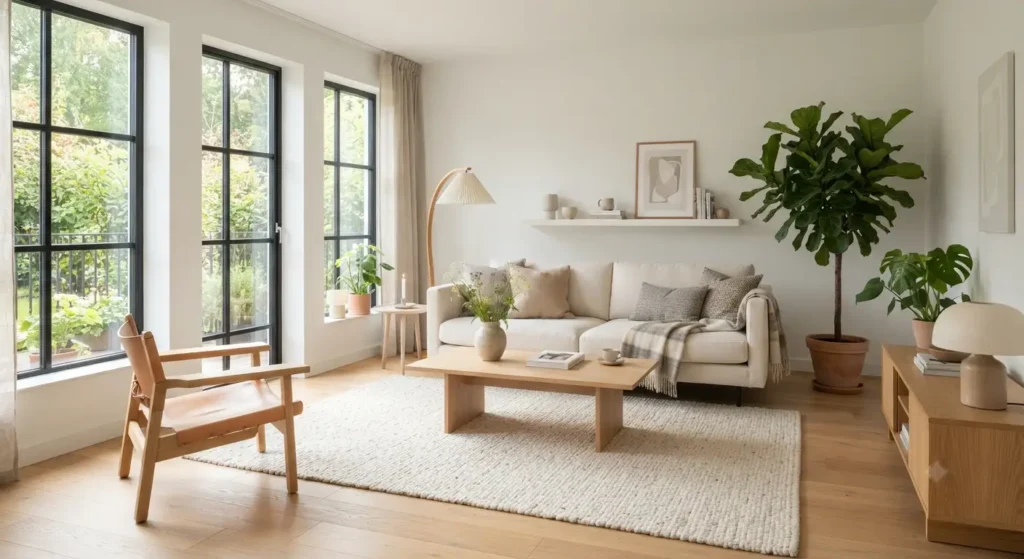
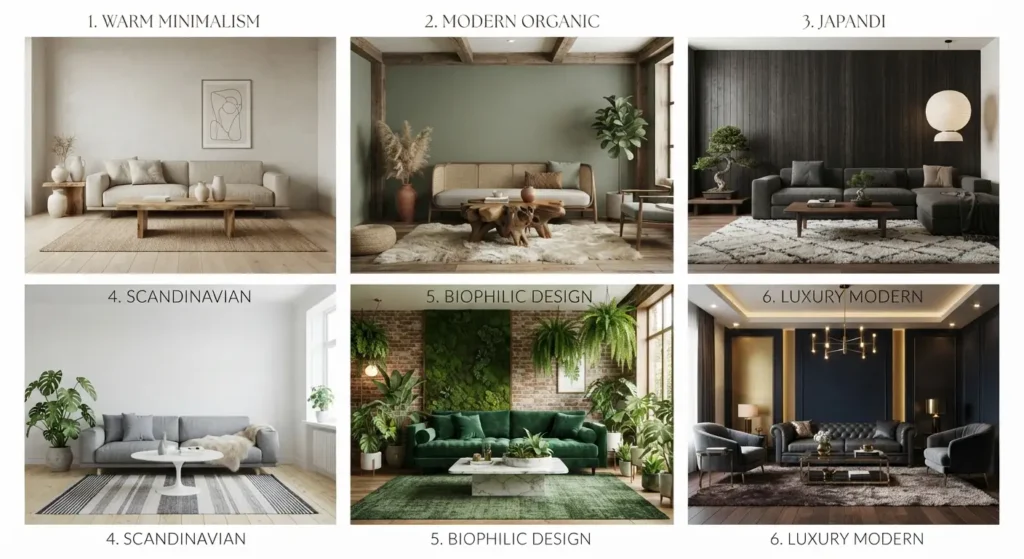
Warm minimalism takes the clean lines of traditional minimalism and adds texture, warmth, and personality back into the room. Instead of stark white walls, think soft plaster tones, curved furniture, and layered natural materials like linen, wood, and wool.
This style works well for people who want a calm, uncluttered home without it feeling cold or sterile. Keep surfaces clear, choose a muted color palette, and let a few well-chosen pieces like a statement lamp or a woven bench do the visual work.
Japandi Interior Design
Japandi blends Japanese minimalism with Scandinavian functionality, and it remains one of the most requested interior design styles for 2026. Expect low-profile furniture, natural wood tones, handmade ceramics, and a strong emphasis on negative space.
Japandi suits smaller homes particularly well because it prioritizes function and calm over decoration. A few carefully chosen items, thoughtful storage, and a restrained color palette of warm neutrals with the occasional black accent capture the look without overspending.
Modern Organic Interior
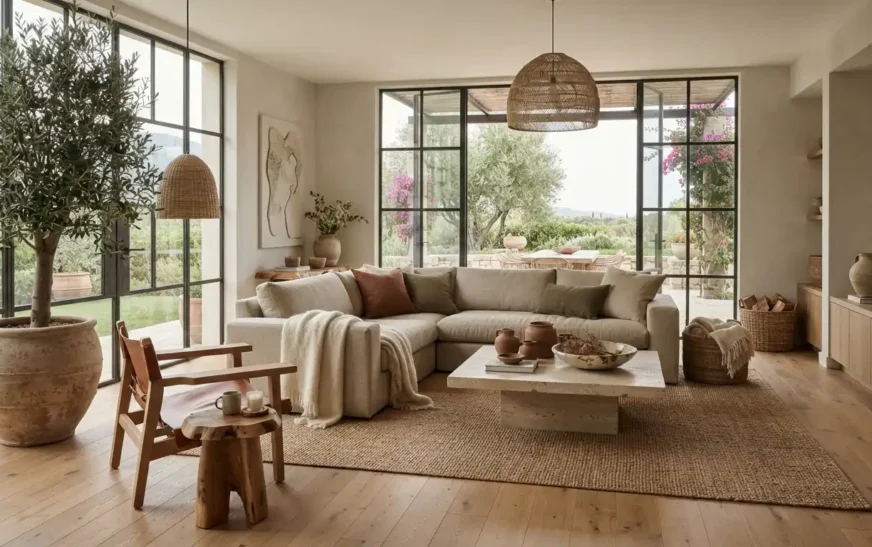
Modern organic interior design pairs contemporary shapes with raw, natural materials think curved sofas, stone side tables, rattan lighting, and plenty of unlacquered wood. It’s a softer alternative to industrial or ultra-modern looks.
This style is a strong choice for open-plan homes that need warmth without leaning traditional. Mixing textures is key: pair a smooth stone surface with a nubby boucle chair, or a rough wood beam with a soft linen sofa.
Scandinavian Home Decor
Scandinavian home decor has evolved from its all-white, catalog-style reputation into something richer. 2026 versions include deeper wood tones, muted greens and terracottas, and more sculptural furniture, while keeping the core values of function, light, and simplicity.
It remains one of the most beginner-friendly interior design styles because it’s forgiving, budget-friendly, and works in almost any climate or room size.
Biophilic Interior Design
Biophilic interior design centers on connecting the indoors with nature not just houseplants, but natural light, organic materials, water features, and layouts that draw the eye toward views of greenery. It’s grown from a niche wellness trend into a mainstream approach for 2026.
Even without a full renovation, you can bring biophilic elements into a home through larger window treatments that maximize light, a dedicated plant corner, natural fiber rugs, and furniture in raw wood or stone finishes.
Modern Interior Design (Tech-Integrated)
Modern interior design in 2026 increasingly blends clean aesthetics with smart-home integration hidden charging stations, app-controlled lighting, and furniture designed around hybrid work needs. The look stays sleek and uncluttered, but the function underneath is more connected than ever.
This style suits homeowners who want their space to look polished while quietly supporting a tech-heavy lifestyle.
Home Decor Trends Shaping 2026
Beyond full design styles, a handful of home decor trends are showing up across almost every aesthetic this year.
- Color palettes. Warm, earthy neutrals clay, sage, butter yellow, and soft terracotta are replacing the stark greige tones of recent years. Deep, moody colors like espresso brown and forest green are appearing as accent walls and cabinetry choices.
- Materials and textures. Unlacquered brass, honed stone, boucle, linen, and rattan continue to dominate. Homeowners are choosing tactile, natural-feeling materials over glossy, synthetic finishes.
- Furniture trends. Curved sofas, sculptural chairs, and multi-functional pieces (think storage ottomans and extendable dining tables) are especially popular as homes adapt to hybrid work and smaller footprints.
- Lighting trends. Layered lighting a mix of ambient, task, and accent lighting has replaced single overhead fixtures. Sculptural pendant lights and warm-toned bulbs are widely favored over cool, bright lighting.
- Sustainable decor. Secondhand and vintage furniture, refinishing over replacing, and buying fewer, higher-quality pieces are becoming standard practice rather than a niche choice.
Interior Design Ideas for Small Homes
Small spaces benefit the most from an intentional style, since every piece of furniture has to work harder.
- Choose multi-functional furniture, like a bench with hidden storage or a coffee table that expands into a dining surface.
- Keep a consistent, light color palette to help rooms feel larger and more connected.
- Use vertical space with tall shelving instead of wide furniture that eats up floor space.
- Stick to a smaller number of larger-scale pieces rather than many small ones, which can make a room feel cluttered.
- Mirrors placed opposite windows help bounce natural light around the room.
- Japandi and Scandinavian styles, in particular, translate very well to small homes and apartments because they’re built around simplicity and function.
Common Mistakes to Avoid When Choosing a Style
- Chasing every trend at once. Combining too many current trends curved furniture, a bold accent wall, biophilic greenery, and industrial lighting can make a room feel disjointed rather than intentional. Pick one or two trends to anchor a room and build around them.
- Ignoring scale and proportion. A style guide can’t account for your room’s actual dimensions. Oversized furniture in a small space (or tiny accents in a large room) will undercut even the best-chosen style.
- Skipping a cohesive color story. Jumping between unrelated color palettes from room to room breaks the flow of a home. Even if each room has its own personality, a shared undertone or accent color helps tie everything together.
- Overlooking lighting. Many homeowners choose furniture and paint first, then treat lighting as an afterthought. Since lighting affects how every material and color reads in a room, it should be planned alongside the rest of the design, not after.
- Buying based on trends instead of function. A striking piece that doesn’t fit your storage needs or daily habits usually ends up unused. Function should always come before aesthetics.
Style Comparison Table
Style | Best For | Budget Level | Key Materials |
Warm Minimalist | Homeowners wanting calm without feeling cold | Moderate | Plaster, linen, light wood |
Japandi | Small homes and apartments | Low to Moderate | Natural wood, ceramics, cotton |
Modern Organic | Open-plan or larger homes | Moderate to High | Stone, rattan, unlacquered wood |
Scandinavian | First-time decorators, budget-conscious homes | Low | Light wood, wool, cotton |
Biophilic | Homes with strong natural light | Moderate to High | Plants, natural fiber, stone, wood |
Modern (Tech-Integrated) | Hybrid workers, tech-forward households | Moderate to High | Engineered wood, metal, glass |
Expert Tips for Blending Styles
Very few real homes stick to a single style perfectly, and that’s fine. A few practical ways to blend styles without creating visual chaos:
- Pick one style as your “base” (roughly 70% of the room) and use a second style as an accent (about 30%).
- Keep a consistent color palette across both styles so the mix feels intentional rather than accidental.
- Let materials do the bridging. Wood tones, for example, can tie a Scandinavian sofa to a Japandi side table in the same room.
- Repeat at least one element a finish, a shape, or a color in every room so the whole home feels connected, even if each room leans toward a slightly different style.
Frequently Asked Questions
What is the most popular interior design style for 2026?
Warm minimalism and Japandi are the two most requested styles this year, largely because both balance a clean, uncluttered look with natural warmth rather than a cold, stark aesthetic.
How do I choose an interior design style if I like more than one?
Pick one style as your dominant base and treat the others as accents. Anchoring around 70% of a room in one style, with 30% pulled from a second, usually keeps the space cohesive.
Is Scandinavian design still popular in 2026?
Yes, though it has shifted toward deeper wood tones, muted colors, and more sculptural furniture rather than the all-white look it was known for a decade ago.
What is biophilic interior design?
Biophilic interior design focuses on connecting indoor spaces with nature through natural light, plants, organic materials, and layouts that emphasize views of the outdoors.
What interior design style works best for small apartments?
Japandi and Scandinavian styles tend to work best in small apartments because both prioritize function, light colors, and minimal clutter.
How much does it cost to redesign a room in a new style?
Costs vary widely depending on the style and scope, from a few hundred dollars for paint and textiles to several thousand for new furniture, lighting, and structural changes.
What colors are trending in home decor for 2026?
Warm, earthy neutrals like clay, sage, and butter yellow are trending, alongside deeper accent tones such as espresso brown and forest green.
Can I mix modern and traditional interior design styles?
Yes. Many 2026 homes blend clean modern lines with traditional or vintage pieces, using a shared color palette or material to keep the mix from feeling mismatched.
Do interior design trends apply to renters?
Most of them do. Paint (where allowed), furniture, textiles, lighting, and plants can bring almost any style into a rental without permanent changes.
How often do interior design trends change?
Broad style movements, like minimalism or Scandinavian design, tend to shift gradually over several years, while smaller trends like color palettes or furniture shapes can change annually.
Conclusion
Interior design styles and trends 2026 are pointing toward the same idea from different directions: homes that feel warm, intentional, and personal rather than picture-perfect for a moment and forgotten the next. Whether you’re drawn to the quiet balance of Japandi, the nature-forward calm of biophilic design, or a tech-savvy take on modern interior design, the best starting point is always your own daily life. Pick a style that supports how you actually live, test it in small ways before committing fully, and build from there one thoughtful piece at a time.