


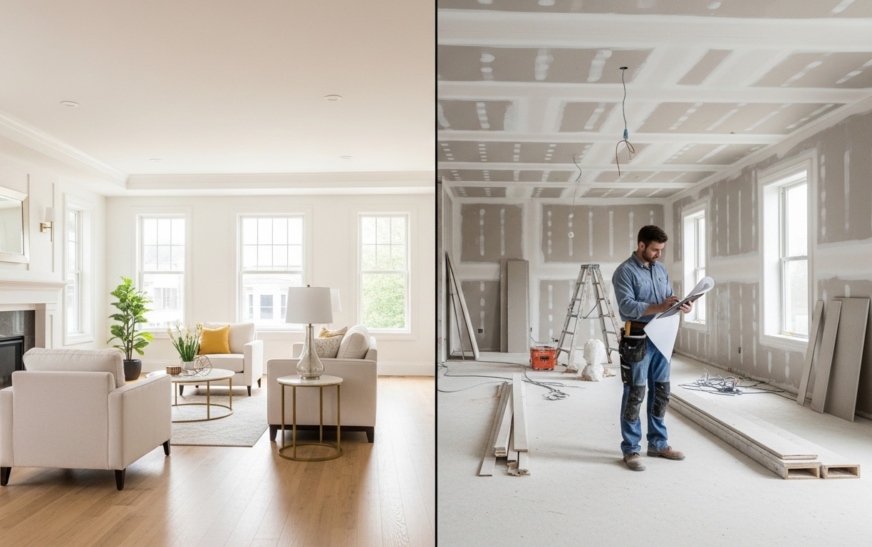
If you’ve ever Googled “how much does a home renovation cost,” you already know the problem: every answer is different, every number seems huge, and nothing tells you what you actually need to know as a beginner.
The truth? Home renovation costs vary enormously from a few hundred dollars for cosmetic touch-ups to well over $100,000 for a full gut renovation. But the numbers become a lot less scary once you understand what’s actually driving them.
This guide breaks down everything in plain English: average costs by room, what factors inflate your budget, how to plan without overspending, and the hidden costs most homeowners discover the hard way after the fact.
Whether you’re thinking about a kitchen refresh, a bathroom upgrade, or a whole-home transformation, you’ll finish this guide knowing exactly what to expect and how to plan for it.
What Is a Home Renovation? (And Why It Costs What It Does)
A home renovation is any improvement, repair, or upgrade to an existing residential property. That covers everything from slapping a fresh coat of paint on your kitchen cabinets to completely tearing down walls and rebuilding from scratch.
The reason renovation costs vary so dramatically comes down to four things:
- Labor: Skilled tradespeople plumbers, electricians, carpenters charge $45–$200 per hour depending on your location and their specialty. Labor typically accounts for 40–60% of your total renovation bill.
- Materials: Granite countertops cost dramatically more than laminate. Hardwood floors cost more than vinyl. Your material choices can double or triple a project’s cost overnight.
- Scope: Painting a room is not the same as moving a load-bearing wall. The more structural or technical the work, the higher the cost.
- Location: The same kitchen renovation that costs $35,000 in Atlanta can run $55,000 in San Francisco. Local labor rates drive most of this gap.
Keep these four factors in mind throughout this guide. They explain most of the variation you’ll see between quotes, regions, and types of projects.
How Much Does a Home Renovation Cost in 2026? (Quick Overview)
Here’s the short answer before we go deeper:
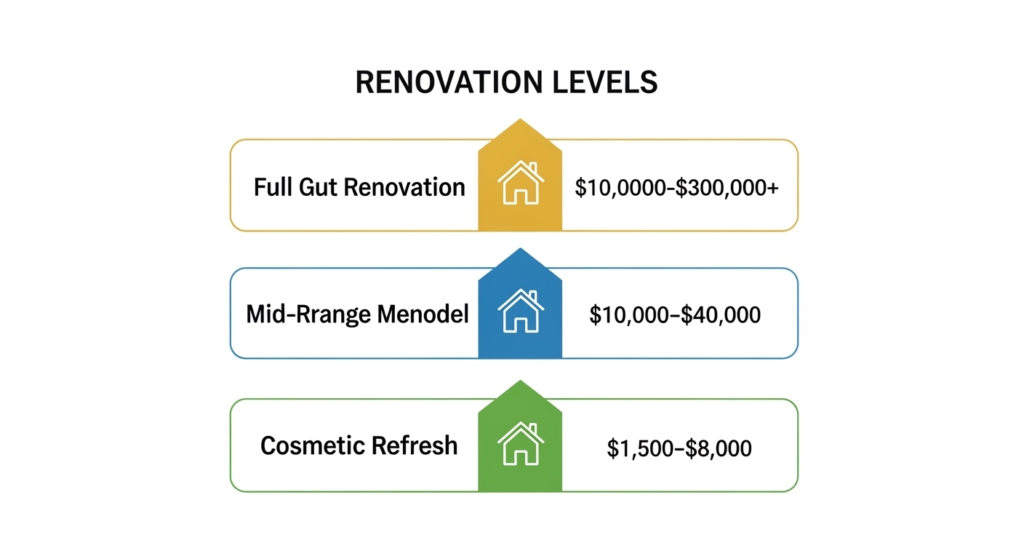
| Renovation Scope | Average Cost (2026) | Cost Per Sq. Ft. |
| Cosmetic refresh (single room) | $1,500–$8,000 | $15–$40 |
| Mid-range renovation (1–2 rooms) | $10,000–$40,000 | $40–$100 |
| Full home renovation | $40,000–$150,000 | $60–$150 |
| Complete gut renovation | $100,000–$300,000+ | $100–$400+ |
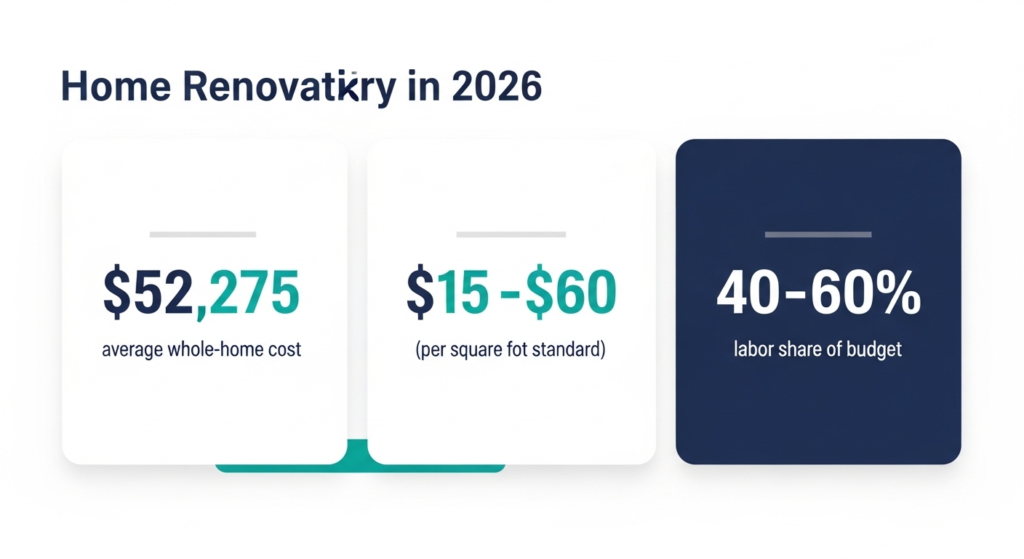
According to data from Angi, the average whole-home renovation for a 1,250–1,600 sq. ft. home costs around $52,275 in 2026, with most homeowners spending somewhere between $19,500 and $88,400.
But here’s what those averages don’t tell you: almost no homeowner lands exactly on the average. Your actual cost depends heavily on which rooms you’re touching, your location, how old your home is, and how many surprises are hiding behind your walls.
Let’s go room by room.
Home Renovation Cost by Room (2026 Breakdown)
The most practical way to estimate your renovation budget is to think room by room. Rooms with plumbing kitchens and bathrooms cost significantly more than “dry” rooms like bedrooms and living rooms. If you want to cut costs further, explore our home décor guide to learn how smart styling and design choices can upgrade your space without major renovation expenses. But For Renovation Costs Here’s what to expect in 2026.
Kitchen Renovation Cost
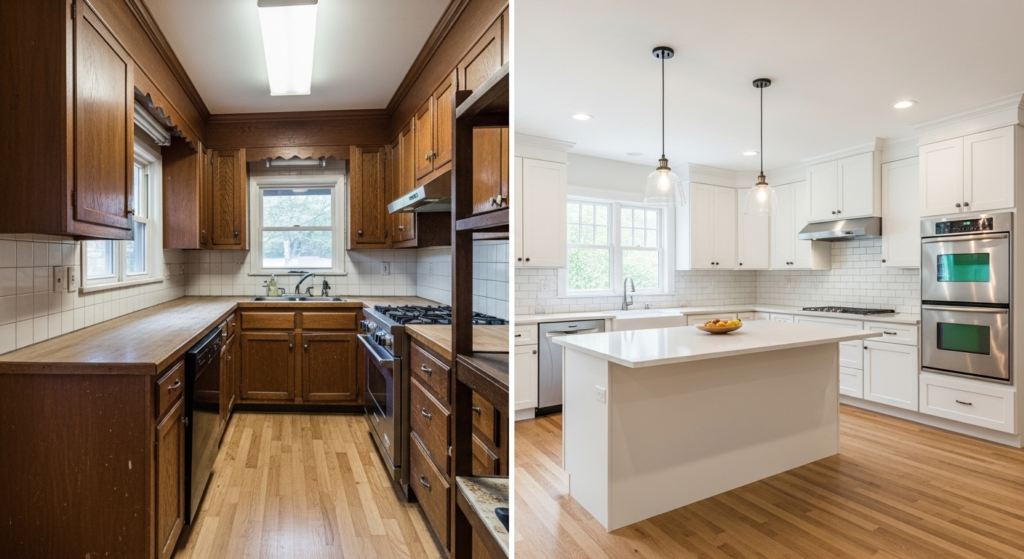
The kitchen is consistently the most expensive room to renovate and for good reason. It involves more trades than any other room: plumbing, electrical, cabinetry, countertops, flooring, and often structural changes if you’re opening up the space.
| Kitchen Renovation Type | Average Cost (2026) |
| Minor refresh (paint, hardware, fixtures) | $5,000–$15,000 |
| Mid-range remodel (new cabinets, counters, flooring) | $20,000–$45,000 |
| High-end full kitchen renovation | $50,000–$100,000+ |
Where the money goes in a kitchen:
- Cabinetry: $160–$1,000+ per linear foot (stock vs. custom)
- Countertops: $1,500–$5,500 installed (granite, quartz, marble)
- Cabinet painting or refacing: $900–$3,800 (budget-friendly alternative)
- Appliances: $2,000–$15,000 depending on brand and spec
- Labor: typically 40–50% of the total kitchen budget
Beginner tip: The highest ROI kitchen move is cabinet refacing, not full replacement. You get 80% of the visual impact at 30% of the cost. If your cabinet boxes are solid, don’t tear them out.
Bathroom Renovation Cost
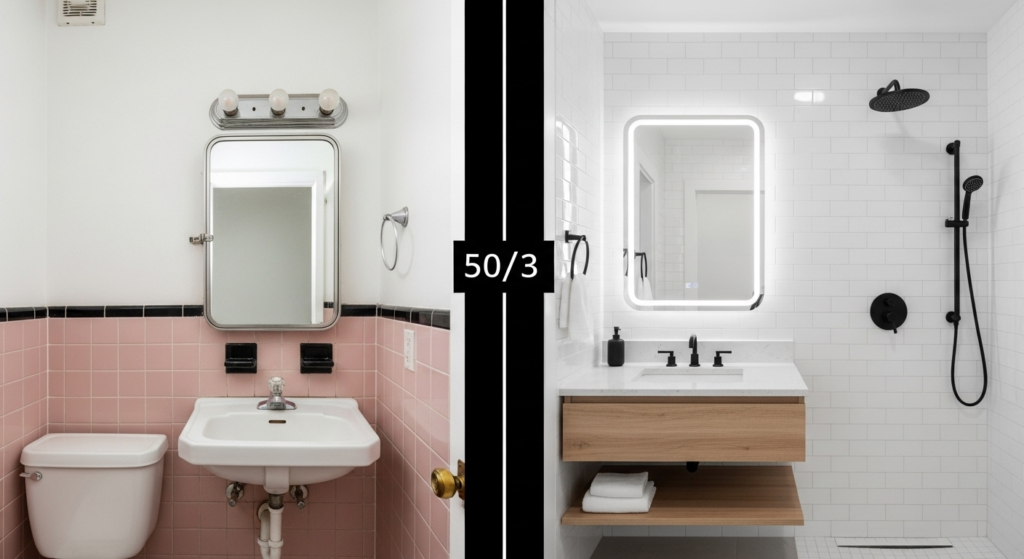
Bathrooms offer some of the best return on investment in home renovation, and they cost significantly less than kitchens but they’re still not cheap. Any room with plumbing carries a premium.
| Bathroom Renovation Type | Average Cost (2026) |
| Half bath / powder room update | $3,000–$8,000 |
| Full bathroom mid-range remodel | $10,000–$20,000 |
| Master bath high-end renovation | $25,000–$50,000+ |
Where the money goes in a bathroom:
- Tile (floor and shower): $10–$30 per sq. ft. installed
- Vanity and sink: $300–$3,000 depending on material and style
- Bathtub or shower unit: $500–$8,000
- Toilet: $150–$1,000
- Labor and plumbing: often 50%+ of the total bathroom budget
ROI note: A mid-range bathroom remodel averaging $25,000 typically recouped around 73.7% of its cost at resale, according to recent industry data one of the strongest returns of any renovation type.
Bedroom Renovation Cost
Bedrooms are among the most affordable rooms to renovate because they rarely involve plumbing, appliances, or complex mechanical systems. This makes them ideal first-renovation projects for beginners.
| Bedroom Renovation Type | Average Cost (2026) |
| Basic refresh (paint, flooring, fixtures) | $1,500–$5,000 |
| Mid-range update (hardwood, molding, lighting, windows) | $5,000–$12,000 |
| Full bedroom renovation with closet system | $10,000–$25,000 |
Beginner tip: A bedroom repaint plus new flooring is one of the highest-visual-impact, lowest-cost renovations you can do. Start here if you’re new to renovation planning.
Living Room Renovation Cost
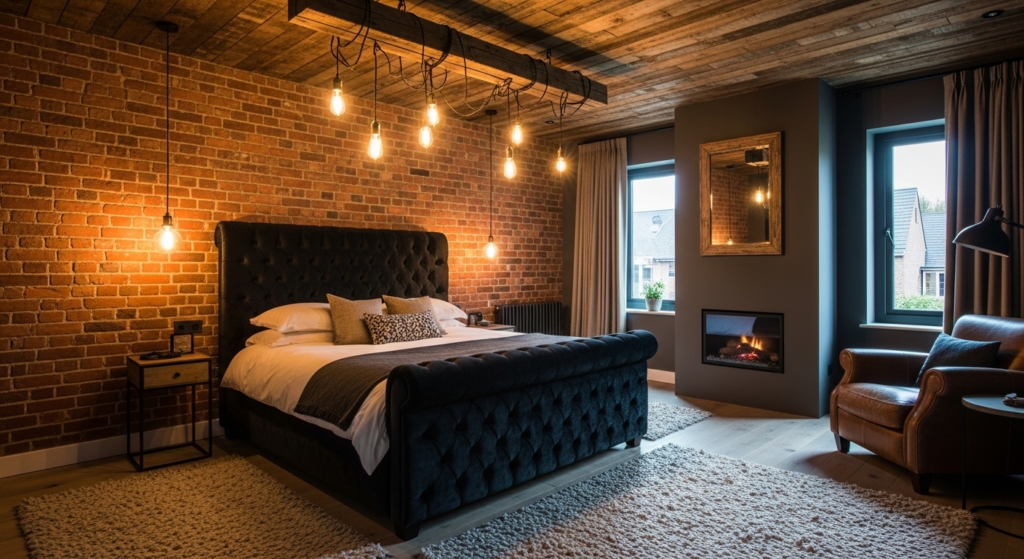
Like bedrooms, living rooms are dry rooms no plumbing which keeps costs significantly lower than kitchens or bathrooms. The main expenses are flooring, paint, lighting, and any structural changes like opening up a wall.
| Living Room Renovation Type | Average Cost (2026) |
| Cosmetic update (paint, curtains, lighting) | $1,500–$4,000 |
| Mid-range renovation (flooring, trim, fireplace) | $5,000–$12,000 |
| Full renovation (open floor plan, structural changes) | $15,000–$40,000+ |
Basement Renovation Cost
Finishing an unfinished basement is one of the most cost-effective ways to add usable square footage to your home and one of the projects with the strongest ROI.
| Basement Renovation Type | Average Cost (2026) |
| Basic finishing (drywall, flooring, lighting) | $10,000–$25,000 |
| Full basement remodel with bathroom | $25,000–$50,000 |
| Basement apartment or suite | $40,000–$75,000+ |
ROI note: Finished basements return approximately 70% of their cost at resale while adding immediate livable space making them one of the smartest investments for growing families.
Whole House Renovation Cost
| Home Size | Estimated Renovation Cost (2026) |
| 1,200 sq. ft. home | $18,000–$72,000 |
| 1,500 sq. ft. home | $22,500–$90,000 |
| 2,000 sq. ft. home | $28,000–$115,000 |
| 3,000 sq. ft. home | $45,000–$180,000+ |
These ranges assume mid-range finishes, standard materials, and no major structural changes. Luxury finishes, structural modifications, or older homes will push costs toward the higher end.
What Factors Affect Your Home Renovation Cost Most?
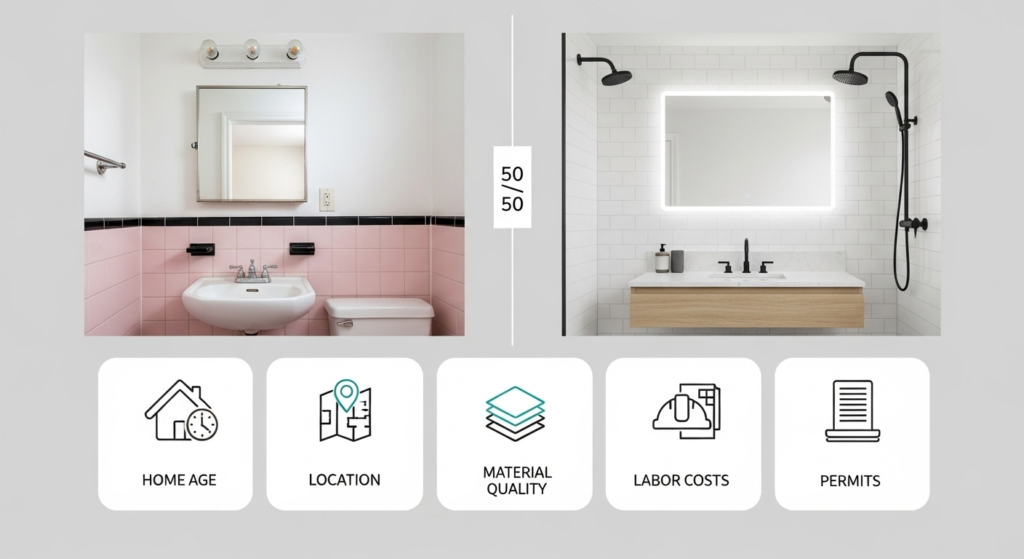
Understanding what drives renovation costs is the most valuable thing you can do before opening your wallet. Here are the six biggest variables:
1. Your Home’s Age
Older homes particularly those built before 1978 carry hidden costs that newer homes don’t. Lead paint, asbestos insulation, outdated galvanized plumbing, and knob-and-tube wiring are all common in older properties. Owners of homes built before 1940 typically spend 50% more on renovations than owners of newer homes. Always budget an extra 20–25% contingency if your home is pre-1980.
2. Your Location
Labor rates vary dramatically by region. An electrician in New York City charges roughly double what one in rural Tennessee charges and that multiplier cascades across every trade on the job. Urban projects also typically face higher permit fees and stricter building code requirements. If you live in a major metro area, expect your renovation costs to run 15–35% higher than national averages.
3. Room Type
Rooms with running water (kitchens, bathrooms, laundry rooms) cost significantly more to renovate than dry rooms (bedrooms, living rooms, offices) because plumbing adds both material and labor expense. If you’re planning your first renovation, starting with a dry room gives you the most results for the least risk and cost.
4. Material Quality
Material choices can change the cost of a project dramatically. Laminate countertops start around $6–$30 per square foot. Granite runs $50–$190 per square foot. Marble can exceed $250 per square foot. Choosing mid-range materials quartz countertops, engineered hardwood floors, semi-custom cabinetry is the sweet spot for most beginners: you get a quality result without the luxury price tag.
5. Labor Costs
Labor accounts for 40–60% of almost every renovation budget. This is where most beginners get surprised. General contractors charge $50–$150 per hour. Plumbers charge $45–$200 per hour. Electricians charge $50–$130 per hour. If you can safely do any prep work yourself demo, painting, basic assembly you can reduce your labor costs meaningfully.
6. Permits and Inspections
Building permits cost $500–$2,500 for major renovations. Simple cosmetic updates like painting typically don’t require permits, but structural changes, electrical panel upgrades, plumbing modifications, and new additions almost always do. Skip permits at your own risk unpermitted work can make your home harder to sell and void your homeowner’s insurance in the event of a claim.
The Hidden Costs Most Beginners Never Budget For
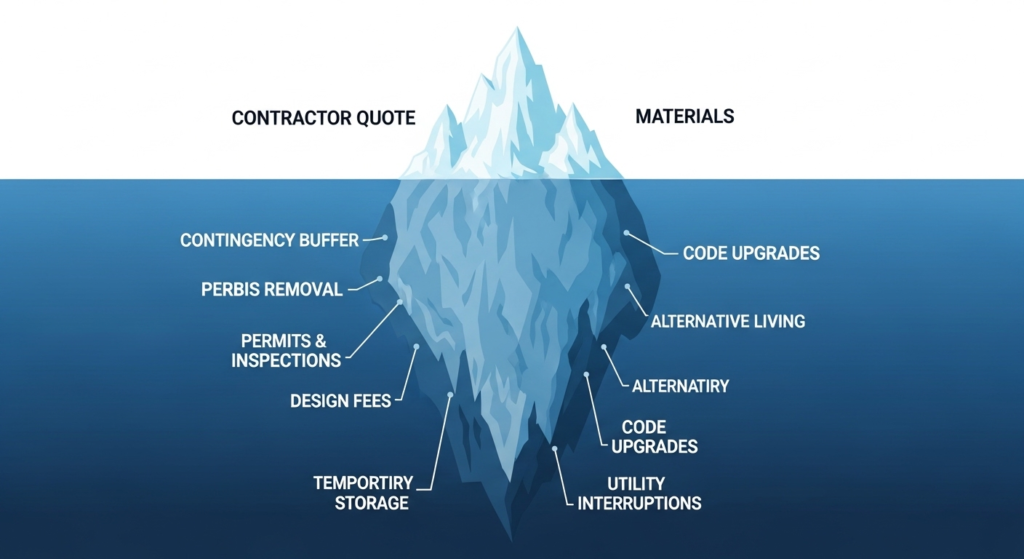
This is the section most renovation guides skip but it’s the one that will save you the most stress. These costs are almost universal, but beginners consistently forget to account for them.
- The contingency buffer (15–20% of your total budget): Mandatory. Not optional. Every experienced contractor builds this in. Surprises behind walls hidden water damage, outdated wiring, rotted subfloor are the norm, not the exception. If you don’t hit any surprises, you get a bonus. If you do, you’re covered.
- Permits and inspections: $500–$2,500 depending on your municipality and project scope. Budget for these upfront.
- Design and architecture fees: For larger projects, you may need architectural drawings, interior design consultation, or 3D renderings. These run $1,500–$10,000+ depending on project complexity.
- Debris removal and disposal: Dumpster rentals run $300–$600 per week. For significant demo work, budget at least $500–$1,500 for waste removal.
- Temporary accommodations: For full gut renovations, you may need to vacate your home for weeks. Extended-stay hotels or rentals during renovation cost $2,000–$10,000+ depending on duration and location.
- Temporary storage: Furniture and belongings need somewhere to go during renovation. Storage unit rental runs $100–$300 per month.
- Utility interruptions: Plumbing and electrical work means your water or power will be off for portions of the project. Budget for any workarounds or inconveniences.
- Code upgrades triggered by the renovation: A bathroom addition might require upgrading your electrical panel. A re-roof might trigger energy code compliance. These “code cascades” are one of the most common reasons renovation budgets exceed initial estimates.
The rule: Whatever your contractor quotes, add 15–20% on top. For pre-1980 homes, add 20–25%. This is industry-standard practice, not pessimism.
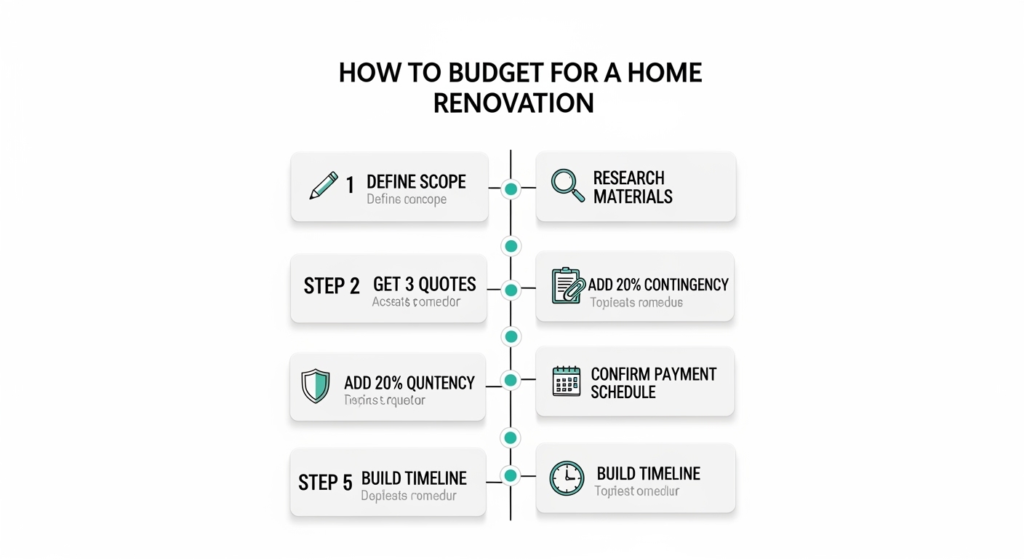
How to Budget for a Home Renovation (Step-by-Step)
Good budgeting is the single most important thing a beginner can do before a renovation begins. Here’s a straightforward process that works:
Step 1 — Define Your Scope Clearly
Write down exactly what you want done in one specific sentence per room. “Update the kitchen” is not a scope. “Reface cabinets, replace countertops with quartz, install new backsplash tile, and upgrade lighting” is a scope. The more specific you are, the more accurate your quotes will be.
Step 2 — Research Material Costs First
Before meeting a contractor, spend time pricing materials online at HomeDepot.com, Lowes.com, or Wayfair. This gives you a rough material baseline and prevents sticker shock when quotes arrive. You’ll also be able to spot if a contractor’s material markup seems unreasonable.
Step 3 — Get Three Quotes from Licensed Contractors
Never accept a single quote. Get at least three from licensed, insured contractors. A quote that’s dramatically lower than the others isn’t necessarily a deal — it may mean corners will be cut or the contractor missed something in the scope. The middle quote is usually the most reliable benchmark.
Step 4 — Add Your Contingency Buffer
Take your contractor’s final quote and add 15–20%. This is your real budget. Put that contingency money in a separate savings account before the project starts so you’re not scrambling if it’s needed.
Step 5 — Confirm the Payment Structure
Legitimate contractors typically ask for a deposit of 10–30% upfront, followed by milestone payments tied to specific stages of completion. Never pay more than 50% before work begins, and never pay in full until the job is done to your satisfaction and any inspections are passed.
Step 6 — Build a Timeline with Buffer Too
Renovation timelines almost always run longer than estimated. A kitchen remodel quoted at 4 weeks often takes 6–8 weeks once material delays, inspection waits, and subcontractor scheduling are factored in. Build 30–50% extra time into your expectations.
Which Home Renovations Give You the Best Return on Investment?
Not every renovation dollar comes back to you at resale. Here’s what the data shows for 2026:
| Renovation Type | Average ROI | Notes |
| Minor kitchen remodel | 72–96% | Best ROI when you spend under $30,000 |
| Mid-range bathroom remodel | 60–74% | Consistent performer across all markets |
| Basement finishing | ~70% | Adds significant livable square footage |
| Exterior painting / curb appeal | 55–80% | High visual impact, relatively low cost |
| Front door replacement | 80–100%+ | One of the best dollar-for-dollar upgrades |
| Major luxury kitchen renovation | 38–50% | Low ROI — overspending relative to home value |
| Swimming pool | Less than 40% | Personal enjoyment, not investment value |
The pattern: Mid-range renovations almost always outperform luxury renovations in ROI. Spending $50,000–$85,000 on a major kitchen overhaul typically returns less than spending $20,000–$27,000 on a thoughtful mid-range refresh. Match your renovation level to your home’s overall market value.
Smart Ways to Save Money on Your Renovation
You don’t have to choose between quality and affordability. These strategies consistently help beginners reduce renovation costs without cutting corners where it matters:
- Do the demolition yourself. Demo is the easiest part of renovation for a capable adult to safely handle. Renting a dumpster and doing the tear-out yourself can save $500–$2,000 in labor costs on a mid-size project.
- Reface, don’t replace. Kitchen cabinets that are structurally sound don’t need to be torn out. Refacing or repainting saves thousands and achieves 80% of the visual impact of new cabinetry.
- Time your project strategically. Spring and fall are peak contractor seasons. Booking work for late fall or winter often gets you better scheduling and occasionally better pricing since contractors are competing more for work.
- Choose mid-range materials. The difference in durability between mid-range and luxury materials is often minimal. The difference in price is often 200–400%. Quartz countertops over marble, engineered hardwood over solid, semi-custom over full-custom cabinetry.
- Get multiple bids. Never accept the first quote. Three bids minimum gives you a market reference and negotiating leverage.
- Phase your renovation. You don’t have to do everything at once. Tackle the highest-priority room first, live with it, save more, then move to the next. This prevents overextending your budget and lets you learn from each project.
- Avoid moving plumbing or electrical panels. These are the single biggest budget multipliers. If your renovation plan requires moving a drain, sink, or electrical panel, explore whether the design can be adjusted to keep systems in place. The cost savings are often $5,000–$15,000.
How to Hire the Right Renovation Contractor
Your choice of contractor is as important as your budget and design decisions. A poor contractor choice can turn a $30,000 renovation into a $60,000 problem. Here’s what to verify before signing anything:
What to Ask Every Contractor
- Are you licensed and insured in this state? (Verify this independently — don’t just take their word.)
- Can I see three references from projects similar to mine in the last 12 months?
- Who are your subcontractors, and are they also licensed and insured?
- Will you pull all required permits for this project?
- What does your payment schedule look like, and what are the milestones?
- What is your policy on change orders and unforeseen costs?
Red Flags to Avoid
- Asking for more than 30–50% upfront before work begins
- No written contract everything is verbal
- Pressure to make a decision immediately (“This price is only good today”)
- No license number provided when asked
- Quote dramatically lower than all other bids with no explanation
- No mention of permits or suggesting you skip them to “save money”
Best Time to Book a Contractor
For large projects, book your contractor 3–6 months in advance, especially for spring and summer start dates when demand is highest. The best contractors are rarely immediately available a very short wait list is sometimes a red flag itself.
How to Finance a Home Renovation
Most homeowners don’t pay for major renovations entirely out of pocket. These are the most common financing options in 2026, along with their trade-offs:
| Financing Option | Best For | Typical Rate (2026) |
| Cash / savings | Any project — always cheapest | No interest |
| Home Equity Loan (HEL) | Large projects, stable repayment | 7–9% fixed |
| Home Equity Line of Credit (HELOC) | Phased renovations, flexible draw | 7–10% variable |
| Personal loan | Smaller projects, no equity | 9–16% |
| FHA 203(k) loan | Fixer-upper buyers, purchase + renovation | Market rate |
| Credit card | Small purchases only — emergency | 18–28% |
More than half of American homeowners tap into their home equity to finance renovations. If you have equity built up, a home equity loan or HELOC is almost always cheaper than a personal loan or credit card, and the interest may be tax-deductible for qualifying home improvements. Consult a financial advisor before committing.
Should You Live in Your Home During a Renovation?
For minor or room-specific renovations updating one bathroom, repainting, replacing flooring most homeowners stay in the home without major disruption. For larger projects, it gets more complicated:
- Kitchen renovation: A full kitchen renovation typically takes 3–8 weeks. You can usually remain in the home, but you’ll need a temporary kitchen setup (microwave, hot plate, mini-fridge).
- Full gut renovation: Staying in the home is rarely practical. Budget $2,000–$10,000 for temporary accommodations depending on project duration.
- Bathroom renovation: If you have a second bathroom, you can typically stay. Single-bathroom homes require temporary arrangements during active plumbing work.
Tip: Discuss your stay-or-go plan with your contractor before the project begins. Some contractors prefer homeowners to vacate it speeds up their work and reduces complications. Others are comfortable working around a family in residence.
Home Renovation Costs: 2026 Market Trends You Should Know
The renovation market in 2026 has a few notable dynamics that affect your budget and planning:
- Material prices have stabilized compared to the supply-chain peaks of 2022–2023, but premium finishes remain expensive. Mid-range materials represent the best value in the current market.
- HVAC and electrical trades are tight. The ongoing EV charger installation boom and heat pump adoption have created high demand for electricians and HVAC technicians. Expect longer wait times and premium pricing for these trades in 2026.
- Smart home integrations are increasingly common — adding to renovation budgets but also improving resale value in buyer-attractive markets.
- Labor remains the biggest cost driver. Material costs have moderated, but skilled labor rates continue to rise. This is the core reason renovation costs in 2026 are 15% higher than 2024 on average.
- Energy-efficient upgrades pay back faster. Heat pumps, smart thermostats, improved insulation, and energy-efficient windows now frequently qualify for federal tax credits under the Inflation Reduction Act, reducing your effective out-of-pocket cost.
Your Renovation Budget Checklist (Use This Before You Start)
Print this out or save it. Before beginning any renovation project, confirm you’ve addressed every item:
- Project scope written down in specific detail
- Material costs researched before meeting contractors
- At least three quotes received and compared
- All contractors verified as licensed and insured
- Contract signed with detailed scope, timeline, and payment schedule
- Permit requirements confirmed with local municipality
- 15–20% contingency buffer set aside in a separate account
- Financing secured (if needed) before work begins
- Stay-or-go plan decided and communicated to contractor
- Storage plan for furniture and belongings during renovation
- Realistic timeline set with buffer built in
- Final inspection plan confirmed before making final payment
Ready to Start Planning Your Renovation?
Home renovation costs are complex but they’re not mysterious. Once you understand what drives the numbers, you can plan confidently, avoid the budget-busting surprises, and make decisions that actually pay off.
Start with one room. Build your budget from the ground up using the ranges in this guide. Get three quotes. Add your contingency. And resist the urge to upgrade everything to the top tier mid-range done right beats luxury done rushed every time.
For more beginner-friendly guides on home improvement, budgeting, and renovation planning, explore The Living Scope. We break down every step so your home improvement journey feels manageable, not overwhelming.
Frequently Asked Questions
In 2026, the average home renovation costs $15 to $60 per square foot for standard finishes, with whole-home renovations averaging around $52,275 for a 1,250–1,600 sq. ft. home. Room-specific renovations range from $1,500 for a basic bedroom refresh to $100,000 or more for a high-end kitchen remodel. Your final cost depends on your location, the room type, material choices, and whether your home has any hidden structural or mechanical issues.
Labor is consistently the most expensive component of any renovation, typically accounting for 40–60% of the total budget. Among room types, kitchens are the most expensive to renovate because they involve the most trades: plumbing, electrical, cabinetry, countertops, flooring, and often structural changes. Moving plumbing or electrical panels adds thousands to any project.
Always add 15–20% on top of your contractor’s final quote as a contingency buffer. For homes built before 1980, budget 20–25% extra because the likelihood of discovering hidden issues — outdated wiring, lead paint, asbestos, water damage increases significantly. This contingency is standard industry practice, not pessimism.
Minor kitchen remodels (under $30,000) return 72–96% of their cost at resale. Mid-range bathroom remodels return around 60–74%. Finishing a basement returns approximately 70%.
Front door replacement and exterior painting are among the best dollar-for-dollar improvements. Major luxury renovations consistently return less —typically 38–50% because they overshoot what the home’s overall market value can support.
It depends on the scope of the project and your local municipality. Simple cosmetic work painting, replacing fixtures, installing shelving typically doesn’t require a permit. Structural changes, major electrical or plumbing work, adding square footage, and building a new deck almost always require permits. Unpermitted work can make your home harder to sell, void your homeowner’s insurance, and require costly remediation. Always check with your local building department before starting any significant project.