


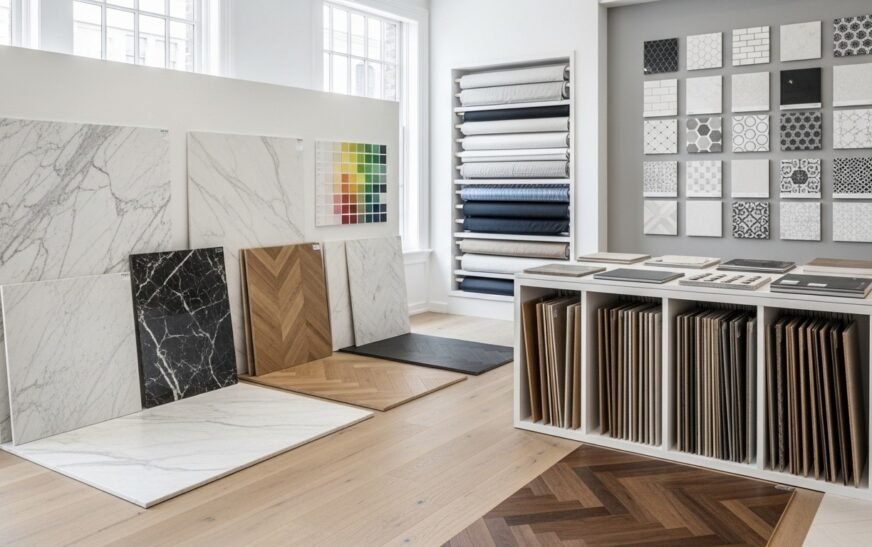
If you’ve ever walked into a room and immediately felt something warmth, elegance, or even discomfort chances are the materials and finishes in that space were doing all the talking.
Interior finishing materials refer to the materials used to complete or “finish” the interior surfaces of a building. These materials help enhance the aesthetic appeal, functionality, and overall atmosphere of a space. They can be applied to walls, ceilings, floors, and other surfaces to create the final look.
In simple words: materials are what a surface is made of wood, stone, tile, concrete. Finishes are how that surface looks and feels glossy, matte, rough, smooth, painted, or sealed.
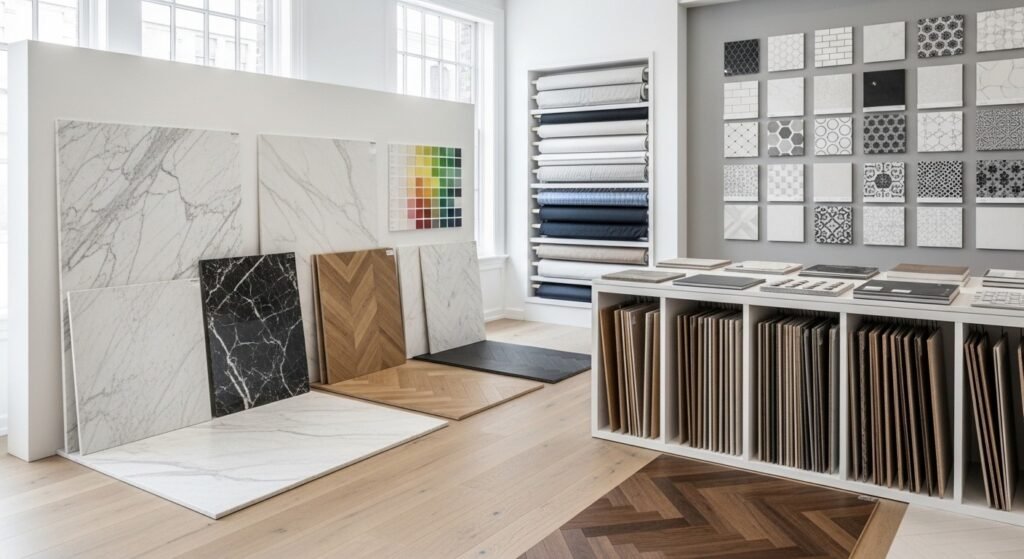
Together, they are the foundation of every interior design decision. Get them right, and your space feels intentional and beautiful. Get them wrong, and even the most expensive furniture won’t save it.
This guide walks you through everything from flooring to ceilings in plain, beginner-friendly language.
Why Do Materials and Finishes Matter So Much?
Materials play a crucial role in the success of any interior design project, as they can affect the overall look, feel, and functionality of a space. Understanding the different types of materials in interior design, and the different finishes available, as well as their properties and applications, will help you make informed decisions and achieve your design goals.
Here’s what the right material choices do for your home:
- Set the mood Warm wood feels cozy; cool marble feels luxurious
- Define your style Rustic, modern, coastal, or traditional
- Impact your budget Some materials cost more upfront but save money long-term
- Affect daily life Maintenance, durability, and comfort all depend on your material choices
Now let’s explore each surface area of your home, one by one.
Flooring Materials and Finishes: Your Foundation
Flooring is the single most impactful surface in any room. It covers the most square footage, takes the most daily wear, and sets the visual tone for everything above it.
Hardwood Flooring
Hardwood offers durability and timeless appeal, suitable for various decor styles. Ideal for living rooms and bedrooms where its warmth and elegance come to the fore.
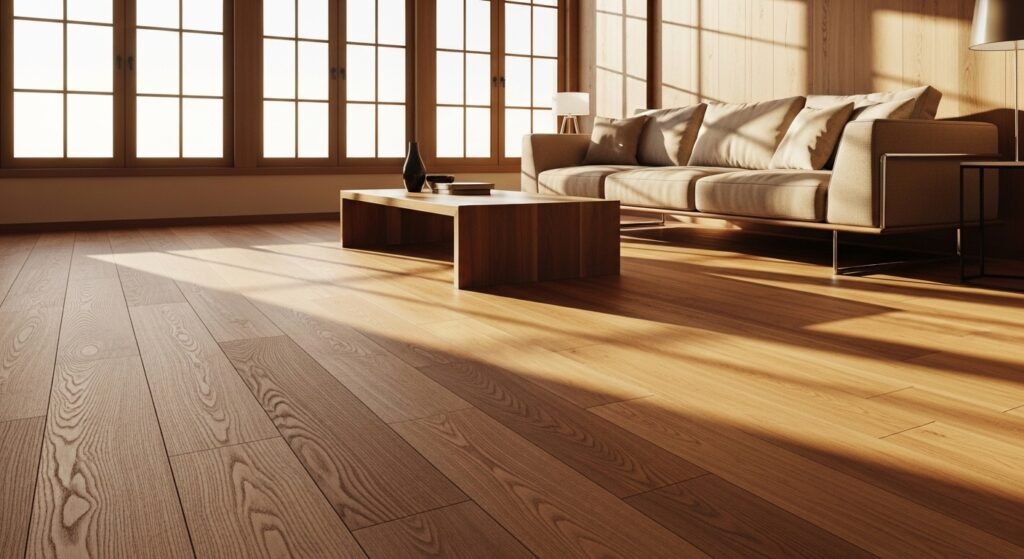
Hardwood comes in species like oak, walnut, maple, and teak. Each has its own grain pattern, color, and hardness level. It can be sanded and refinished multiple times, making it a long-term investment. The downside is cost and sensitivity to moisture avoid it in bathrooms or basements.
Best for: Living rooms, bedrooms, dining rooms Finish options: Matte, satin, semi-gloss, oiled
Laminate Flooring
A multi-layer synthetic flooring product, laminate simulates wood or stone with a photographic applique layer under a clear protective layer, popular for its durability and ease of installation.
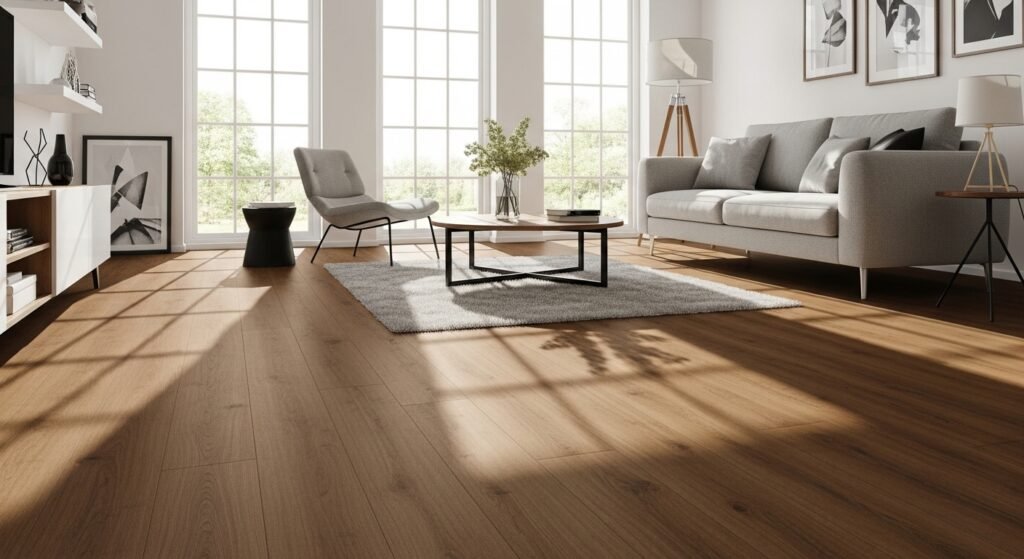
Laminate is the budget-friendly alternative to hardwood. It looks almost identical in photos, resists scratches better, and is much easier to install. However, it cannot be refinished once it’s worn, it needs to be replaced.
Best for: High-traffic areas, rental homes, budget renovations Finish options: Wood-look, stone-look, high-gloss, embossed texture
Ceramic and Porcelain Tile
Available in ceramic, porcelain, and stone, tile is highly durable and offers long-term value for your investment. They are ideal for bathrooms, kitchens, and high-moisture areas.
Tiles are waterproof, easy to clean, and incredibly durable. The main downside is that they can feel cold and hard underfoot. Adding underfloor heating solves this in bathrooms or kitchens.
Best for: Bathrooms, kitchens, entryways, laundry rooms Finish options: Matte, glossy, textured, polished
Luxury Vinyl Plank (LVP)
Vinyl is a highly durable, water-resistant, and cost-effective material. It’s easy to clean, low-maintenance, and can replicate the look of natural materials like wood, stone, or tile at a fraction of the cost. This makes it perfect for bathrooms, kitchens, and high-traffic areas.
LVP has become one of the most popular flooring choices in recent years and for good reason. It’s waterproof, comfortable underfoot, and looks remarkably like real wood or stone.
Best for: Entire homes, families with kids or pets, wet areas Finish options: Wood-look, stone-look, matte, textured
Carpet
Soft and comfortable, perfect for bedrooms and living spaces. Carpet comes in various textures and colors to complement any décor.
Carpet adds warmth, reduces noise, and is very comfortable especially in bedrooms. It requires regular vacuuming and professional cleaning every 1–2 years. Not ideal for allergy sufferers unless you choose low-pile, easy-clean options.
Best for: Bedrooms, home offices, family rooms Finish options: Loop pile, cut pile, plush, berber, frieze
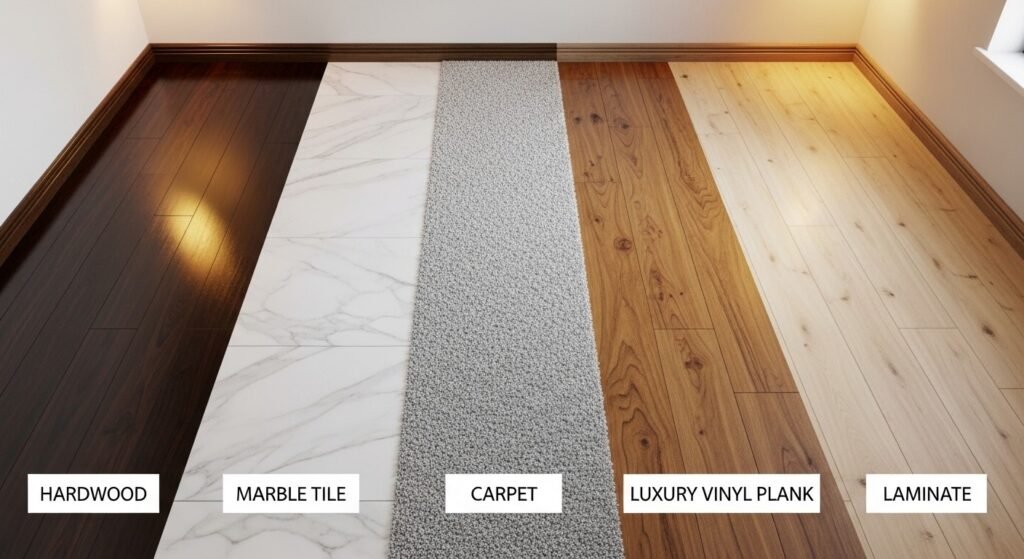
Natural Stone (Marble, Slate, Travertine)
Natural stone is the ultimate luxury flooring. Every piece is unique. It adds significant value to a home and lasts for decades when properly maintained. It does require sealing to prevent staining and can be slippery when wet.
Best for: Entryways, bathrooms, feature areas Finish options: Polished, honed, brushed, tumbled
Wall Materials and Finishes: Your Biggest Canvas
Walls are the backdrop of your entire interior. The right wall finish can make a small room feel larger, a dark room feel brighter, or an ordinary room feel extraordinary.
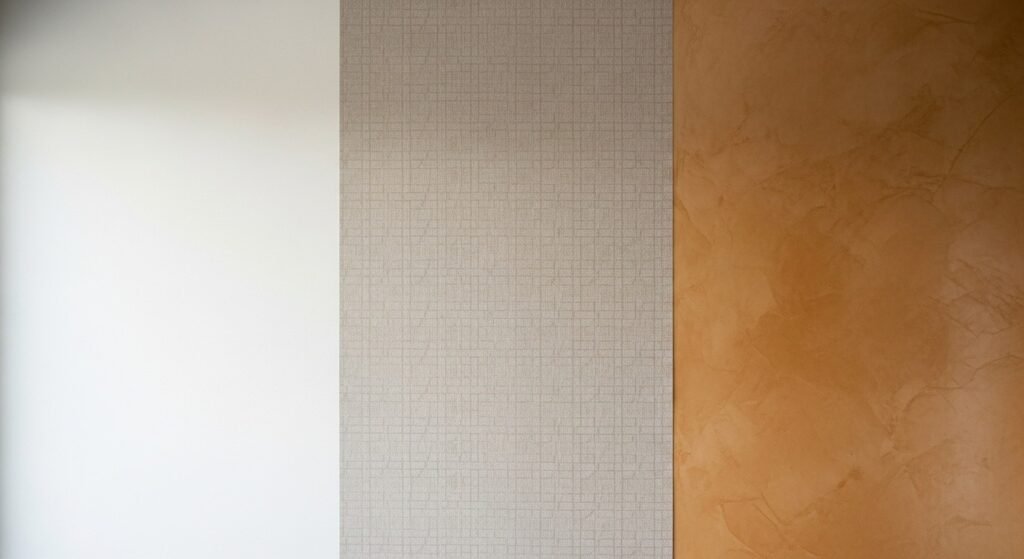
Paint
Paint is the most accessible and versatile wall finish available. The most common and versatile wall finish, paint is available in countless colors and finishes a quick and affordable way to refresh a space.
Understanding paint finishes is essential for beginners:
| Finish Type | Sheen Level | Best Used For |
| Flat / Matte | No sheen | Bedrooms, ceilings, low-traffic walls |
| Eggshell | Very low sheen | Living rooms, dining rooms |
| Satin | Soft sheen | Hallways, kids’ rooms, kitchens |
| Semi-Gloss | Medium sheen | Bathrooms, trim, doors |
| High-Gloss | High sheen | Cabinets, furniture, accent walls |
Wallpaper
Wallpaper adds texture and pattern to your walls. Modern wallpapers offer a variety of designs from classic florals to bold geometric patterns.
Modern wallpaper is a far cry from the peelable disasters of the past. Today’s options include peel-and-stick designs for renters, grasscloth for texture, and metallic or textured papers for statement walls. It’s one of the fastest ways to transform a room dramatically.
Best for: Accent walls, dining rooms, bedrooms, powder rooms
Wood Paneling
Ideal for creating a rustic or sophisticated look, wood paneling is perfect for accent walls or entire rooms.
From shiplap to board-and-batten to full wood cladding, wood paneling adds warmth, texture, and architectural character to any room. It works beautifully in living rooms, home offices, and bedrooms.
Best for: Accent walls, studies, living rooms, entryways
Plaster and Venetian Plaster
Polished plaster (Venetian Plaster) is a luxurious finish that mimics natural stone with its multi-layered, glossy application. It is durable and adds a sophisticated touch to any high-end space.
Venetian plaster creates a depth and luminosity that paint simply cannot replicate. It requires skilled application but the result is stunning walls that look like living marble. It’s growing rapidly in popularity for high-end residential interiors.
Best for: Living rooms, feature walls, bathrooms, dining rooms
Tile on Walls
Not just for floors tile is an exceptional wall material, especially in kitchens and bathrooms. Subway tile, zellige, mosaic, and large-format tiles each create entirely different aesthetics. The grout color you choose matters as much as the tile itself.
Best for: Kitchen backsplashes, bathrooms, shower walls
Brick and Stone Veneer
Natural or faux brick and stone veneers add incredible character and texture. They work particularly well in industrial, rustic, or farmhouse-style interiors. They’re heavy structural considerations apply for real stone installations.
Best for: Feature walls, fireplaces, entryways, kitchen backsplashes
Ceiling Materials and Finishes: The Forgotten Fifth Wall
Ceilings are often overlooked, but choosing the right ceiling finishes can significantly impact the overall feel of a room.
Most beginners completely ignore the ceiling and that’s a missed opportunity. Here’s what your options look like:
Smooth Plaster or Drywall
The most common ceiling finish smooth, painted white or a light tone. It’s clean, classic, and works with every style. Paint sheen matters here too: flat or matte paint is always preferred on ceilings as it hides imperfections.
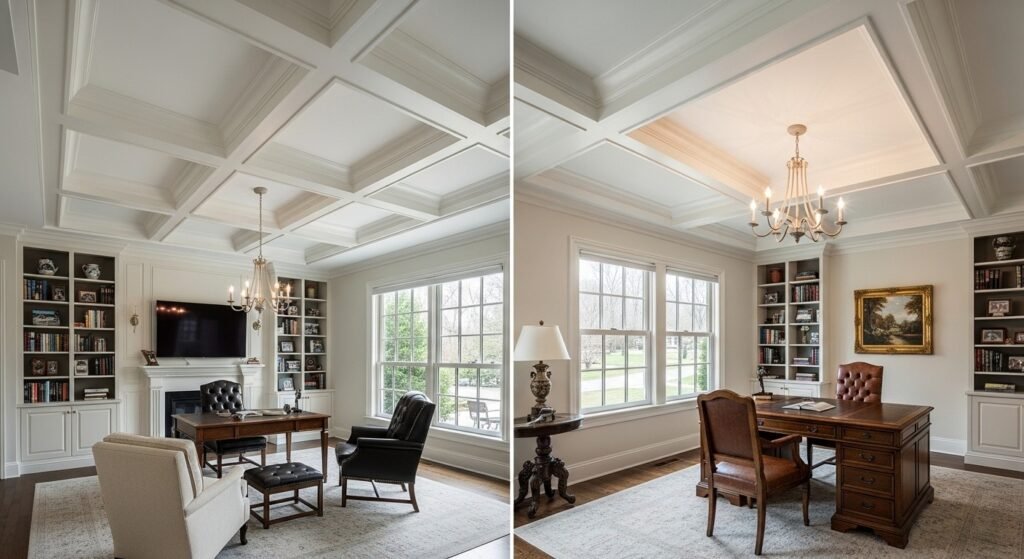
Coffered Ceilings
Coffered ceilings feature a grid of recessed panels framed by beams. They add architectural grandeur and visual height to a room. Common in dining rooms, studies, and formal living areas.
Exposed Ceilings
Exposed ceilings can give a room a rustic or industrial feel and are often used in open-plan living spaces.
Leaving beams, pipes, or the structural ceiling exposed is a popular choice in loft conversions, industrial-style homes, and open-plan living areas. Paint them black for a dramatic, high-contrast effect.
Wooden Ceilings
Wood on the ceiling adds warmth and texture in a way that few other materials can. From rustic reclaimed wood beams to sleek oak slat ceilings, this finish dramatically changes the feel of a space.
Suspended / Drop Ceilings
Often used in commercial spaces, suspended ceilings are also useful in basements or rooms where you need to conceal plumbing, wiring, or ductwork while adding acoustic insulation.
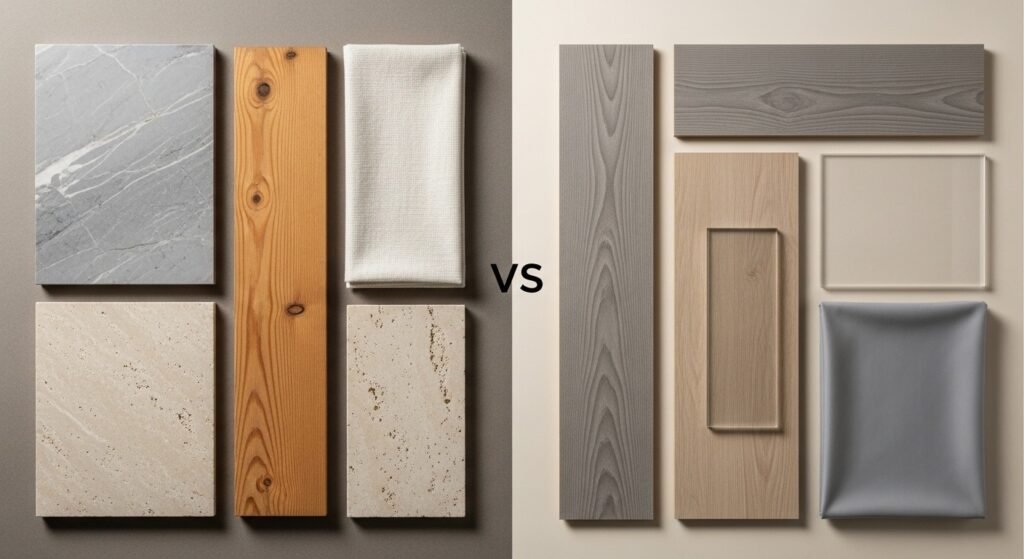
Natural vs Synthetic Materials: What’s the Difference?
Interior design materials can be broadly classified into two main categories: natural and synthetic, each with its unique qualities, textures, colors, and capabilities.
Here’s a quick comparison to help beginners decide:
| Feature | Natural Materials | Synthetic Materials |
| Examples | Wood, stone, marble, linen | Vinyl, laminate, acrylic, polyester |
| Durability | High (varies by type) | Generally very high |
| Cost | Higher upfront | More budget-friendly |
| Maintenance | May require sealing/care | Usually low-maintenance |
| Sustainability | Eco-friendly options available | Often petroleum-based |
| Aesthetic | Unique, warm, organic | Consistent, versatile |
The golden rule: Mix both. Use natural materials for key surfaces flooring, countertops, soft furnishings and synthetic materials where practicality matters most, like bathrooms and high-traffic areas.
How to Choose the Right Materials and Finishes for Your Home
This is where most beginners feel overwhelmed. Here’s a simple, step-by-step framework:
Step 1: Identify the Room’s Function
A bathroom needs waterproof, easy-clean materials. A bedroom needs comfort and warmth. A kitchen needs durability and heat resistance. Always let function guide your first decisions.
Step 2 : Set Your Budget
Synthetic materials like vinyl and laminate are typically used when the budget is a concern. This choice of material is more affordable and gives the appearance of tile, wood, or other natural components when used as flooring or wall covering.
Decide early where you’re willing to invest (flooring, countertops) and where you’re happy to save (ceilings, secondary walls). Prioritize surfaces you touch and see daily.
Step 3 : Define Your Style
When choosing wall and ceiling finishes, consider the overall design style of the room. For example, if you want to create a rustic and cozy atmosphere, consider using wood paneling or stone veneer. If you want a modern and sleek atmosphere, consider using wallpaper or a textured paint.
Collect reference images before you shop. Notice what materials appear in rooms you love that pattern reveals your style.
Step 4 — Test Before You Commit
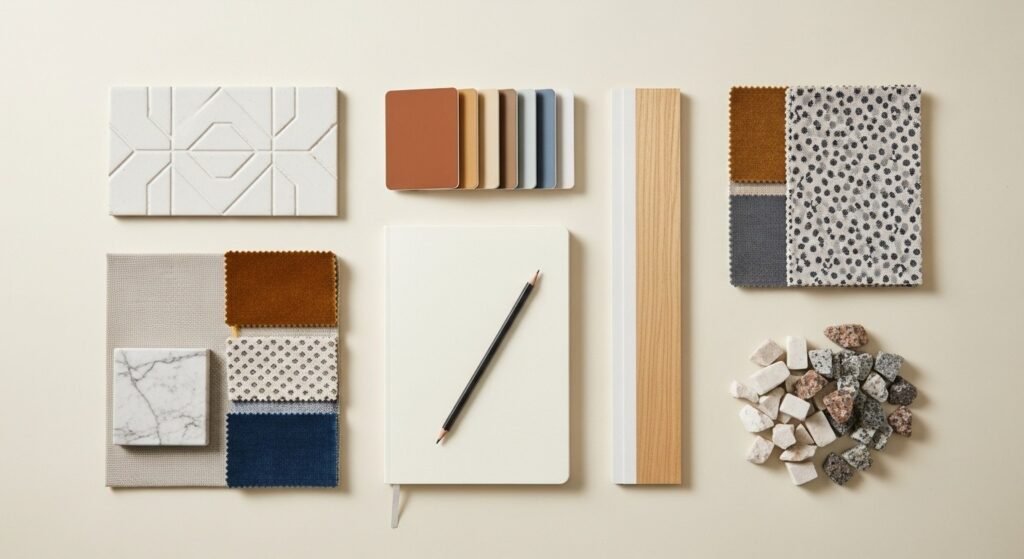
Test, test, test! Get as many samples, swatches, and demo elements as you can and use them all around the house to see exactly how they all work together.
Order tile samples, paint swatches, and fabric samples. Live with them for a week in different lighting morning light, afternoon sun, evening lamp before making final decisions.
Step 5 — Consider Maintenance Honestly
A beautiful marble floor is stunning but are you prepared to seal it annually and wipe up spills immediately? Choose materials that match your actual lifestyle, not your idealized version of it.
Step 6 — Mix Textures Deliberately
Use a variety of colors and textures, but don’t use too many or you’ll lose a sense of purposeful cohesiveness.
A room with all smooth surfaces feels cold. A room with all rough surfaces feels chaotic. Balance hard and soft, shiny and matte, natural and refined.
Trending Materials and Finishes in 2006
The world of interior materials is always evolving. Here are the finishes gaining momentum right now:
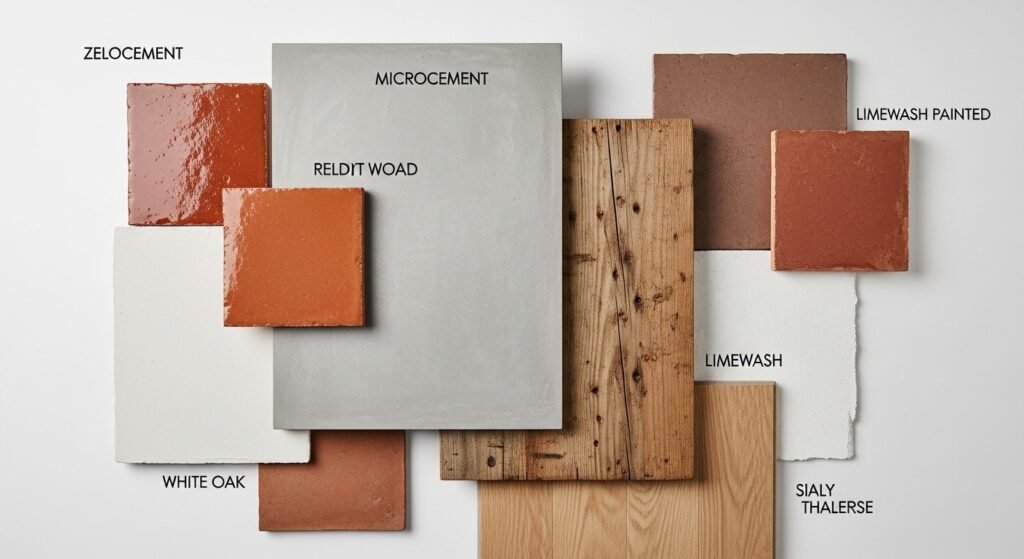
Microcement :Ideal for a sleek, industrial look, microcement offers a smooth, customizable finish for floors, walls, and ceilings. Its durability and seamless appearance make it perfect for minimalist designs.
Reclaimed Wood : Adds historical charm and warmth with each piece’s unique imperfections. Reclaimed wood suits rustic or vintage styles and promotes sustainability.
Textured Wallpapers These bring depth and luxury to walls, mimicking materials like suede or silk. Textured wallpapers make striking statement walls.
Zellige Tile Handmade Moroccan tile with an organic, imperfect surface that catches light beautifully. Exploding in popularity in kitchens and bathrooms.
Limewash Paint A centuries-old technique making a major comeback. Creates walls with depth, variation, and a beautifully aged, organic texture.
White Oak Whether for flooring, cabinetry, or furniture, white oak’s cool, contemporary tone has become the defining wood of modern interiors.
Room-by-Room Materials and Finishes Guide
Kitchen
- Flooring: Porcelain tile, LVP, or hardwood (away from sink area)
- Walls: Subway or zellige tile backsplash, limewash or satin paint
- Countertops: Quartz, marble, or butcher block
- Ceiling: Smooth painted drywall, exposed beam, or wood slat
Bathroom
- Flooring: Porcelain tile, natural stone with anti-slip finish
- Walls: Large-format tile, mosaic, Venetian plaster
- Ceiling: Moisture-resistant paint on smooth drywall
Living Room
- Flooring: Hardwood, LVP, or area rug over tile
- Walls: Paint, wallpaper, wood paneling, or textured plaster
- Ceiling: Smooth painted, coffered, or exposed wood beams
Bedroom
- Flooring: Carpet, hardwood, or LVP with rug
- Walls: Matte paint, wallpaper feature wall, fabric panels
- Ceiling: Smooth matte paint keep it simple
Entryway
- Flooring: Tile, stone, or hardwood (durable and easy to clean)
- Walls: Bold wallpaper, paint, or stone veneer
- Ceiling: Painted with pendant light as focal point
Common Beginner Mistakes to Avoid
Choosing materials only from photos. Screens distort color and texture. Always order physical samples.
Ignoring undertones. A “white” tile can have pink, green, or grey undertones. Hold it next to your other materials in natural light.
Over-matching everything. A room where every surface is the same wood tone, same finish, same color feels flat. Layer different materials for depth.
Forgetting about transitions. Where two flooring materials meet say, hardwood and tile the transition strip matters. Plan for it early.
Buying too little. Always add 10–15% to your material order to account for cuts, waste, and future repairs.
Frequently Ask Question
A material is what a surface is made from wood, stone, tile, or plaster. A finish is how that material’s surface is treated polished, matte, painted, sealed, or textured. Both work together to define how a surface looks, feels, and performs.
Porcelain tile and luxury vinyl plank (LVP) are the most durable options for family homes. Both are waterproof, scratch-resistant, and easy to clean ideal for households with children or pets.
Paint is the most beginner-friendly wall finish. It’s affordable, easy to apply, available in thousands of colors, and completely reversible. Satin or eggshell finishes are the best all-purpose choices for living areas.
Absolutely and you should. Combining natural materials like wood or stone with synthetic ones like vinyl or laminate creates a layered, interesting space while keeping costs manageable.
Luxury vinyl plank (LVP) and porcelain tile require the least maintenance. Both are waterproof, stain-resistant, and easy to clean with regular sweeping and mopping.
Matte finishes hide imperfections and feel softer — ideal for walls and ceilings. Glossy finishes reflect light and are easier to wipe clean — ideal for kitchens, bathrooms, cabinetry, and trim.
Final Thoughts: Choose Materials That Serve Your Life
The best interior materials aren’t always the most expensive ones. They’re the ones that fit your lifestyle, your budget, and your vision of what home should feel like.
Start with function. Layer in beauty. Test everything before committing. And remember the surfaces you choose will be with you every single day for years. Take your time, do your research, and trust your instincts.
Whether you’re renovating a single room or starting from scratch, understanding materials and finishes gives you the confidence to make decisions that are truly yours not just what was on display at the showroom.









2 Comments
[…] bedrooms use rich textures, statement headboards, elegant lighting, and premium materials like velvet, marble, and brass. You do not need an enormous budget even a few well-chosen pieces […]
[…] streets of Tokyo, bathed in neon lights at night, are a sight to behold. And then the same city in the morning, immersed in the silence of a temple, […]