

You’ve finally landed on the perfect color. The little paint chip is taped to your fridge, and you’re ready to head to the store. Then the person behind the counter asks a question that stops you cold: “What finish do you want, flat, eggshell, or satin?”
If you’ve ever stood there blinking, you’re not alone. Color gets all the attention, but paint finish, sometimes called sheen, is what actually determines how your walls perform day to day. It affects how easy your walls are to clean, how much light bounces off them, whether they hide dents and drywall seams, and how long the paint job holds up before it starts looking tired.
Knowing how to choose the right paint finish is one of those small decisions that makes a surprisingly big difference in how a room looks and lives. In this guide, we’ll walk through every type of paint finish, where each one works best, and how to match sheen to the specific rooms in your home, from ceilings to cabinets to that hallway your kids treat like a racetrack.
What Is Paint Finish (Sheen) and Why It Matters
Paint finish refers to how much shine or gloss a paint has once it dries. That gloss level comes from the ratio of resin to pigment in the paint formula. More resin means more shine, more durability, and a surface that wipes clean more easily. More pigment means a flatter, softer look that hides imperfections but scuffs and stains more easily.
This matters for a few practical reasons. A paint sheen that’s too flat in a busy kitchen will show grease splatters and become nearly impossible to scrub clean. A paint sheen that’s too glossy on a living room wall with uneven drywall will highlight every bump, seam, and nail pop under natural light. Choosing the right paint finish means balancing three things: how the room is used, how much natural light it gets, and the condition of your walls.
The 5 Types of Paint Finishes Explained
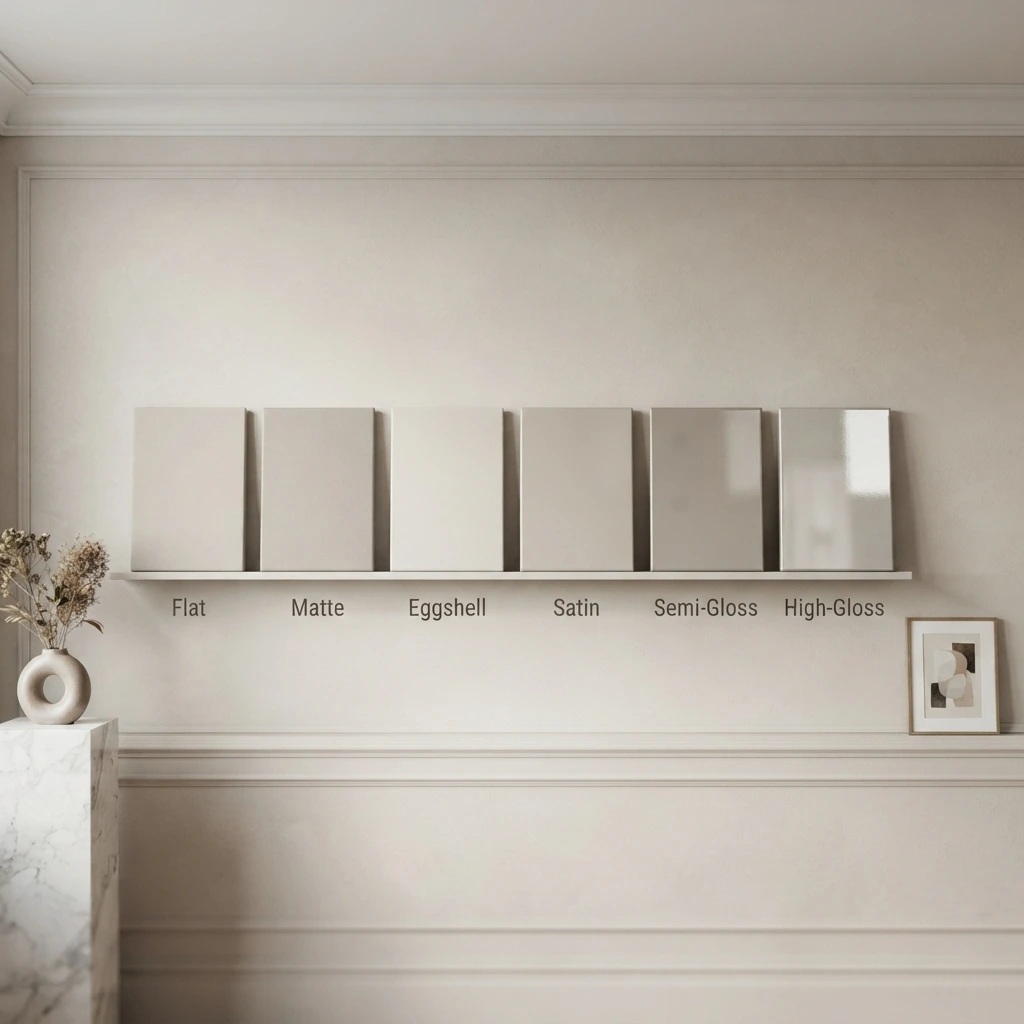
Paint sheens sit on a spectrum from completely flat to mirror-like gloss. Here’s what each one actually looks and behaves like.
Flat / Matte Paint
Flat paint, sometimes labeled matte paint, has no shine at all. It absorbs light rather than reflecting it, which gives walls a soft, velvety look and does a wonderful job hiding imperfections like drywall seams, nail holes, and uneven texture. The trade-off is durability. Flat paint is the hardest finish to clean, since scrubbing can burnish or remove the color entirely. It works best in low-traffic areas like formal dining rooms, adult bedrooms, and ceilings.
Eggshell Finish
Eggshell finish has a soft, low luster that’s often compared to the surface of, well, an eggshell. It offers a nice middle ground: more washable than flat paint, but still soft enough to camouflage minor wall flaws. This makes eggshell finish one of the most popular all-purpose choices for main living areas.
Satin Finish
Satin finish has a noticeable soft sheen, often described as having a pearl-like glow. It’s more durable and washable than eggshell, which makes it a favorite for hallways, kids’ rooms, and family rooms where walls take more of a beating. Satin does reflect a bit more light, so it will show wall imperfections slightly more than eggshell.
Semi-Gloss Paint
Semi-gloss paint has a noticeably shiny surface that stands up well to moisture, grease, and repeated scrubbing. It’s the go-to choice for kitchen walls, bathroom walls, trim, doors, and cabinets, anywhere durability and cleanability matter more than hiding a few wall imperfections.
High-Gloss Paint
High-gloss paint is the shiniest, hardest-wearing finish available. It reflects the most light and creates a polished, almost lacquered look. Because it highlights every flaw in the surface underneath, high-gloss is usually reserved for cabinetry, doors, and trim rather than full walls, and it requires very smooth prep work to look its best.
Finish | Gloss Level | Durability | Best For | Cleanability |
Flat / Matte | None | Low | Ceilings, low-traffic walls, formal rooms | Difficult |
Eggshell | Low | Moderate | Living rooms, bedrooms, dining rooms | Good |
Satin | Medium | Good | Hallways, kids’ rooms, family rooms | Very good |
Semi-Gloss | High | Very good | Kitchens, bathrooms, trim, doors | Excellent |
High-Gloss | Very high | Excellent | Cabinets, doors, accent trim | Excellent |
How to Choose the Right Paint Finish for Each Room
Once you understand the sheens themselves, matching them to your rooms gets a lot easier. Here’s a room-by-room breakdown.
Best Paint Finish for Living Room Walls
For most living rooms, eggshell or satin finish hits the sweet spot. Eggshell gives you a soft, elegant look that suits formal or low-traffic living rooms, while satin is the better call if your living room sees a lot of foot traffic, pets, or kids, since it holds up better to the occasional scuff or fingerprint.
Best Paint Finish for Bedroom Walls
Bedrooms are typically low-traffic, low-mess spaces, which makes eggshell finish the most popular pick. It creates a calm, soft look that suits a restful room, and it’s easy enough to wipe down if needed without a lot of scrubbing.
Best Paint Finish for Kitchen Walls
Kitchens deal with grease splatters, steam, and constant cleaning, so satin or semi-gloss paint is the better match. Satin works well on general kitchen walls, while semi-gloss is worth the extra shine around the stove, backsplash area, and any wall that regularly gets wiped down.
Best Paint Finish for Bathroom Walls
Bathrooms deal with constant humidity and moisture, which is exactly what semi-gloss paint is built to handle. Its tighter, more resin-rich surface resists mildew growth and wipes clean easily, making it the standard recommendation for bathroom walls, especially around sinks, tubs, and showers.
Best Paint Finish for Ceilings
Ceilings almost always call for flat or matte paint. Since ceilings aren’t touched or cleaned often, durability isn’t a priority, and the flat finish helps disguise any texture, seams, or minor imperfections overhead, plus it minimizes distracting glare from overhead lighting.
Best Paint Finish for Doors and Trim
Doors, baseboards, and trim get bumped, brushed against, and cleaned more than almost any other surface in the house, which is why semi-gloss or high-gloss finish is the standard choice. The extra shine also helps trim stand out and frame the room, especially against a flatter wall color.
Eggshell vs Satin Paint: What’s the Real Difference
Eggshell and satin often get mixed up because they sit right next to each other on the sheen spectrum. The core difference comes down to shine and durability. Eggshell has a lower, softer glow and does a slightly better job hiding wall imperfections. Satin has a more noticeable sheen, holds up better to scrubbing and moisture, and is the more durable of the two.
As a rule of thumb, choose eggshell for rooms where the look matters more than heavy-duty durability, like a formal living room or a primary bedroom. Choose satin for rooms that need to withstand more contact, cleaning, or humidity, like a mudroom, hallway, or kids’ bathroom.
Satin vs Semi-Gloss Paint: Which Should You Choose
Satin and semi-gloss both hold up well, but semi-gloss takes durability and cleanability a step further. Satin has a soft, pearl-like glow that works well on walls throughout the house. Semi-gloss has a noticeably shinier finish that resists moisture and grease more effectively, which is why it’s the standard choice for kitchens, bathrooms, and trim rather than general living spaces.
If you’re deciding between the two for a specific wall, ask how often that wall gets touched, splashed, or wiped down. Occasional touch-ups point to satin. Frequent cleaning or moisture exposure points to semi-gloss.
Which Paint Finish Hides Wall Imperfections Best
Flat and matte paint are the clear winners here. Because they don’t reflect light, they don’t draw attention to dents, drywall seams, nail pops, or uneven texture the way glossier finishes do. Eggshell comes in a close second, offering a bit of that same forgiving quality while still being more washable than flat paint. If your walls have visible flaws and you’re not planning to repair them before painting, staying on the flatter end of the sheen spectrum will make a noticeable difference.
Which Paint Finish Is Easiest to Clean
High-gloss and semi-gloss finishes are the easiest to wipe down, since their higher resin content creates a tighter, more water-resistant surface. Satin comes in next, holding up well to a damp cloth without much fuss. Eggshell can handle light cleaning but shouldn’t be scrubbed aggressively, and flat paint is the most likely to show marks or lose color if you try to clean it.
Common Mistakes People Make When Choosing Paint Sheen
- Choosing flat paint for a high-traffic hallway and being frustrated when scuff marks won’t wipe off
- Using high-gloss paint on walls with visible imperfections, which only makes flaws more noticeable
- Assuming one sheen has to be used throughout the whole house instead of mixing finishes by room
- Skipping a sample swatch and judging sheen from a tiny paint chip under store lighting
- Forgetting that ceilings, trim, and walls usually need different finishes, not the same one
- Ignoring how much natural light a room gets, which changes how a sheen actually reads on the wall
Pro Tips From Professional Painters
- Test a sample patch on your actual wall and view it at different times of day before committing
- In rooms with big windows, lean toward slightly flatter finishes so glare doesn’t become distracting
- Use the same sheen on all trim throughout connected rooms for a cohesive, intentional look
- For rental properties, satin is often the safest all-around choice for durability and easy touch-ups
- Keep leftover paint labeled with the room and sheen so future touch-ups actually match
Quick Reference Cheat Sheet
Save this for your next trip to the paint store.
Room | Recommended Finish |
Living Room Walls | Eggshell or Satin |
Bedroom Walls | Eggshell |
Kitchen Walls | Satin or Semi-Gloss |
Bathroom Walls | Semi-Gloss |
Ceilings | Flat / Matte |
Doors and Trim | Semi-Gloss or High-Gloss |
Kids’ Rooms and Playrooms | Satin |
Hallways and Staircases | Satin |
Frequently Asked Questions
Is eggshell or satin better for a family with kids?
Satin is usually the better choice for busy family homes since it’s more durable and easier to wipe clean than eggshell, especially on walls near play areas.
Can I use the same paint finish on every wall in my house?
You can, but it’s not usually the best approach. Different rooms have different needs, so most homeowners get better results mixing finishes: flatter sheens for bedrooms and ceilings, glossier ones for kitchens, bathrooms, and trim.
What paint finish do professional painters recommend most?
Many professional painters default to eggshell or satin for main living spaces because they balance a soft look with reasonable durability, then switch to semi-gloss for trim, doors, and wet areas.
Does paint finish affect how a color looks on the wall?
Yes. The same color can look noticeably different depending on sheen, since glossier finishes reflect more light and can appear slightly brighter or more saturated than a flat version of the same shade.
Is satin paint good for bathrooms?
Satin can work in a powder room with low humidity, but for full bathrooms with showers or tubs, semi-gloss is the more reliable choice for standing up to steam and moisture.
What finish should I use for a rental property?
Satin is a common choice for rentals since it holds up well to wear between tenants and is easier to spot-clean than flatter finishes.
Why does my new paint job show streaks in certain light?
This is usually a sign the sheen is too glossy for the wall’s condition or that it was applied unevenly. Higher-gloss finishes are more likely to reveal roller marks or application inconsistencies.
Do I need a different finish for interior doors versus walls?
Yes. Doors get touched, bumped, and cleaned constantly, so semi-gloss or high-gloss holds up far better on doors than the softer finishes typically used on walls.
Is it worth paying more for a higher-quality paint sheen?
Generally yes. Higher-quality paints in any sheen category tend to have better pigment coverage, more consistent finish, and greater resistance to fading or yellowing over time.
Can I mix flat and satin paint on the same wall?
It’s not recommended, since combining sheens on one continuous surface can create an uneven, patchy appearance. It’s better to choose one finish per wall or surface.
Final Thoughts
Choosing the right paint finish comes down to matching the sheen to how a room actually gets used. Flat and matte work best where durability isn’t a priority and hiding imperfections is. Eggshell and satin cover most main living spaces. Semi-gloss and high-gloss earn their place in kitchens, bathrooms, doors, and trim, where moisture and cleaning are a daily reality.
Next time you’re standing at the paint counter, you won’t have to guess. Think about the room, how it’s used, and how much light it gets, then pick the finish that fits. Your walls, and your cleaning routine, will thank you.