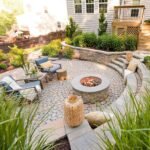


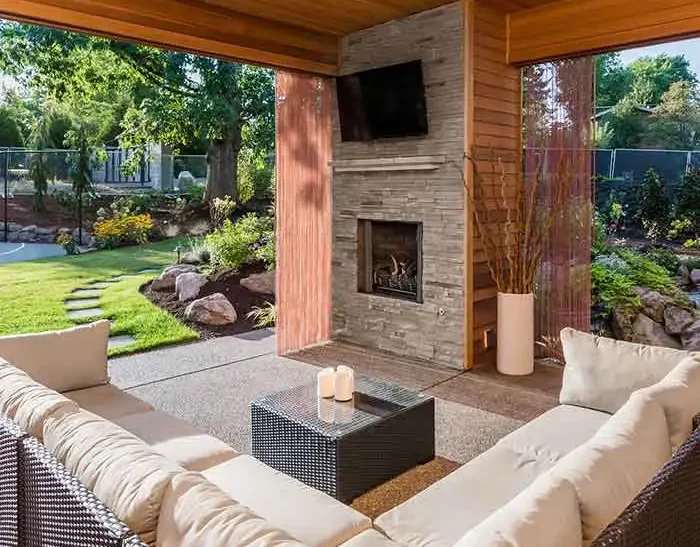
Your backyard has more potential than you’re probably giving it credit for. It’s not just grass and a fence it’s an extra room you’re not using to its full advantage. The right outdoor living ideas can turn that space into a second living room, an evening retreat, or the place your family actually gathers instead of scattering to separate rooms indoors.
This guide covers outdoor living design for every budget, yard size, and climate from a $200 patio refresh to a full outdoor kitchen build. You’ll get specific, buildable ideas, not just a list of pretty pictures. Along the way, we’ll flag the details most articles skip: permit rules, maintenance realities, and what actually holds up season after season.
What Are Outdoor Living Spaces, Exactly?
An outdoor living space is any area outside your home designed for the same activities you’d do indoors relaxing, cooking, eating, and entertaining but built to handle weather, sun, and outdoor wear.
The core elements that separate a true outdoor living space from a bare patio are:
Defined zones (lounging, dining, cooking)
Weather-resistant furniture and materials
Shelter or shade (pergola, awning, umbrella)
Lighting for use after sunset
A focal point, often a fire feature or kitchen
You don’t need all five to start. Most successful backyards are built one zone at a time.
Outdoor Living Design: Start With Your Yard, Not Pinterest
Before picking furniture or finishes, answer three questions. Skipping this step is the single most common reason backyard projects get expensive and then get abandoned.
How do you actually want to use the space? Quiet reading nook and morning coffee spot? Weekend cookouts for twelve people? Both, at different times of day?
What does the sun do in your yard? Track it for a day. A dining area that bakes at 6 p.m. in July won’t get used, no matter how nice it looks.
What’s your maintenance appetite? Real wood decking looks incredible and needs restaining every 2–3 years. Composite costs more upfront and needs almost none.
A landscape designer will tell you the same thing a good architect tells you about interiors: function first, aesthetics second. The pretty part gets much easier once the layout is right.
Outdoor Living Ideas by Space Type
Patio Ideas
A patio is the most flexible foundation for outdoor living because it works with almost any layout and doesn’t require the structural planning a deck does.
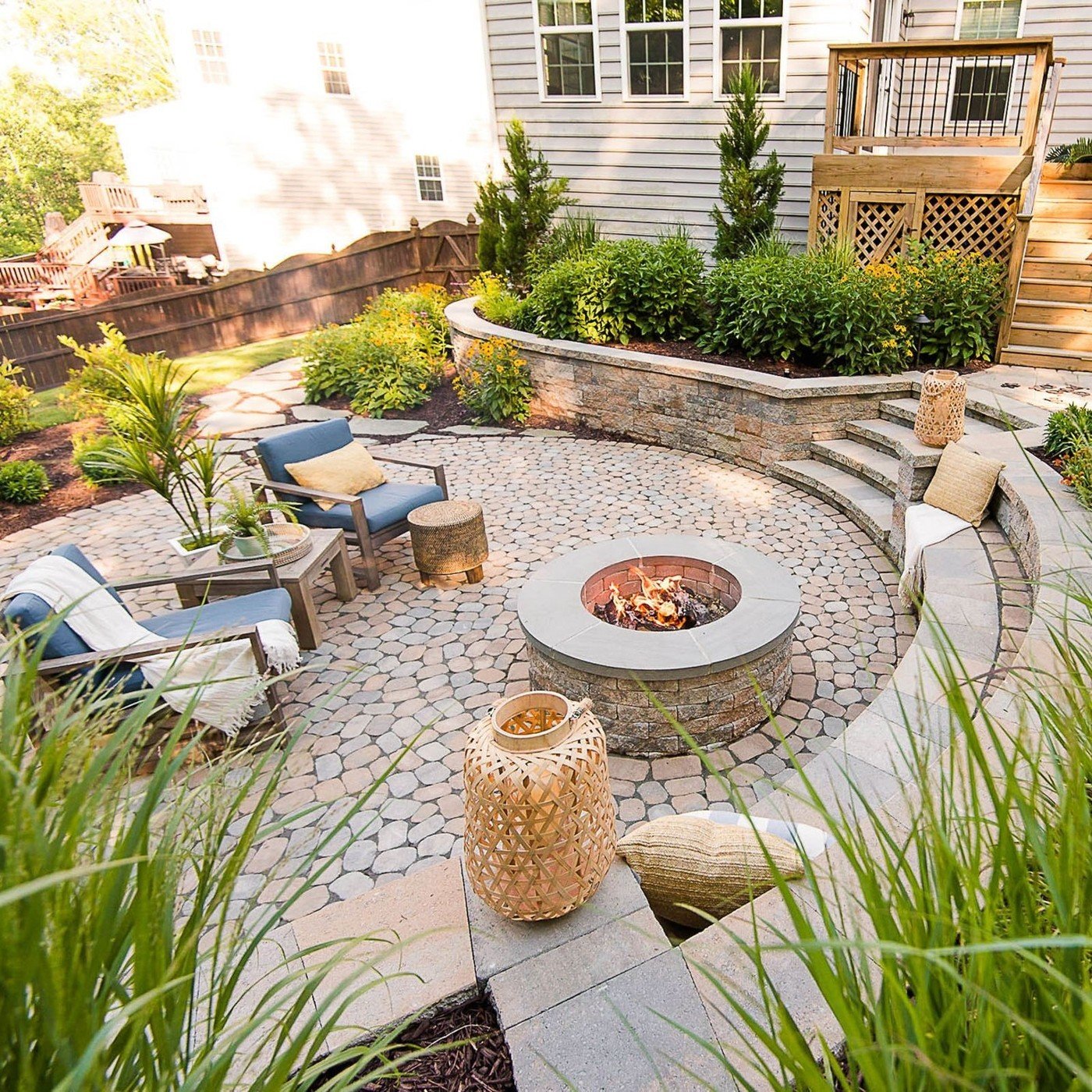
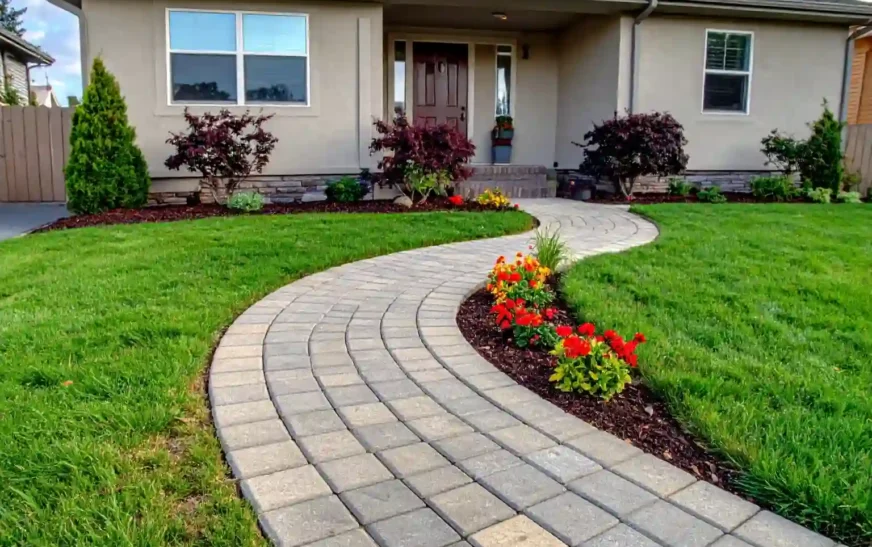
- Paver patios offer the most design flexibility herringbone, running bond, or circular patterns and individual pavers can be replaced if damaged.
- Poured concrete is the budget leader per square foot and can be stamped or stained to mimic stone.
- Natural stone (flagstone, travertine) costs more but adds resale-ready visual weight.
Quick tip for small patios: lay pavers on a diagonal. It’s a simple trick that makes a small square footprint read as larger.
Deck Ideas
Decks make sense for sloped yards, homes with a raised main floor, or anywhere you want separation from the ground level.
| Decking Material | Lifespan | Maintenance | Relative Cost |
| Pressure-treated wood | 10–15 years | Restain every 2–3 years | $ |
| Cedar/redwood | 15–20 years | Seal annually | $$ |
| Composite (Trex, TimberTech, etc.) | 25–30 years | Occasional wash | $$$ |
| PVC | 30+ years | Minimal | $$$$ |
If your deck will sit in full sun, composite is worth the premium real wood fades and checks faster under constant UV exposure than most homeowners expect.
Backyard Living Ideas for Small Spaces
Small yards benefit more from planning than any other size. A few approaches that consistently work:
- Multi-purpose furniture: a storage bench doubles as seating and hides cushions or garden tools.
- Vertical landscaping: trellises and wall-mounted planters add greenery without eating floor space.
- One statement zone instead of three small ones. A single well-furnished 8×8 patio beats three cramped, half-finished areas.
- Foldable or stackable furniture for yards that double as play space or dog runs.
Modern Outdoor Living Ideas
Modern outdoor design leans on clean lines, a restrained material palette, and negative space rather than ornamentation.
- Monochrome or two-tone color schemes (charcoal, warm gray, black metal accents)
- Linear fire features (fire tables or linear fire pits) instead of round, rustic ones
- Cantilevered pergolas with minimal support posts
- Large-format concrete pavers instead of small, patterned units
Luxury Outdoor Living Ideas
At the higher end, the difference is usually integration systems working together rather than one impressive feature standing alone.
- Outdoor kitchens with built-in appliances (grill, side burner, mini fridge, sink) rather than a freestanding grill
- Covered living rooms with weatherproof sectionals, a TV, and a ceiling fan
- Water features: a linear water wall or small pond integrated into the hardscape
- Zoned smart lighting and audio controlled from a phone
Outdoor Living Ideas With Key Features
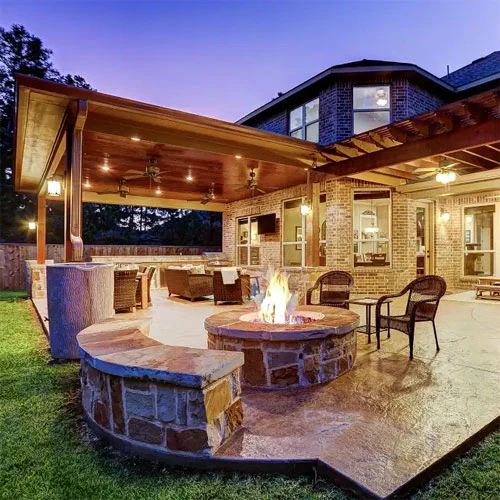
Outdoor Living Ideas With Pergola
A pergola is one of the highest-value additions for outdoor living because it defines a “room” without fully enclosing it.
Attached pergolas extend off the house and work well over a dining area.
Freestanding pergolas anchor a separate zone, like a lounge near the back of the yard.
Louvered or retractable-canopy pergolas let you adjust shade through the day worth the extra cost if your patio gets harsh afternoon sun.
Add string lights or a ceiling fan to the pergola frame to make it functional after dark and in summer heat.
Outdoor Living Ideas With Fire Pit
Fire pits are consistently the feature homeowners say gets the most use, likely because they extend the outdoor season into spring and fall.
Wood-burning pits give the classic campfire feel but need clearance from structures and, in many areas, a permit.
Gas fire pits light instantly, have no smoke, and are easier to place close to seating.
Fire tables double as a coffee table when unlit a smart pick for smaller patios.
Check local fire codes before installing. Many municipalities restrict wood-burning fire pits during dry seasons or require a set distance from fences and overhangs.
Outdoor Living Ideas With Outdoor Kitchen
An outdoor kitchen ranges from a single built-in grill island to a full second kitchen.
Entry-level: a grill on a small paved pad with a nearby prep cart.
Mid-range: a built-in island with grill, counter space, and a mini fridge.
Full outdoor kitchen: grill, side burner, sink, refrigerator, and covered counter seating.
A detail worth flagging that most guides skip: run a dedicated gas line and GFCI electrical outlet during the initial hardscape phase, even if you’re not installing full appliances yet. Trenching later, after pavers or concrete are down, costs significantly more than doing it during the original build.
Outdoor Living Ideas on a Budget
You don’t need a five-figure renovation to make a real difference. Budget-friendly upgrades that punch above their cost:
Outdoor rug + string lights + refreshed cushions: often under $150 and changes the whole feel of an existing patio
Second-hand furniture, repainted or restained
Gravel or mulch defined seating area instead of poured hardscape
Tabletop fire bowl instead of a built-in fire pit
Vertical pallet planters for greenery on a near-zero budget
DIY Outdoor Living Ideas
Projects realistically doable in a weekend without specialized tools:
Build a simple pea-gravel patio: excavate, add landscape fabric, gravel, and edging.
Build a planter box bench from cedar boards.
Install solar path lights along a walkway.
Hang a DIY shade sail between two posts or a post and the house.
Build a simple pallet or cinder-block fire pit surround for a gas insert.
Projects better left to professionals: gas line work, electrical for outdoor kitchens, structural pergola posts on a deck, and anything requiring a permit.
Landscaping, Lighting, and Furniture: The Details That Make It Feel Finished
Landscaping
Landscaping is what turns hardscape into a living space rather than a slab with furniture on it.
Layer plant heights (tall backdrop plants, mid-height shrubs, low border plants) for visual depth
Choose native, drought-tolerant plants where possible they need less water and hold up better long-term
Use planters to soften hard edges around a patio or deck without committing to permanent beds
Outdoor Lighting
Lighting is what makes an outdoor living space usable past sunset, and layering it matters as much as it does indoors:
Ambient: string lights or a pergola-mounted fixture for overall glow
Task: brighter lighting over a grill or outdoor kitchen counter
Accent: low path lights or uplights on trees and architectural features
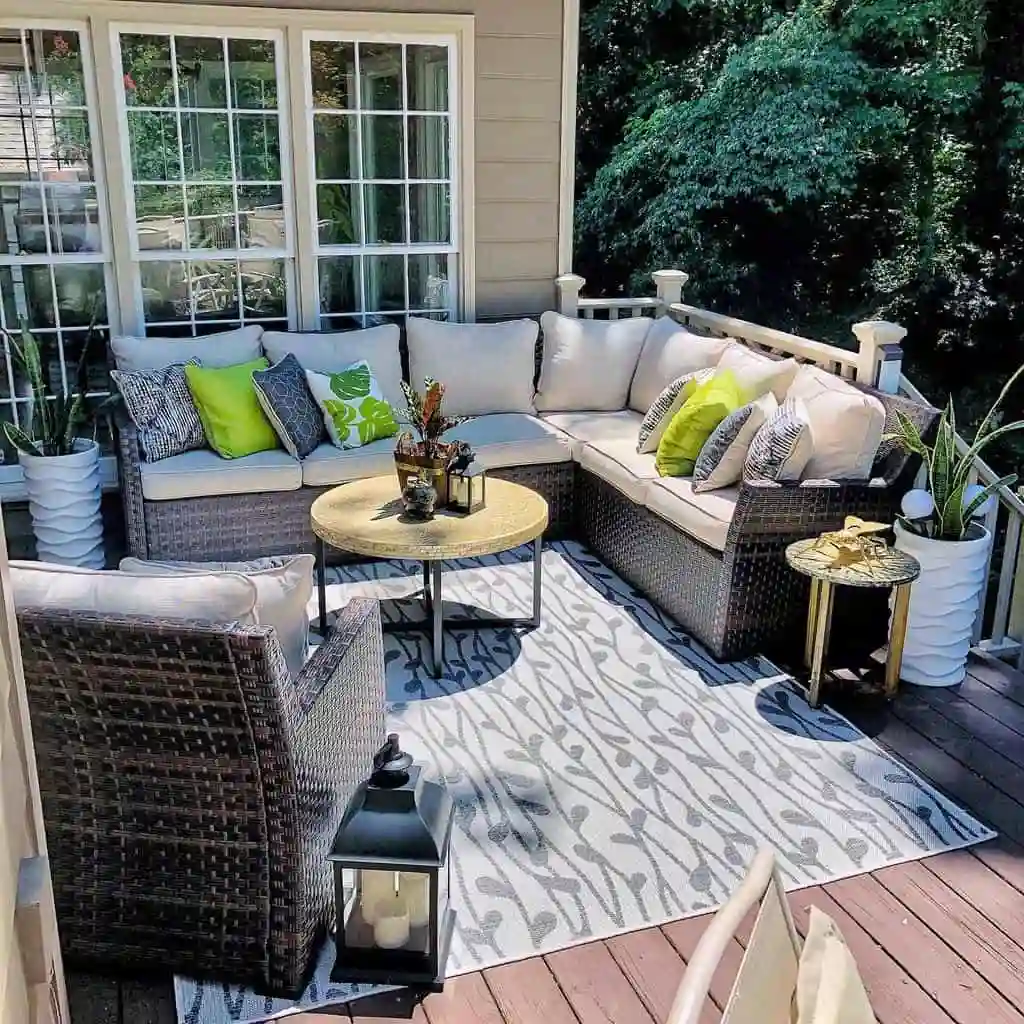
Outdoor Furniture
Match material to your climate and maintenance tolerance:
Material | Best For | Maintenance |
Teak | Coastal/humid climates | Low grays naturally or oil annually |
Aluminum | Most climates | Very low, rust-resistant |
Wicker/rattan (synthetic) | Covered patios | Low, avoid direct sun fading |
Wrought iron | Traditional style | Needs rust-prevention care |
Final Thoughts
The best outdoor living spaces aren’t the ones with every feature on this list; they’re the ones built around how a household actually spends time outside. Start with one zone that matches your real habits, whether that’s a fire pit for fall evenings or a simple paver patio and a good chair. Get that right, and the rest of the yard tends to grow into it naturally, one season at a time.
Frequently Asked Questions
What is the cheapest way to create an outdoor living space?
Start with what you already have. A cleaned and repainted existing patio, an outdoor rug, string lights, and refreshed cushions can transform a space for under $200 without any construction.
Do I need a permit for a pergola or fire pit?
Often, yes. Most municipalities require a permit for permanent pergolas over a certain height or footprint, and many restrict wood-burning fire pits by placement and season. Check with your local building department before starting.
What’s the difference between a patio and a deck?
A patio is a ground-level paved surface (concrete, pavers, stone). A deck is a raised structure, typically built from wood or composite boards on a frame. Decks suit sloped yards or homes with a raised main floor; patios suit flat, ground-level yards.
How much does an outdoor living space cost?
Costs vary widely by scope. A basic patio refresh can cost a few hundred dollars in furniture and decor. A mid-range patio with a pergola and fire pit often falls in the low-to-mid five figures. A full outdoor kitchen with built-in appliances can run considerably higher depending on materials and appliance grade. Get a local contractor quote for an accurate number — regional labor and material costs vary significantly.
What adds the most value to a backyard?
Industry cost-vs-value reports have consistently shown that outdoor projects like deck additions and patio upgrades recoup a solid portion of their cost at resale, often more than many interior remodels. A well-built deck or patio, paired with basic landscaping, tends to offer strong return relative to cost.
How do I make a small backyard feel bigger?
Use one well-defined zone instead of several small ones, lay pavers on a diagonal, add vertical greenery instead of ground-level beds, and choose furniture scaled to the space rather than oversized pieces.