

Most homeowners spend months picking out paint colors and light fixtures, then walk right past the one feature every single guest sees before they even reach the front door: the walkway. If yours is a cracked slab of concrete or an afterthought path worn into the grass, it’s quietly working against every other improvement you’ve made. The good news is that front walkway ideas don’t have to mean a full landscaping overhaul or a five-figure budget. A weekend of edging and the right plant choices can change how your entire property feels.
Why Your Front Walkway Matters More Than You Think
A front walkway does two jobs at once. It’s infrastructure, guiding feet safely from the driveway or sidewalk to your door, and it’s design, setting the tone before anyone steps inside. Real estate agents will tell you that a well-defined, attractive walkway is one of the cheapest ways to lift a home’s perceived value, right alongside a fresh coat of paint on the front door.
Beyond appearances, a well-built walkway solves practical problems: it keeps mud out of the house, prevents awkward diagonal paths worn into the lawn, and gives kids, guests, and delivery drivers a clear, level route. If your current path is narrow, uneven, or simply invisible, that’s usually the first sign it’s time for an upgrade.
Choosing the Right Walkway Material
Material is the single biggest decision in any front walkway project, since it drives cost, maintenance, and style all at once. Here’s how the most popular options stack up.
Concrete Front Walkway Ideas
Concrete remains the most requested option for a reason: it’s affordable, durable, and flexible enough to be poured in a straight line or a sweeping curve. Stamped concrete can mimic the look of stone or brick at a fraction of the cost, and a broom finish adds slip resistance for rainy climates. The trade-off is that plain gray concrete can look flat unless you dress it up with a border, a tinted finish, or a contrasting edge.
Brick Front Walkway Ideas
Brick brings warmth and a traditional, cottage-style feel that pairs beautifully with red-door colonials, craftsman bungalows, and older homes. A herringbone or basketweave pattern adds texture without competing with your landscaping, and individual bricks can be replaced if one cracks, which isn’t true of poured concrete. Expect higher material and labor costs than concrete, and know that brick can shift over time if the base isn’t compacted properly.
Stone and Flagstone Walkway Ideas
Flagstone walkway ideas are popular for a reason: irregular, natural-edged stones set in sand or soil create a relaxed, organic look that suits cottage gardens and wooded lots especially well. Bluestone, limestone, and travertine each bring a different color palette, so it’s worth picking up a sample before committing. Flagstone costs more upfront than concrete or gravel, but it rarely goes out of style.
Paver Walkway Ideas
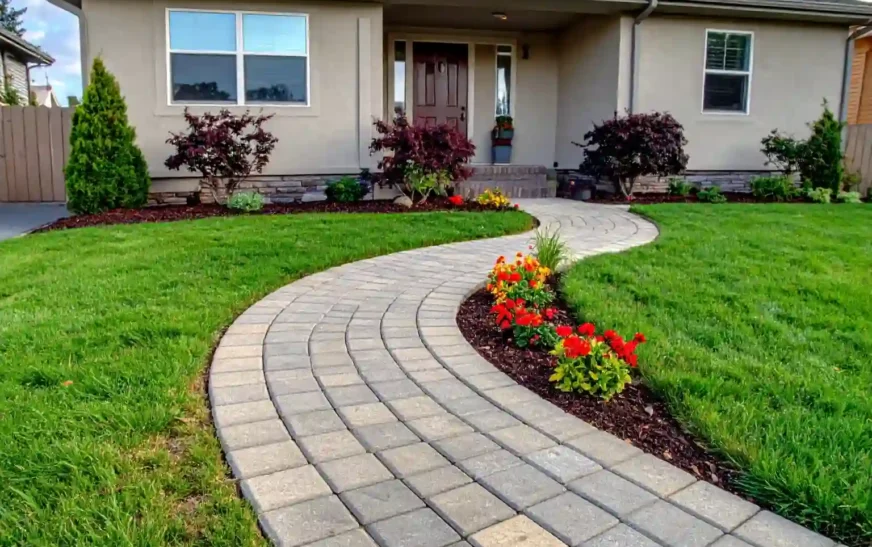
Pavers hit a sweet spot between cost and customization. Because they’re modular, you can mix colors, create patterns, and replace a damaged section without redoing the whole path. Permeable pavers are worth considering if your property struggles with drainage, since they let water filter through instead of pooling.
Gravel Front Walkway Ideas
A gravel front walkway is the budget-friendly, weekend-project option. It drains well, works nicely with cottage and coastal styles, and is one of the easiest surfaces for a beginner to install. The downside is that loose gravel migrates over time and isn’t the most stroller- or wheelchair-friendly surface, so steel or timber edging is essential to keep it contained.
Stepping Stone Walkway Ideas
Stepping stones work well as a secondary path, a garden accent, or a casual route through a side or backyard, and they’re increasingly used as a front walkway in relaxed, cottage-style landscapes. Spacing them for a natural stride, roughly 24 to 30 inches center to center, keeps the path comfortable to walk without looking like a balance-beam course.
Front Walkway Shapes and Layouts
Material sets the style, but the shape of your path decides how the whole front yard reads.
Straight Front Walkway Ideas
A straight front walkway approach is the most formal option, drawing the eye directly to the door and pairing naturally with symmetrical landscaping, matching planters, and classic architecture like Georgian or colonial homes. It’s also the most efficient use of space, which matters on a narrow lot.
Curved Front Walkway Ideas
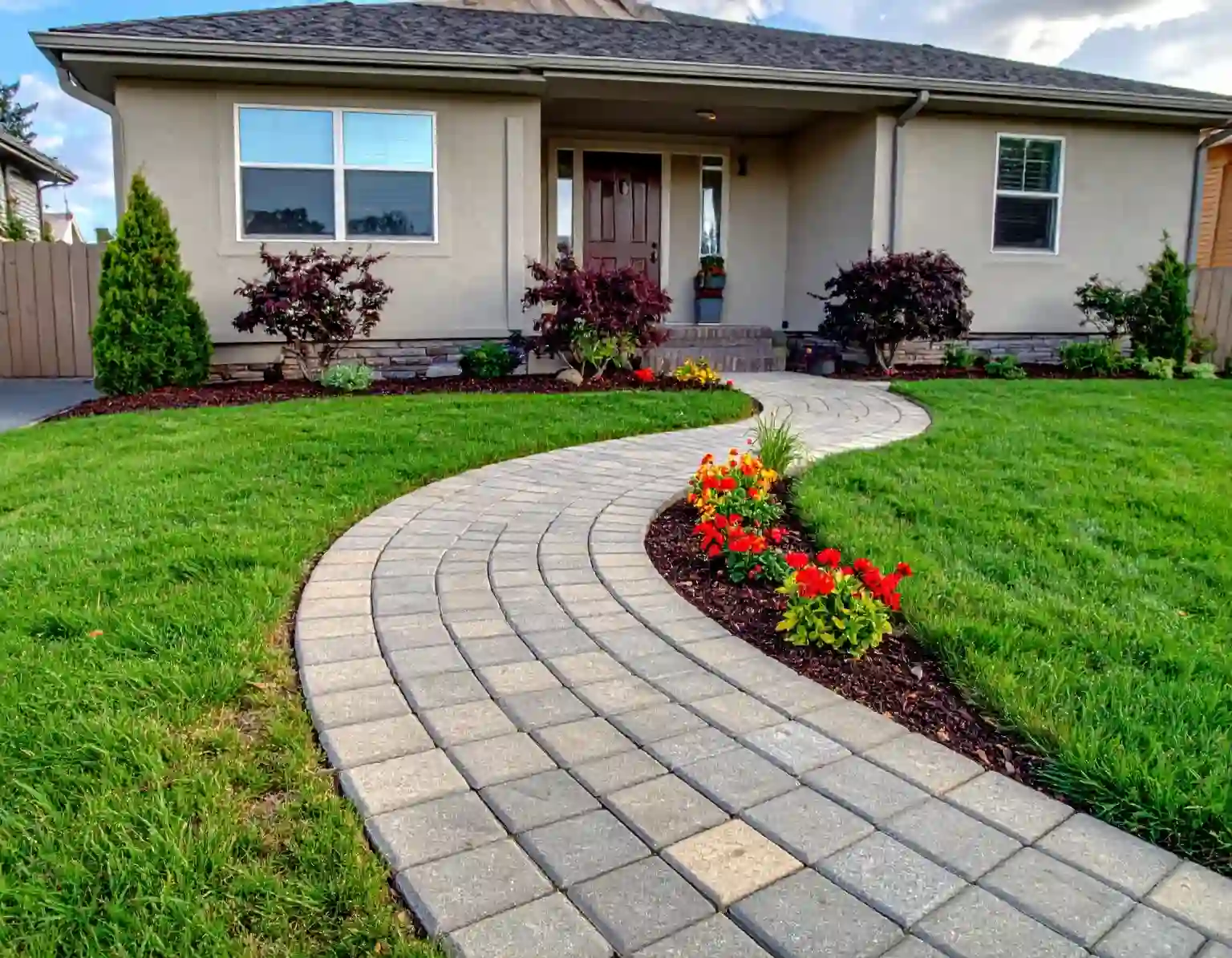
A curved front walkway layout slows visitors down and creates a more relaxed, inviting feel, especially on larger properties where a straight shot from the sidewalk would look stark. Curves also give you more edge space for planting beds, which is where a lot of front walkway landscaping ideas come to life.
Narrow Front Walkway Ideas
On tight lots, narrow front walkway ideas focus on making a compact path feel intentional rather than cramped. A single, well-defined material paired with low, tidy plantings along the border reads as designed, while a mismatched mix of leftover pavers reads as an afterthought. Keeping the width consistent, at least 36 inches for comfortable single-file walking, matters more on a narrow path than a wide one.
Front Walkway Landscaping Ideas
The plants and edging around your path do as much visual work as the path itself.
Flower Beds and Borders
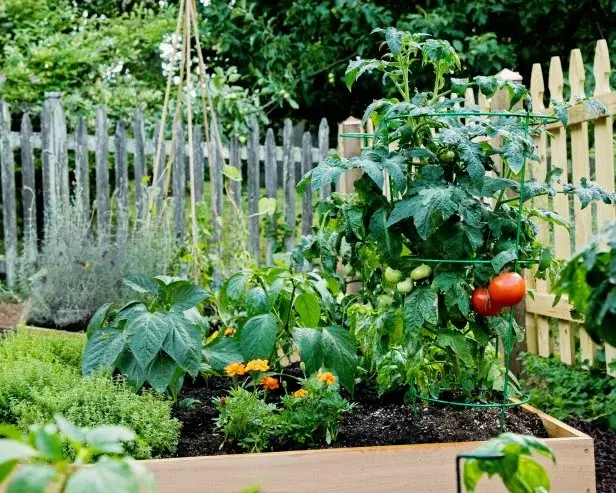
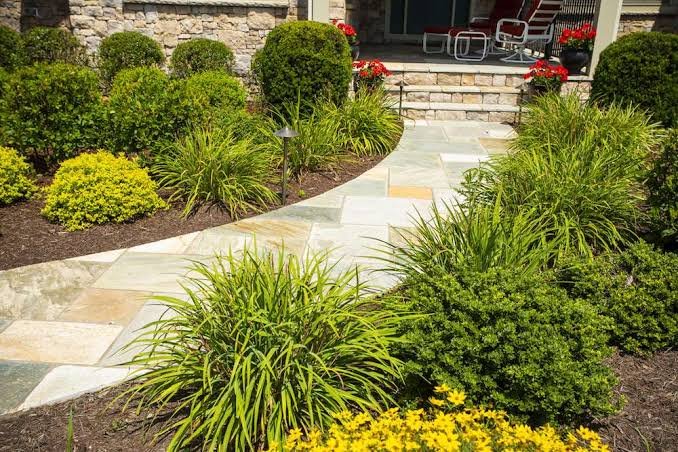
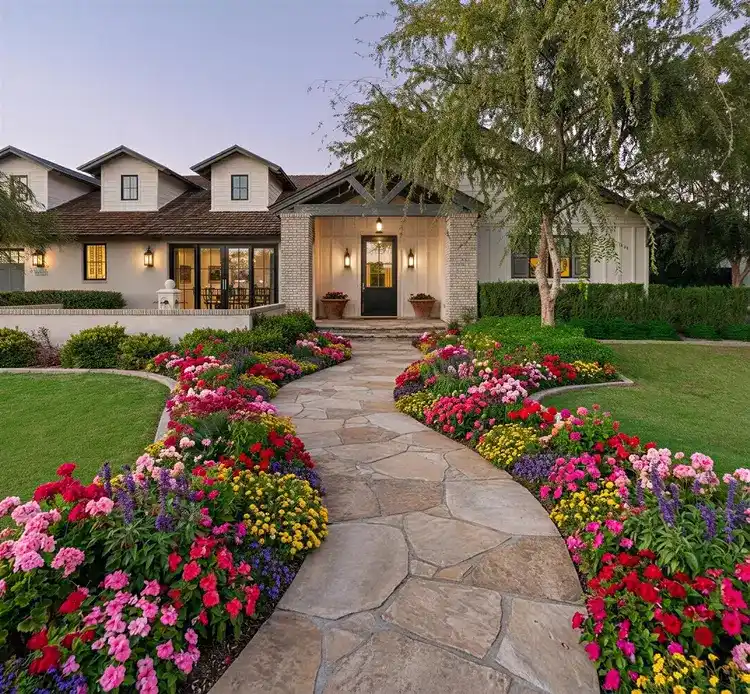
Layered flower beds along a walkway create depth and seasonal color. A simple, repeatable formula works well: low groundcover or edging plants at the path’s edge, mid-height perennials behind them, and a taller anchor plant or small shrub set back from the walkway. Repeating the same three or four plant varieties on both sides keeps the look cohesive instead of busy.
Shrubs and Greenery
Evergreen shrubs like boxwood, dwarf holly, or compact junipers give a front walkway year-round structure, so the path still looks intentional in winter when perennials have died back. Space them to allow for mature growth; a common mistake is planting too close to the path, which forces future pruning battles just to keep the walkway clear.
Walkway Edging Ideas
Edging is what separates a designed path from a worn-in trail. Steel and aluminum edging give the cleanest, most modern line and hold up well against lawn mowers. Brick-on-edge or stone edging suits traditional homes and doubles as a small retaining border for mulch beds. Whatever material you choose, consistent edging is one of the fastest ways to make a walkway look finished.
Front Walkway Lighting Ideas
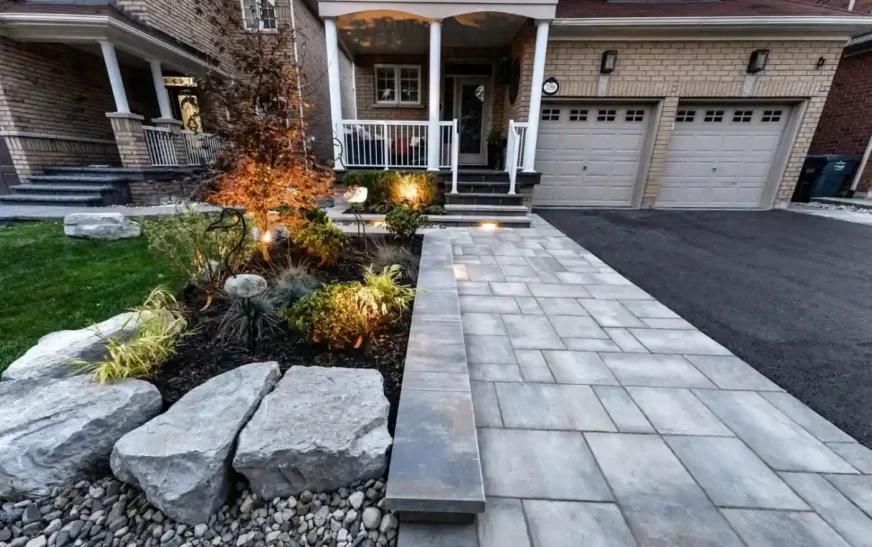
Walkway lighting is safety and style rolled into one upgrade. Low-voltage LED path lights, spaced every 6 to 8 feet along alternating sides, prevent the runway-strip look while still lighting the full route. Solar stake lights are the easiest no-wiring option for a weekend project, though they tend to be dimmer than hardwired fixtures. For a more architectural look, uplighting a tree or shrub near the entry adds ambiance beyond just the path itself, and it’s a detail that shows up beautifully in evening curb appeal photos.
Low-Maintenance Front Walkway Ideas
If weekends spent weeding and re-leveling pavers sound like the opposite of what you want, low maintenance front walkway ideas center on a few key choices: poured concrete or large-format pavers instead of loose gravel or small stepping stones, mortared joints instead of sand-filled ones that invite weeds, and drought-tolerant plantings like lavender, sedum, or ornamental grasses along the border instead of thirsty annuals that need replanting every season.
- Choose large-format pavers or poured concrete over small units with many joints
- Use polymeric sand or mortar in joints to reduce weed growth
- Plant perennials and evergreens instead of annuals that need yearly replacement
- Add a stone or gravel buffer strip next to lawn edges to reduce string-trimming
- Install edging to keep grass from creeping into the walkway surface
Modern Front Walkway Ideas
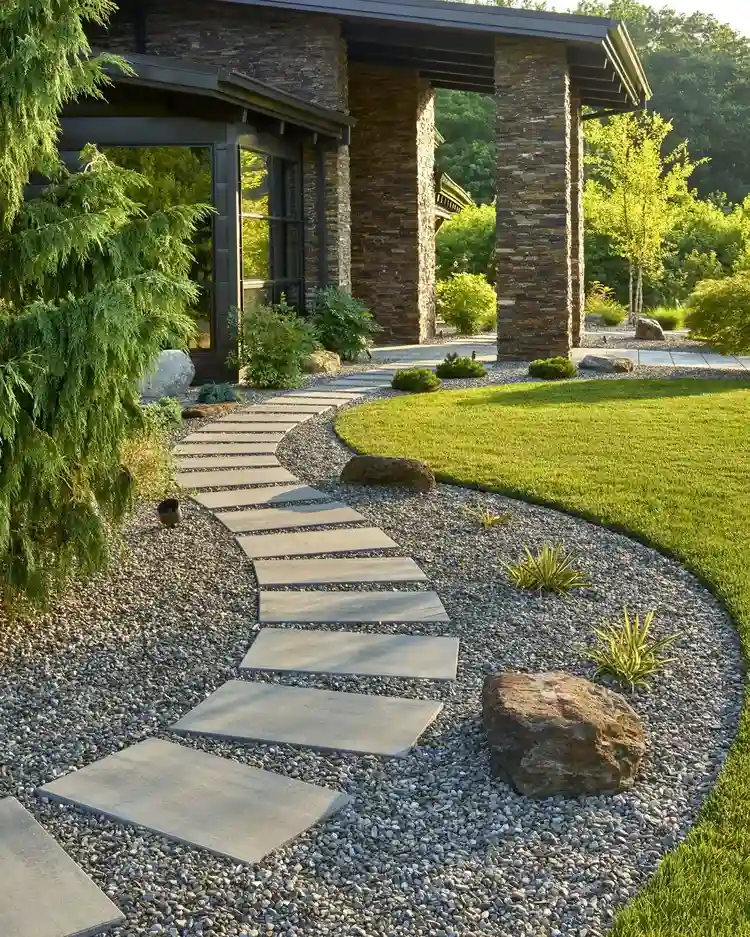
Modern front walkway ideas lean into clean geometry and restrained materials. Large-format concrete pavers set with wide, gravel-filled joints are a signature look, as are single-material paths in a neutral gray or charcoal tone with minimal edging. Linear, low-profile lighting fixtures reinforce the geometric feel, and plantings tend to be architectural, ornamental grasses, boxwood spheres, or a single striking tree, rather than a mix of colorful perennials.
Front Walkway Ideas for Small Yards
A small front yard doesn’t have to mean a boring path. Keeping the walkway narrow but well-defined, using a single material throughout, and choosing a subtle curve rather than a straight line can make a compact space feel larger than it is. Vertical elements, like a trellis, an arbor near the door, or tall narrow plantings, draw the eye up and make the whole entrance feel more substantial without eating into limited square footage.
Material Comparison Table
Here’s a quick side-by-side to help narrow down your options.
Material | Avg. Cost | Durability | Maintenance | Best For |
Concrete | $ | High | Low | Budget projects |
Pavers | $$ | High | Low-Med | Custom patterns |
Brick | $$$ | Med-High | Medium | Traditional homes |
Flagstone | $$$ | High | Medium | Cottage / natural style |
Gravel | $ | Medium | Medium-High | DIY, coastal style |
Stepping Stones | $ | Medium | Medium | Casual, secondary paths |
Common Mistakes to Avoid
- Making the path too narrow under 36 inches feels cramped for two people walking side by side
- Skipping a proper gravel or sand base, which leads to cracking and shifting within a year or two
- Choosing a material that clashes with the home’s existing brick, siding, or roofline
- Planting too close to the walkway edge, forcing constant trimming
- Forgetting drainage, which leaves puddles and ice patches right where people walk
- Over-lighting the path so it looks like an airport runway instead of a home entrance
Expert Tips for Planning Your Project
- Walk the route first. Before choosing materials, walk from the driveway or sidewalk to your door the way guests actually would, and let that worn-in path guide your layout.
- Match the house, not the trend. A material that complements your siding and roofline will age better than whatever’s trending this year.
- Budget for the base, not just the surface. A well-compacted gravel base is what actually prevents cracking and shifting down the line.
- Plan lighting during design, not after. Running conduit or wiring before the hardscape goes in saves you from tearing up a finished path later.
- Get quotes for both DIY and professional installation. Materials like gravel and stepping stones are realistic weekend projects; poured concrete and mortared stone usually aren’t.
Frequently Asked Questions
What is the cheapest material for a front walkway?
Gravel and poured concrete are typically the most budget-friendly options, with gravel usually costing the least per square foot if you’re comfortable installing it yourself.
How wide should a front walkway be?
Most designers recommend a minimum of 36 inches, and 48 inches or wider if you want two people to comfortably walk side by side.
Can I install a front walkway myself?
Gravel, stepping stones, and some paver walkways are realistic DIY projects for an ambitious homeowner. Poured concrete and mortared brick or stone generally call for a professional, since the base prep and finishing are easy to get wrong.
What’s the best low-maintenance walkway material?
Poured concrete and large-format pavers with mortared or polymeric-sand joints require the least upkeep, since they resist weeds and don’t shift like loose gravel or sand-set stone.
How much does a new front walkway cost?
Costs vary widely by material and region, but gravel paths tend to be the least expensive, concrete falls in the middle, and natural stone or brick typically costs the most per square foot.
Should a front walkway be straight or curved?
It depends on your home’s style and lot size. Straight paths suit formal, symmetrical homes and smaller lots, while curved paths feel more relaxed and work well on larger properties.
What plants work best along a front walkway?
Low, tidy plants like boxwood, lavender, hostas, and ornamental grasses hold their shape well along a path edge without spilling over and blocking foot traffic.
Do I need permits to replace a front walkway?
Many municipalities don’t require a permit for a simple like-for-like replacement, but if the walkway connects to a public sidewalk or changes drainage patterns, it’s worth checking with your local building department first.
How do I keep weeds out of a paver or stone walkway?
Polymeric sand or mortared joints are the most effective long-term fix, since loose sand-filled joints are where most weeds take hold.
What’s the best spacing for walkway lighting?
Spacing fixtures every 6 to 8 feet, staggered on alternating sides, provides even light coverage without the runway effect of matching lights placed directly opposite each other.
Final Thoughts
A front walkway is one of the few home features that work on every level at once: safety, function, and first impressions. Whether you’re drawn to the clean lines of a modern paver path or the relaxed charm of flagstone with flower beds on either side, the real win comes from matching the material and layout to your home’s style and picking details, edging, lighting, and plant choices that make the path feel finished rather than incidental. Start with the base, plan lighting early, and let the walkway do the quiet work of making your entrance feel welcoming before a single guest reaches the door.