


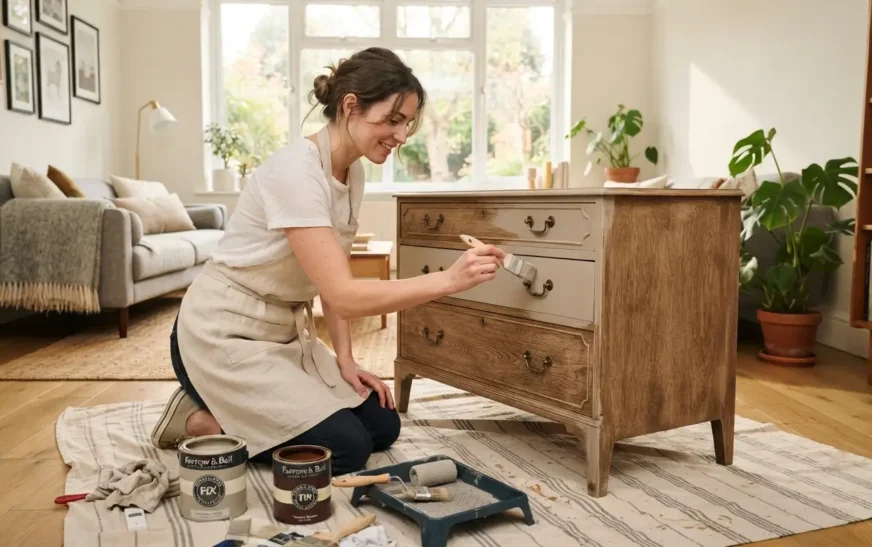
That thrift store dresser sitting in your garage isn’t junk it’s a project waiting for the right can of paint. Choosing the right furniture paint can completely transform old, tired pieces into beautiful statement furniture without spending a fortune on new items. But walk into any hardware store and you’ll be staring down a wall of options, wondering which one is actually the best furniture paint for your piece.
Maybe you’re refinishing a solid wood furniture piece passed down from a relative. Maybe you’re drawn to the soft, vintage look of chalk paint for furniture. Or maybe you just want your thrifted nightstand to stop looking like it belongs in a 1990s guest room. Whatever brought you here, this guide breaks down everything paint types, finishes, colors, techniques, and mistakes to avoid so your next furniture makeover actually turns out the way you pictured it.
Table of Contents
Best Furniture Paint for Different Furniture Types
Not every piece of furniture should be painted the same way. The material underneath your paint job matters just as much as the paint itself.
For solid wood furniture (dressers, tables, chairs): Wood breathes, expands, and contracts with humidity, so it handles most paint types well as long as it’s properly prepped. Chalk paint, mineral paint, and quality acrylic paints all adhere well to raw or lightly sanded wood.
For laminate or veneer furniture (IKEA-style flat-pack pieces): These slick surfaces are notoriously hard for paint to grip. A bonding primer designed specifically for laminate is non-negotiable here skip it and you’ll likely see peeling within months.
For metal furniture (bed frames, patio chairs, vintage lamps): Look for paint labeled specifically for metal, or use a rust-inhibiting primer first if there’s any existing corrosion.
For outdoor wood furniture: Exterior-grade paint with UV resistance is essential. Indoor furniture paint will chalk and fade quickly when left in direct sun.
A few well-known furniture paint brands worth researching for your specific project type include Annie Sloan, Rust-Oleum, Behr, Fusion Mineral Paint, and Country Chic Paint. Each has strengths depending on whether you’re prioritizing durability, color range, or eco-friendly formulas it’s worth reading a few reviews for your specific furniture material before committing.
Types of Furniture Paint
Understanding the different paint categories will save you from buying the wrong product and having to redo the entire job.
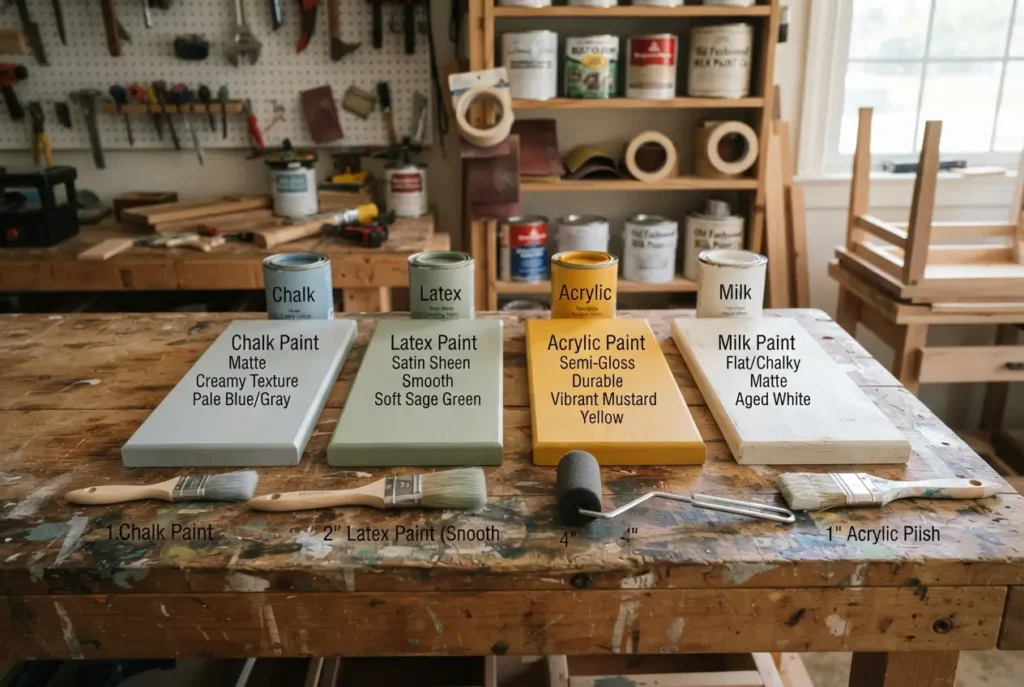
Chalk Paint
Chalk paint has a matte, slightly chalky texture (hence the name) and is famous for requiring little to no sanding or priming. It’s forgiving for beginners and gives furniture that soft, farmhouse or vintage look. The tradeoff is that it usually needs a protective wax or topcoat to hold up to daily use.
Latex Paint
Latex paint is water-based, widely available, and comes in nearly unlimited colors since it’s the same paint used on walls. It’s durable once cured but typically requires more prep work sanding and priming for it to bond properly to furniture surfaces.
Acrylic Paint
Acrylic furniture paints are formulated to be thicker and more durable than standard wall paint, often with built-in primer or bonding agents. They dry fast, resist chipping well, and are a solid middle-ground option for beginners who still want a durable finish.
Milk Paint
Milk paint is a natural, powder-based paint mixed with water before use. It gives an authentic, aged look that’s popular for antique restoration projects. It can be unpredictable on certain surfaces (sometimes chipping intentionally for a distressed effect), so it’s better suited to intermediate or advanced painters who want that specific aesthetic.
How to Paint Furniture Without Sanding
Sanding is the part of furniture painting most people dread, and the good news is you can skip it in many cases if you follow the right prep steps.
Step 1: Clean thoroughly. Wipe the piece down with soapy water or a degreaser to remove dust, grease, and grime. Paint won’t stick to a dirty surface no matter how good it is.
Step 2: Use a bonding primer. This is the real trick to skipping sanding. A quality bonding primer grips onto glossy or sealed surfaces and gives your paint something to hold onto. Skip this step and you’re gambling with peeling later.
Step 3: Apply thin, even coats. Load your paint brush or foam roller lightly and apply two to three thin coats rather than one thick one. Thin coats dry more evenly and reduce brush marks.
Step 4: Seal it with a top coat. Once your paint has fully cured, a top coat whether wax, polyurethane, or a water-based sealer protects your work from scuffs, water rings, and everyday wear.
Chalk paint and mineral paint are typically the easiest options for this no-sand method, since they’re formulated to grip most surfaces on their own.
Best Furniture Paint Colors
Color choice can make or break a furniture makeover, and trends have shifted noticeably in recent years toward warmer, softer palettes.
Popular furniture paint colors right now:
- Warm whites and creams (for a soft, airy farmhouse feel)
- Sage and olive green (a top pick for kitchen cabinets and dressers)
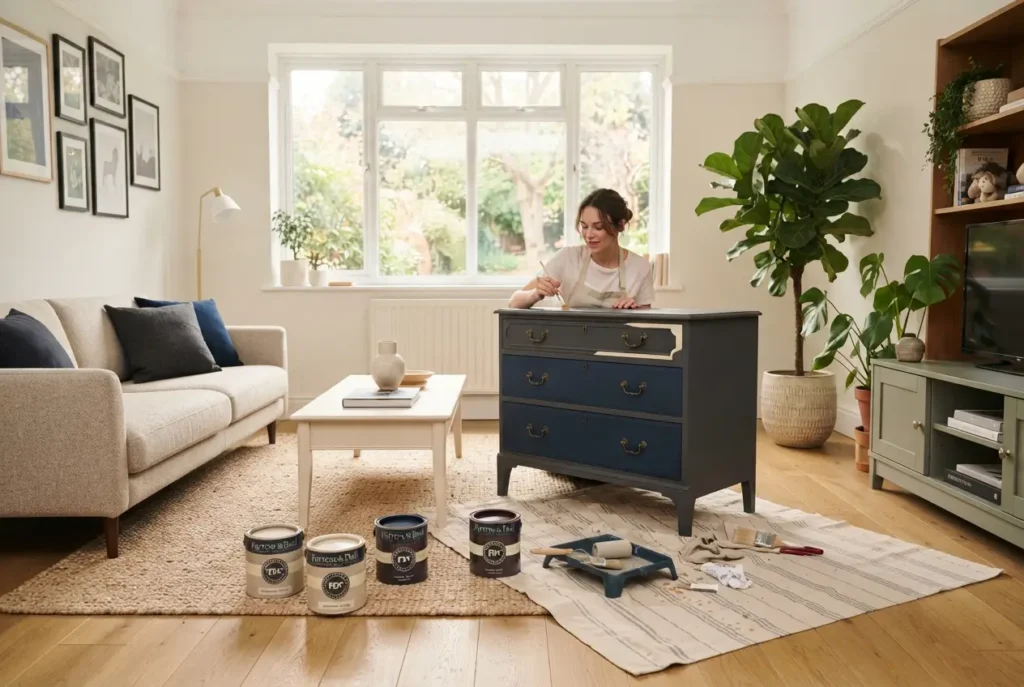
- Deep navy or charcoal (great for statement pieces like sideboards)
- Terracotta and rust tones (paired well with wood and rattan accents)
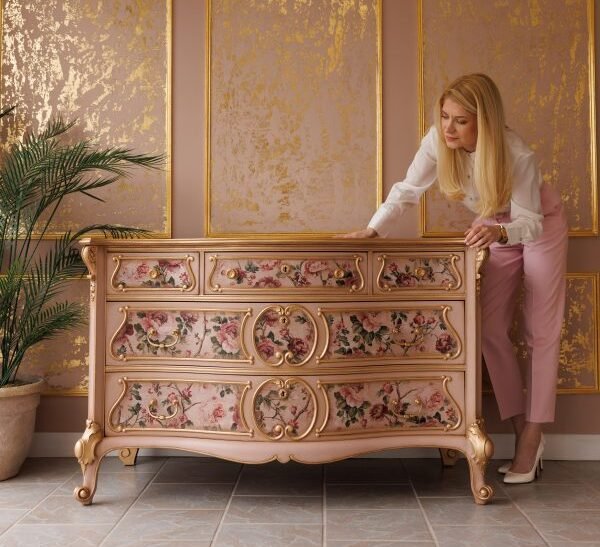
- Soft blush pink (popular in bedroom furniture and nurseries)
Beyond color, the finish you choose changes the entire look and feel of the piece:
- Matte finish a flat, no-shine look that hides imperfections well and suits farmhouse or vintage styles.
- Satin finish a subtle sheen that’s more durable than matte and easier to wipe clean, making it a popular middle-ground choice.
- Gloss finish a shiny, reflective look that works well on modern or statement pieces but shows brush strokes and dents more easily.
If you’re unsure, satin is generally the safest bet for furniture that gets daily use, like dining tables or dressers.
Chalk Paint vs Latex Paint
This is one of the most common questions beginners search for, so let’s break it down clearly.
Factor | Chalk Paint | Latex Paint |
Prep required | Minimal to none | Sanding + priming usually needed |
Finish look | Matte, vintage | Smooth, versatile |
Durability | Needs wax/topcoat for protection | Durable once cured |
Color range | Limited but curated | Nearly unlimited |
Best for | Beginners, vintage looks | Long-term durability, custom colors |
If you want a fast, beginner-friendly project with a soft aesthetic, chalk paint wins. If you want a custom color matched to your room and don’t mind extra prep work, latex paint is the stronger long-term choice. When it comes to the best paint finish for furniture that sees heavy use think kids’ furniture or kitchen cabinets a satin or semi-gloss latex paint sealed with a durable topcoat tends to outperform chalk paint over time.
Common Furniture Painting Mistakes
Even careful DIYers run into the same handful of problems. Here’s what usually goes wrong and how to avoid it.
Mistake 1:
Skipping primer on glossy surfaces. This is the number one cause of furniture paint peeling. If your piece has a factory finish or laminate coating, primer isn’t optional.
Mistake 2:
Painting in high humidity. Moisture in the air extends furniture paint drying time significantly and can cause a tacky, uneven finish. Aim for a dry day with good ventilation.
Mistake 3:
Applying paint too thick. Thick coats trap moisture underneath and lead to paint chipping once the surface dries unevenly. Thin, multiple coats always outperform one heavy coat.
Mistake 4:
Not sealing the final coat. Paint without a topcoat is vulnerable to water rings, scratches, and general wear especially on high-touch surfaces like tabletops and drawer fronts.
Mistake 5:
Rushing between coats. Even fast-drying paints need real cure time (often 24–48 hours) before a second coat or heavy use. Patience here saves you from redoing the whole project.
Painted Furniture Ideas
Looking for inspiration before you pick up a brush? Here are a few approachable painted furniture ideas to try:
- Two-tone dressers paint the frame one color and the drawers another for a modern, custom-built look.
- Ombre bookshelves gradually lighten or darken the same color shade from top to bottom.
- Painted chair accents leave the seat natural wood and paint just the legs and frame for contrast.
- Stenciled drawer fronts add a simple pattern to plain drawer fronts using painter’s tape or a stencil kit.
- Color-blocked headboards paint geometric shapes onto a plain wood headboard for an easy statement piece.
These small DIY furniture makeover projects are a great way to practice furniture refinishing techniques before tackling a larger piece, and they’re an affordable way to update a room without buying anything new.
FAQ
What is the best furniture paint?
There’s no single “best” paint for every project it depends on the furniture material and how much wear the piece will get. Chalk and mineral paints are best for beginners and vintage looks, while acrylic and latex paints suit pieces that need more durability.
Can you paint furniture without sanding?
Yes. Using a bonding primer designed for glossy or laminate surfaces lets you skip sanding in most cases, as long as the piece is thoroughly cleaned first.
How long does furniture paint take to dry?
Most furniture paints are dry to the touch within 1–2 hours, but full curing when the paint reaches maximum hardness typically takes 24 to 48 hours. Humid conditions can extend this.
Do you need primer before painting furniture?
It’s recommended for any glossy, laminate, or previously sealed surface. Raw or unfinished wood can sometimes skip primer, especially with chalk or mineral paints.
What paint lasts longest on furniture?
Acrylic and high-quality latex paints, sealed with a durable polyurethane topcoat, tend to hold up best over years of daily use, particularly on high-touch pieces like tables and dressers.
Conclusion
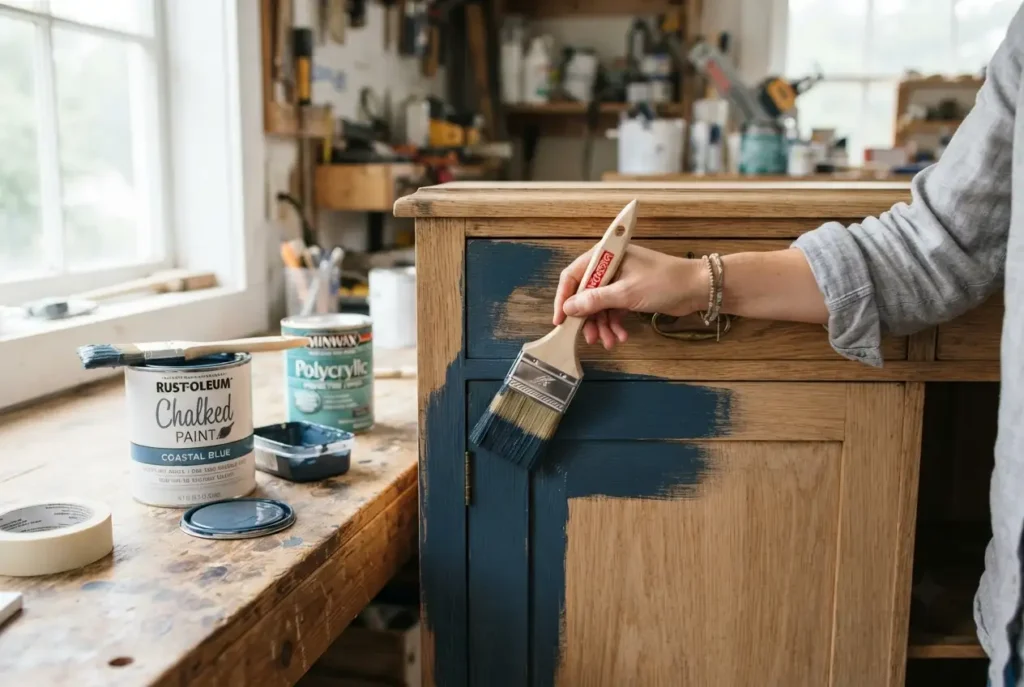
Painting furniture doesn’t have to be intimidating once you understand which paint suits your project and how to prep properly. Whether you’re drawn to the soft look of chalk paint, the durability of latex, or you’re simply trying to save an old dresser from the landfill, the right combination of paint, primer, and finish makes all the difference between a project that lasts and one that peels within months. Pick your paint type, choose a finish that fits how the piece will be used, and take your time between coats the results are almost always worth the patience.






2 Comments
[…] replacing furniture isn’t possible, consider updating cabinet hardware, painting side tables, or refinishing wooden […]
[…] Curved furniture silhouettes: Sofas and coffee tables with soft, rounded edges are replacing sharp, boxy shapes in […]